Reliable Robotics Completes FAA Detect and Avoid System Testing

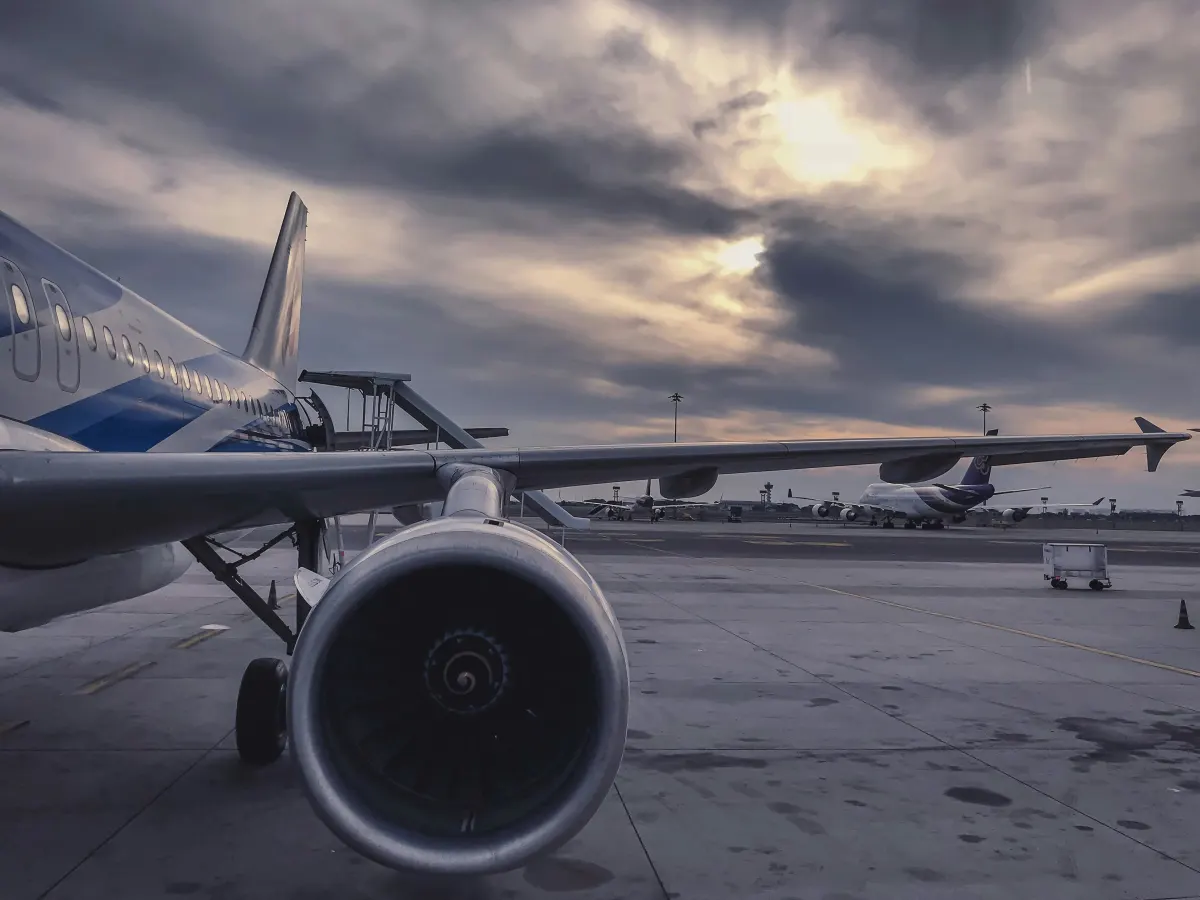
Reliable Robotics completes FAA-contracted Detect and Avoid flight tests, validating ACAS X for integrating uncrewed aircraft into national airspace.
Key Takeaways
- •Completed over 50 scripted Detect and Avoid flight encounters for the FAA.
- •Validated the ACAS Xu collision avoidance system for uncrewed aircraft in terminal airspace.
- •Provides critical data for developing RTCA SC-228 and SC-147 certification standards.
- •Advances the certification pathway for autonomous cargo aircraft like the Cessna 208B.
Reliable Robotics has completed a series of flight tests for the Federal Aviation Administration (FAA) to validate its Detect and Avoid (DAA) system, a critical step toward the integration of large Uncrewed Aircraft Systems (UAS) into the National Airspace System (NAS). The company conducted over 50 scripted flight encounters under an FAA Broad Agency Announcement (BAA) contract, generating essential data for upcoming aviation safety standards.
The successful completion of these tests provides the FAA and industry standards bodies with real-world data needed to finalize certification pathways for autonomous aircraft. The flight encounters, focused on terminal airspace operations, are designed to prove that an uncrewed aircraft can safely detect and maneuver around other traffic without a pilot onboard. This validation is foundational for the future of autonomous cargo and logistics operations, a sector poised for significant growth.
Flight Testing Details
The tests were conducted in and around the terminal area of Hollister Municipal Airport (KCVH) in California. Reliable Robotics utilized a company-owned Cessna 208B Caravan, equipped with its autonomous flight system, as the primary test aircraft. This aircraft flew scripted encounters against a Cessna 182, serving as an "intruder" aircraft equipped with a minimal Automatic Dependent Surveillance–Broadcast (ADS-B) transponder. This setup simulated realistic interactions in a Visual Flight Rules (VFR) traffic pattern.
Brandon Suarez, Vice President of UAS Integration at Reliable Robotics, emphasized the importance of this environment. He stated that demonstrating UAS integration in VFR traffic patterns is essential for scalable aviation autonomy and that the real-world data captured is nearly impossible to generate in a lab. The scenarios tested a range of encounter geometries to validate the system's response under various conditions.
Technical Foundation and Standards
The core of the DAA system tested is the Airborne Collision Avoidance System X (ACAS X), specifically the ACAS Xu variant developed for uncrewed fixed-wing aircraft. This system represents the next generation of collision avoidance technology, designed to replace the legacy Traffic Collision Avoidance System (TCAS II). The project involved key industry partners, including the Mid-Atlantic Aviation Partnership (MAAP) at Virginia Tech, Sagetech, Collins Aerospace, and uAvionix, which provided avionics and technical support.
The data collected from the flights will directly inform the work of the Radio Technical Commission for Aeronautics (RTCA), particularly Special Committees SC-228 and SC-147. These groups are responsible for developing the Minimum Operational Performance Standards (MOPS) that manufacturers must meet to certify DAA systems. Juerg Frefel, Co-founder and CTO of Reliable Robotics, noted that compliance with these consensus-based technical standards is critical to reducing certification risk and ensuring interoperability across the aviation ecosystem.
ACAS X vs. TCAS II
The transition from TCAS II to ACAS X is a significant trend in aviation safety technology. ACAS X offers substantial improvements, particularly for operations in complex airspace.
| Metric | ACAS X | TCAS II |
|---|---|---|
| Alerting Logic | Probabilistic modeling | Rule-based kinematics |
| False Alerts | Significantly reduced in terminal areas | Higher frequency of nuisance alerts |
| UAS Support | Native variants like ACAS Xu | Not designed for uncrewed aircraft |
Technical Analysis
This development marks a crucial transition from theoretical modeling to practical application in the quest for aviation autonomy. While earlier Beyond Visual Line of Sight (BVLOS) approvals in 2023 focused on smaller delivery drones, Reliable Robotics' work targets transport-category aircraft, a far more complex challenge. The validation of ACAS Xu in live VFR traffic patterns builds directly upon the foundation laid by the FAA's 2020 ADS-B Out mandate, which ensured a baseline of cooperative electronic visibility in the airspace. The successful flight tests suggest that the technological and regulatory frameworks are maturing, moving the industry closer to a scalable model for uncrewed cargo operations. This progression from simulation and Hardware-In-The-Loop (HITL) testing to live flight trials is a standard pattern for certifying new, safety-critical aerospace technology, indicating the program is advancing along a recognized certification pathway.
What Comes Next
With the flight test data now collected, the focus shifts to analysis and standards development. The next major step is the publication of updated RTCA SC-228 MOPS for DAA systems, which is expected in 2025. This will provide avionics manufacturers and aircraft integrators with a clear set of requirements for certification.
Concurrently, Reliable Robotics is working toward a Supplemental Type Certificate (STC) for its autonomous flight system on the Cessna 208B. This certification, which the company expects to achieve between 2025 and 2026, would allow for the commercial operation of uncrewed cargo flights.
Why This Matters
This successful DAA system validation is more than a technical milestone; it is a foundational block for the economic and operational future of air cargo. By providing a data-driven path to certifying large autonomous aircraft, it moves the concept from experimental to commercial viability. For logistics companies, this promises new efficiencies, while for the aviation industry, it establishes a blueprint for safely integrating uncrewed aircraft into one of the world's most complex airspaces.
Frequently Asked Questions
- What was the purpose of Reliable Robotics' DAA testing for the FAA?
- The testing was designed to collect real-world flight data to validate the ACAS X collision avoidance system for large uncrewed aircraft. This data helps the FAA and RTCA develop and verify the technical standards required for safely integrating autonomous aircraft into national airspace.
- How does the ACAS X collision avoidance system differ from the older TCAS II?
- ACAS X uses advanced probabilistic models instead of the rule-based kinematics of TCAS II, which significantly reduces unnecessary alerts in dense terminal airspace. It also includes specific variants, like ACAS Xu, which are designed for the unique flight dynamics of uncrewed aircraft.
For in-depth airline coverage and commercial aviation news, omniflights.com delivers timely industry insights. Track policy changes, airspace rules, and global aviation governance in the Regulatory category at omniflights.com/regulatory.

Written by Hardik Vishwakarma
Co-Founder & Aviation News Editor leading initiatives that improve trust and visibility across the global aviation industry. Covers airlines, airports, safety, and emerging technology.
Visit ProfileYou Might Also Like

Trump Orders Release of 161 Declassified UAP Files
DOE Agent Death Sparks UAP Whistleblower Questions
Researcher Claims 4 Alien Species Recovered; Pentagon Denies

Declassified FBI Files Detail Nazi Saucer Claims

Apollo 17 UAP Encounter Detailed in Declassified Files