Qantas to Launch 22-Hour Sydney-London Nonstop in 2027

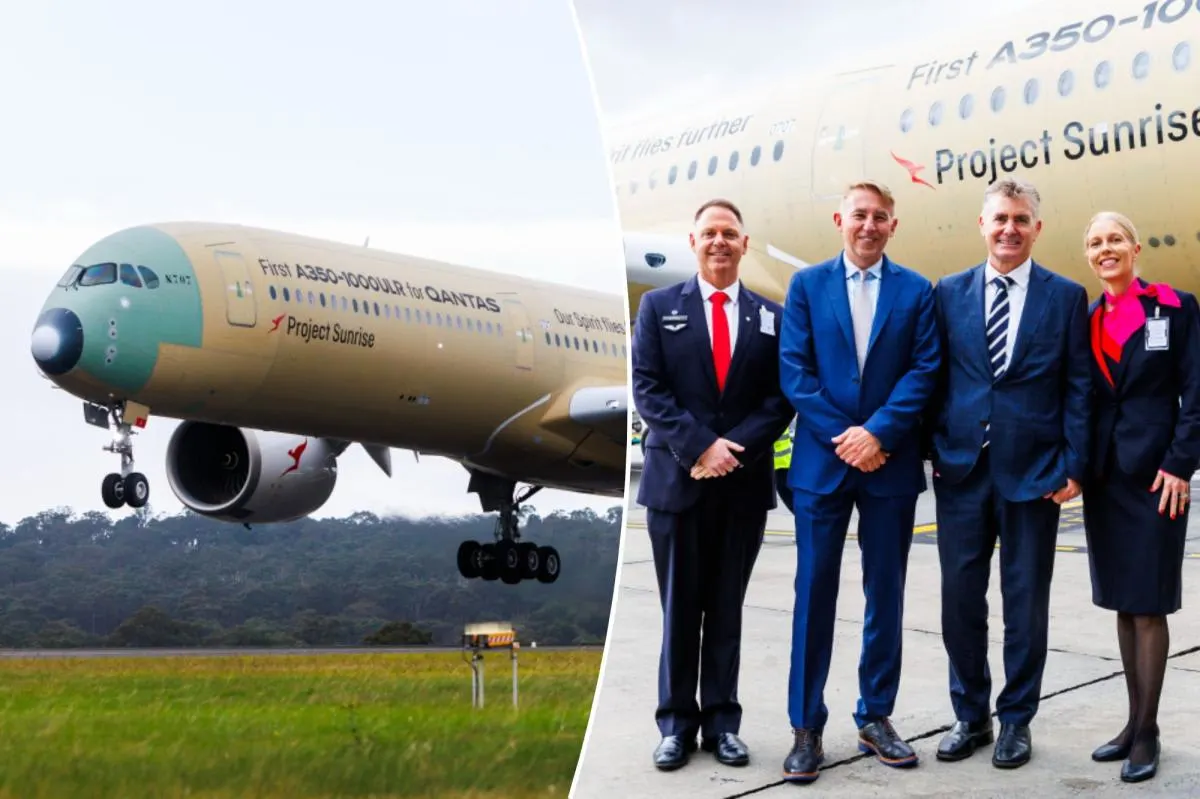
Qantas will debut the world's first 22-hour nonstop flight between Sydney and London in October 2027 using the Airbus A350-1000ULR.
Key Takeaways
- •Qantas launches Sydney-London nonstop service in October 2027.
- •A350-1000ULR carries 238 passengers with a fifth fuel tank.
- •Project Sunrise removes stops from the original 1947 route.
- •New wellbeing zones support passenger health on 22-hour flights.
Qantas to Launch 22-Hour Sydney-London Nonstop in 2027
Qantas has confirmed the launch of the world's longest commercial air route, with nonstop service between Sydney and London scheduled to begin in October 2027. This milestone, known as Project Sunrise, utilizes the Airbus A350-1000ULR (Ultra Long Range) to connect the two cities without intermediate stops. The initiative follows a nine-year development cycle aimed at mastering the logistics of 22-hour flight durations.
Engineering the A350-1000ULR
The A350-1000ULR is a heavily modified variant of the standard Airbus widebody. To achieve the required range, the aircraft is outfitted with a fifth fuel tank—a 20,000-litre rear centre tank—that allows for extended flight operations. This structural modification is currently undergoing rigorous review for EASA (European Union Aviation Safety Agency) type certification. Unlike standard A350-1000 models, which typically carry between 350 and 410 passengers, the Qantas configuration is capped at 238 passengers. This lower density is a strategic trade-off, prioritizing premium cabin space and weight management to ensure the aircraft remains economically viable over ultra-long distances.
Passenger Experience and Wellness
To manage the physiological demands of a 22-hour flight, Qantas has integrated a dedicated wellbeing zone. This space includes stretching handles, a digital movement program, and a hydration station. The cabin is divided into four classes, featuring a premium-heavy layout. The first-class cabin contains six enclosed suites, each equipped with an 80-inch flat bed, a reclining armchair, and a flexible workspace. According to Qantas Group CEO Vanessa Hudson, the airline has partnered with the Charles Perkins Centre to design the onboard experience around scientific data regarding human health during extended travel.
Industry Implications and Historical Context
Lachlan Hyde, president of the Royal Federation of Aero Clubs of Australia, notes that Project Sunrise represents a significant shift in commercial aviation. "It tackles one of the last true frontiers of scheduled passenger flight: economically and practically connecting almost any two major cities on Earth nonstop," Hyde stated. The route marks a dramatic evolution from the original 1947 Qantas Sydney-to-London service, which required four days and seven stops.
Michael McCormick, co-founder of Travel Again Advisory, suggests the route will enhance Sydney’s competitiveness for premium business and leisure travelers. By removing the need for connections, the service narrows historical accessibility barriers that have favored hubs in New Zealand or Asia. However, the project also faces scrutiny from environmental analysts, who note that carrying the additional fuel required for such distances increases the total per-capita carbon footprint of the flight.
A350-1000ULR vs. Standard Airbus A350-1000
| Metric | A350-1000ULR (Qantas) | Standard A350-1000 |
|---|---|---|
| Passenger Capacity | 238 seats | 350-410 seats |
| Fuel Capacity | 20,000L rear centre tank | Standard capacity |
| Maximum Range | ~9,700+ nm | 8,700 nm |
Operational Challenges and Future Milestones
Operating 22-hour missions introduces significant complexity for flight crews. Pilots and cabin crew will operate under new, heavily monitored duty cycles and specialized fatigue risk management systems. Following the delivery of the first aircraft in April 2027, Qantas plans to open ticket sales in February 2027. While the Sydney-London route is confirmed for October 2027, a Sydney-New York service is expected to follow between 2027 and 2028.
Why This Matters for Global Connectivity
Project Sunrise signals a potential shift in how airlines approach long-haul route planning. If successful, the model could influence future fleet requirements and the demand for intermediate transit hubs. For passengers, the project prioritizes comfort and efficiency over traditional multi-leg routing, potentially reshaping global travel patterns for premium travelers.
Frequently Asked Questions
- What aircraft will Qantas use for Project Sunrise?
- Qantas will use the Airbus A350-1000ULR, a modified version of the A350-1000 equipped with a 20,000-litre rear centre fuel tank to enable 22-hour nonstop flights.
- How many passengers will the Project Sunrise A350-1000ULR carry?
- The Qantas A350-1000ULR is configured to carry 238 passengers, which is a significantly lower seat density compared to standard A350-1000 aircraft to accommodate the weight of the additional fuel.
- Why is the A350-1000ULR different from a standard A350-1000?
- The ULR variant features a 20,000-litre rear centre fuel tank and a lower passenger capacity of 238 seats, allowing it to achieve a range of over 9,700 nautical miles for ultra-long-haul missions.
Visit omniflights.com for the latest commercial aviation news and airline industry updates. From aircraft production to supply chains, commercial aviation manufacturing news is covered at omniflights.com/manufacturing.

Written by Ujjwal Sukhwani
Aviation News Editor & Industry Analyst delivering clear coverage for a worldwide audience. Covers flight operations, safety regulations, and market trends with expert analysis.
Visit ProfileYou Might Also Like

Turkish Airlines Signs Deal for 300+ LEAP-1B Engines

Lufthansa A350-1000 to Debut on Munich-Haneda Route
Cathay Pacific Weighs Widebody Fleet Expansion Plans
American Airlines Drops 3 Routes Amid Network Optimization
JAL Orders 16 Embraer E190-E2 Jets for Regional Fleet