Premium Economy Divide: Emirates and Lufthansa Highlight Cabin Quality Gap

Co-Founder & CEOAviation News Editor delivering trusted coverage across the global aviation industry.
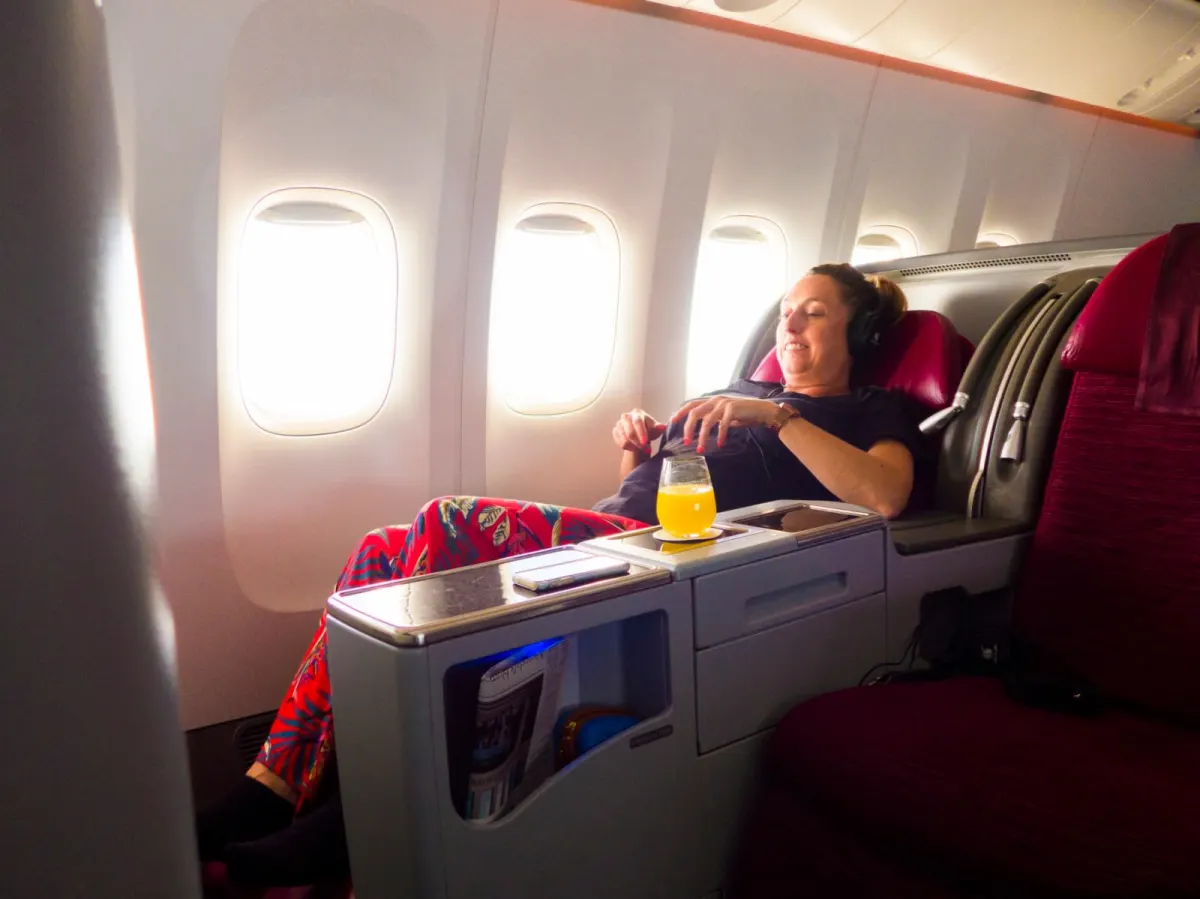
A growing divide in Premium Economy offerings is highlighted by the contrast between Emirates' 'business light' product and Lufthansa's 'economy plus'...
Key Takeaways
- •Highlights a growing quality gap between 'Business Light' and 'Economy Plus' style Premium Economy cabins.
- •Compares Emirates' Premium Economy with 40-inch pitch and dedicated service to Lufthansa's 39-inch pitch Allegris.
- •Notes Premium Economy is the most profitable cabin per square centimeter, driving airline investment.
- •Underscores the need for passengers to research specific airline offerings as product standards vary widely.
A significant divergence is emerging in the international Premium Economy (PE) market, creating a wide gap in quality and passenger experience that belies the single cabin-class name. While the cabin is a key profit center for airlines, the difference between top-tier and lower-tier products is becoming more pronounced, exemplified by the contrasting strategies of carriers like Emirates and Lufthansa.
The discussion gained traction following a social media video from aviation content creator CobyExplanes, which drew over 476,000 views by highlighting this disparity. The analysis underscores a critical trend for travelers: the term "Premium Economy" lacks a standardized definition, requiring passengers to research specific airline products before purchasing an upgrade.
According to industry analysis from Runway Girl Network, Premium Economy is the most profitable space on an aircraft by square centimeter. This has fueled heavy investment from carriers globally, but that investment is manifesting in two distinct approaches: a 'Business Light' model with significantly enhanced services, and an 'Economy Plus' model focused primarily on increased legroom.
Emirates vs. Lufthansa: A Tale of Two Cabins
The gap between these two strategies is clearly illustrated when comparing the PE products of Emirates and Lufthansa. Emirates has positioned its PE cabin as a true step-up from coach, bordering on a business-class experience.
Emirates' official specifications confirm its A380 PE seats offer a generous hard product, including cream leather recliners with up to 40 inches of pitch and a width of 19.5 inches. Crucially, the experience is enhanced by a distinct 'soft product,' including upgraded menus, real glassware, amenity kits, and a dedicated cabin crew. The cabin is physically separated from economy, providing a quieter and more exclusive environment.
In contrast, Lufthansa's new Allegris Premium Economy, while still an upgrade, hews closer to an 'Economy Plus' offering. The seats feature 39 inches of pitch and 19 inches of width. However, the service, amenities, and food are largely aligned with the standard economy cabin. A key design choice in the Allegris cabin was the omission of a physical curtain or divider, separating PE from economy with only a transparent panel. This design decision contributed to certification delays with the European Union Aviation Safety Agency (EASA), as the first row of economy seats behind the fixed-shell PE seats required specialized airbag seatbelts to meet CS-25 crashworthiness standards.
Technical Comparison: Emirates PE vs. Lufthansa Allegris PE
| Metric | Emirates Premium Economy | Lufthansa Allegris Premium Economy |
|---|---|---|
| Seat Pitch | Up to 40 inches | 39 inches |
| Seat Width | 19.5 inches | 19 inches |
| Cabin Separation | Dedicated cabin | Shared cabin with transparent divider |
| Soft Product | Upgraded menus and dedicated crew | Standard economy service |
Industry Context and Impact
The divergence in PE products reflects a historical trend. The cabin class was first introduced by carriers like EVA Air and Virgin Atlantic in 1992, establishing a profitable middle ground between Economy and Business. Today's market fragmentation represents the next stage of its evolution. The 'Business Light' approach from Middle Eastern carriers places competitive pressure on legacy European and North American airlines to enhance their own PE soft products or risk being perceived as uncompetitive.
The trend also has a significant impact on the supply chain. Aircraft seat manufacturers like ZIM Aircraft Seating, which produces the Allegris PE seat, are seeing a surge in demand for highly differentiated, fixed-shell products as airlines retrofit their widebody fleets to capitalize on the high-yield PE segment.
What Comes Next
Airlines are moving quickly to implement these new cabin strategies across their fleets. Emirates expects to complete its full fleet retrofit of A380s and 777s with the new Premium Economy cabin by late 2025. Meanwhile, the rollout of the full Allegris cabin concept on newly delivered A350s and 787s for Lufthansa Group is confirmed for completion through 2026.
Why This Matters
For passengers, this development means the value proposition of a Premium Economy ticket is no longer consistent across the industry, making pre-flight research more critical than ever. For airlines, the PE cabin has become a key battleground for differentiation and profitability, forcing carriers to decide whether to position their product as an enhanced economy seat or a pared-down business class experience. This strategic divide will likely deepen as more airlines invest in redefining long-haul comfort.
For in-depth airline coverage and commercial aviation news, omniflights.com delivers timely industry insights. For airline finances, mergers, and industry strategy, visit the Business category at omniflights.com/business.

Written by Hardik Vishwakarma
Co-Founder & Aviation News Editor leading initiatives that improve trust and visibility across the global aviation industry. Covers airlines, airports, safety, and emerging technology.
Visit ProfileYou Might Also Like
Discover more aviation news based on similar topics
KLM Receives First A350-900 De Nachtwacht for Fleet Renewal
KLM Royal Dutch Airlines has received its first Airbus A350-900, named De Nachtwacht, to begin replacing its aging Boeing 777 and Airbus A330 fleet.
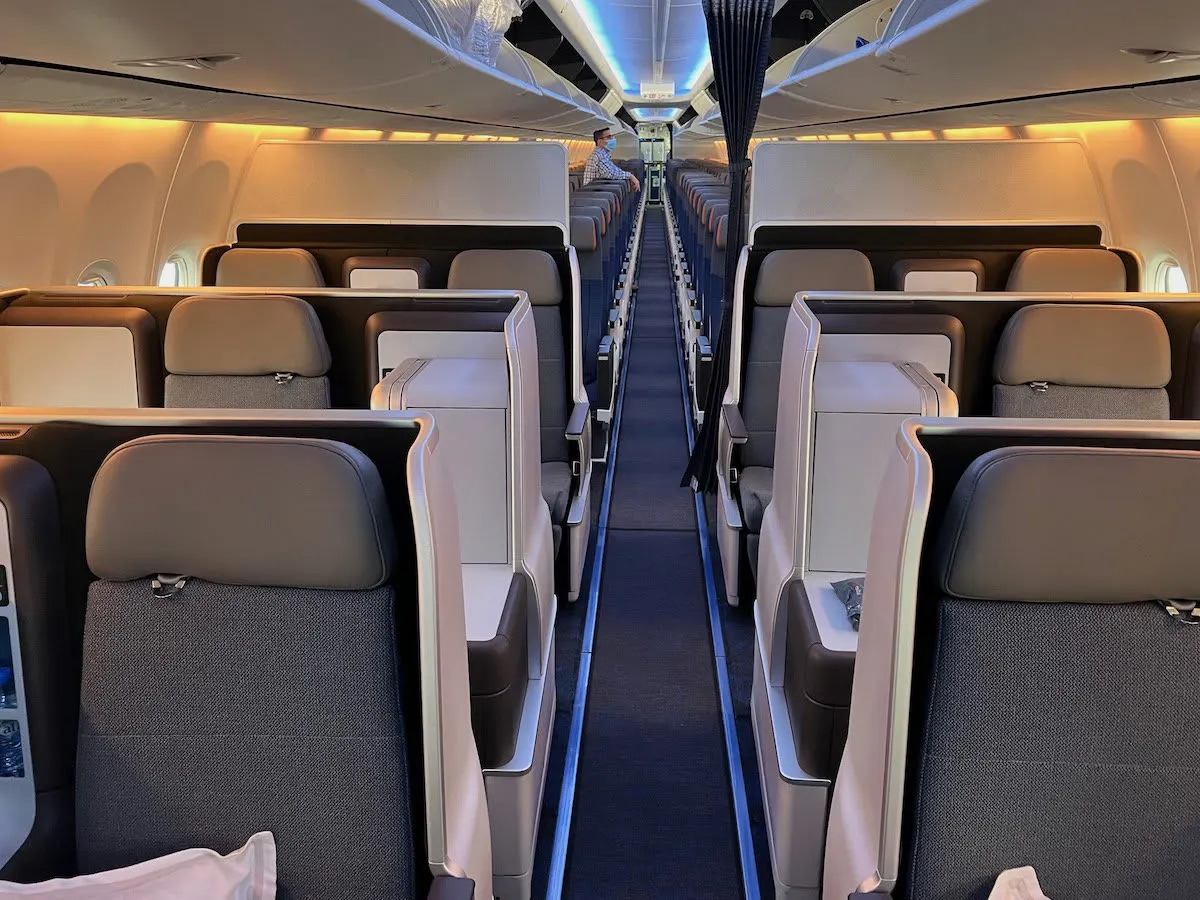
Flydubai Upgrading 21 Boeing 737 MAX 8s to Flat Bed Seats
Flydubai is retrofitting 21 Boeing 737 MAX 8 aircraft with lie-flat business class seats to standardize its premium product by late 2027.
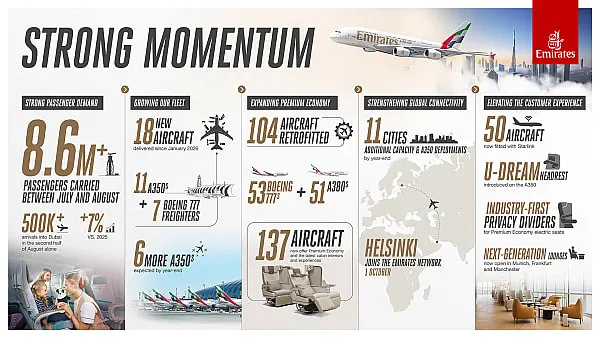
Emirates Winter Booking Momentum Grows Amid Fleet Expansion
Emirates carried 8.6 million passengers this summer and enters winter with strong demand as it accelerates fleet retrofits and network growth.
Air Arabia Consortium Gains AOC for New Dammam Budget Airline
A Saudi GACA-led consortium including Air Arabia has secured an AOC to launch a new budget airline based at Dammam's King Fahd International Airport.
Turkish Airlines Exits Luanda as Angola Hub Struggles
Turkish Airlines dropped its Luanda route as Angola's new airport struggles to attract traffic, handling only 756,028 passengers in 2025.
Red Sea Airlines Leases Two 737 MAX 8s for 2027 Expansion
Red Sea Airlines signed a lease for two Boeing 737 MAX 8 aircraft from SMBC Aviation Capital, arriving in 2027 to support its 14-aircraft fleet goal.