Potomac TRACON Odor Triggers Massive Washington DC Ground Stop

Aviation News Editor & Industry AnalystAviation News Editor & Industry Analyst delivering clear coverage for a worldwide audience.
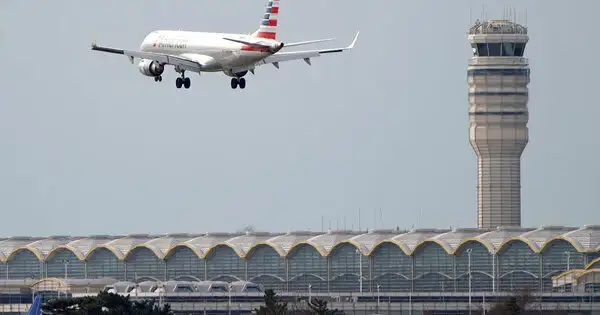
An overheated circuit board at Potomac TRACON caused a ground stop at four DC-area airports, leading to hundreds of flight delays and cancellations.
Key Takeaways
- •Triggered by an overheated circuit board at the Potomac TRACON facility.
- •Halted operations at four major airports: DCA, IAD, BWI, and RIC.
- •Caused over 136 cancellations and 300 delays at Reagan National alone.
- •Exposed critical vulnerabilities in centralized air traffic control infrastructure.
Air traffic across the Washington, D.C. metropolitan area was brought to a standstill on Friday after a chemical odor at a critical air traffic control facility forced an evacuation and a sweeping ground stop. The disruption stemmed from a single overheated circuit board at the Potomac Terminal Radar Approach Control (TRACON) facility in Warrenton, Virginia. The incident led to major operational breakdowns at four key airports, causing widespread delays and cancellations that impacted thousands of travelers.
The Federal Aviation Administration (FAA) issued the ground stop directive for Ronald Reagan Washington National Airport (DCA), Washington Dulles International Airport (IAD), Baltimore-Washington International Airport (BWI), and Richmond International Airport (RIC) after staff at the Potomac TRACON reported a strong chemical smell. Emergency services, including a Hazardous Materials (HAZMAT) team, responded to the facility, which manages the region's busy airspace. The source was identified as an overheated circuit board, which was subsequently replaced. Following the incident, over 30 FAA staff members were medically assessed and cleared to return to duty, according to the Fauquier County Fire Rescue System.
Operational Impact and Recovery
The immediate impact on airline operations was severe. According to flight tracking data, Reagan National was the most affected, with 136 flight cancellations and 300 delays. At the peak of the disruption, delays reached 3.5 hours at DCA, 3 hours at IAD, and 2.5 hours at BWI, based on FAA National Airspace System Status reports. The extended time on the ground had a cascading effect on airline crews, with many exceeding their legally mandated work hours under FAA Part 117 Flight and Duty Time Limitations, leading to a secondary wave of cancellations.
In a series of social media posts, US Transportation Secretary Sean Duffy confirmed the event's resolution. "The ground stop is over and operations have resumed," he stated, adding that firefighters had confirmed "no danger to air traffic controllers." While the ground stop was lifted and the facility was cleared for reentry, the recovery process has been gradual. By late Friday night, average delay times across the affected airports had decreased to approximately 90 minutes, according to an FAA Command Center Advisory. The disruption's effects on flight schedules are expected to continue through the weekend.
Technical Analysis and System Vulnerability
The Potomac TRACON shutdown highlights a persistent vulnerability within the national airspace system: the reliance on centralized, critical infrastructure where a single point of failure can trigger a massive regional collapse. The incident demonstrates how a minor technical malfunction—an overheated circuit board—can incapacitate air travel for a major U.S. metropolitan area, affecting multiple airports and airlines simultaneously.
This event is analogous to previous ATC facility shutdowns that exposed similar weaknesses. In September 2014, a deliberately set fire at the Chicago Air Route Traffic Control Center (ARTCC) in Aurora, IL, caused thousands of cancellations over several weeks and prompted FAA reviews of ATC redundancy. More recently, the March 2020 evacuation of the New York TRACON due to a positive COVID-19 case resulted in an immediate ground stop at JFK, LaGuardia, and Newark airports. Both historical precedents underscore how susceptible these centralized nodes are to sudden, unplanned operational shutdowns, whether from technical faults, deliberate acts, or public health emergencies.
What Comes Next
While the immediate crisis has been resolved, airlines and airport authorities are now focused on restoring normal operations. Full schedule recovery at the DC-area airports is expected to be achieved by March 15-16, 2026, as carriers work to reposition aircraft and crews that were displaced by the ground stop. The FAA has not announced a formal investigation into the infrastructure failure, but the incident will likely add to ongoing discussions about the resilience and modernization needs of aging air traffic control facilities.
Why This Matters
This incident serves as a stark reminder of the fragility of the U.S. aviation infrastructure. For airlines, it represents a significant operational and financial disruption from a single, localized equipment failure. For policymakers and the FAA, it reinforces the critical need for investment in system redundancy and modernization to prevent such widespread impacts from single points of failure in the future.
Visit omniflights.com for the latest commercial aviation news and airline industry updates. Follow aviation sustainability efforts, emissions research, and green initiatives in the Environmental section at omniflights.com/environmental.
Written by Ujjwal Sukhwani
Aviation News Editor & Industry Analyst delivering clear coverage for a worldwide audience. Covers flight operations, safety regulations, and market trends with expert analysis.
Visit ProfileYou Might Also Like
Discover more aviation news based on similar topics
Ryanair Flight RK514 Diverts to Birmingham After Emergency
Ryanair flight RK514 diverted to Birmingham Airport on September 13, 2026, following a medical emergency involving a passenger.

Amazon Suspends 21 Air After Fatal Miami 767 Runway Overrun
Amazon has suspended operations with 21 Air following a fatal Boeing 767 runway overrun at Miami International Airport that resulted in five deaths.
FAA Proposes A220 Fuel Line Inspections for US Operators
The FAA issued a proposed directive requiring inspection of motive-flow fuel lines on 13 US-registered Airbus A220s to prevent potential leaks.
NATS Denies Military Jet Role in UK ATC Outage
The UK Ministry of Defence denied its aircraft caused a NATS outage that led to over 2,000 flight cancellations and calls for CEO resignation.
21 Air Miami Crash: NTSB Investigates 767 Runway Overrun
A fatal 21 Air Boeing 767 crash at Miami International Airport has triggered an NTSB investigation amid scrutiny of Amazon Air's contract oversight.

Amazon Cargo Plane Crash: 5 Remembered After MIA Excursion
Five cleaning crew members died after an Amazon-contracted Boeing 767 overran the runway at Miami International Airport at 158 knots.