Pakistan Extends Airspace Closure for Indian Flights

Co-Founder & CEOAviation News Editor delivering trusted coverage across the global aviation industry.
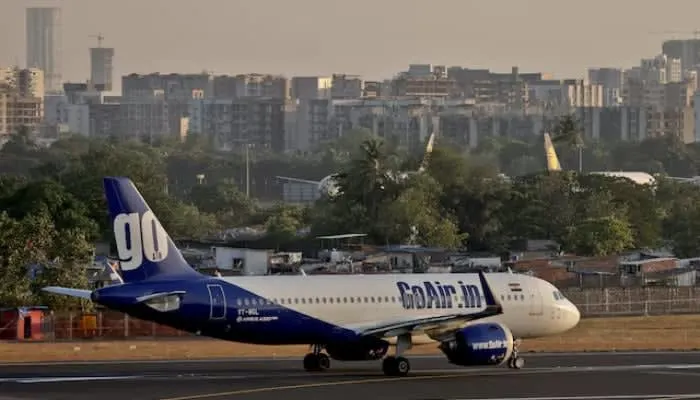
The Pakistan Airports Authority has extended its airspace closure for Indian flights until July 24, 2026, forcing costly reroutes for Air India.
Key Takeaways
- •Pakistan extends airspace closure for Indian aircraft until July 24, 2026.
- •Air India reports a $2.8 billion net loss for the 2025-26 fiscal year.
- •Rerouting costs are estimated at $600 million annually for Indian carriers.
- •Air India is cutting international capacity by 27% due to the ban.
The Pakistan Airports Authority (PAA) has issued a Notice to Airmen (NOTAM) extending the closure of its national airspace to all Indian-registered and operated aircraft until July 24, 2026. This Pakistan airspace closure represents a significant escalation in a geopolitical standoff that began in April 2025, effectively barring Indian flights from utilizing established transit corridors. The restriction forces both commercial and military aircraft to navigate around the region, significantly increasing flight times and operational expenditures for regional carriers.
Financial Impact on Air India
The ongoing Air India financial loss has reached critical levels, with the carrier reporting an approximate net loss of $2.8 billion (3.56 billion SGD) for the 2025-26 fiscal year. According to the Singapore Airlines (SIA) FY2025-26 Annual Report, this downturn is heavily influenced by an estimated $600 million in annual rerouting costs. These expenses are driven by a sharp increase in fuel consumption, with data showing that Air India’s fuel costs have spiked by up to 29% on specific international routes.
Air India CEO Campbell Wilson has publicly characterized the financial burden of these detours as a significant challenge to the airline’s operational viability. To mitigate these mounting losses, the carrier is actively reducing its international capacity by 27%, which includes the planned suspension of seven overseas routes, such as the Delhi-Chicago corridor. The situation has forced investors, including Singapore Airlines—which holds a 25% stake in the Indian carrier—to account for potential indicators of impairment on their holdings.
Geopolitical Airspace Fragmentation
This development highlights a growing industry trend where geopolitical instability leads to the severe fragmentation of global airspace. The current situation mirrors the 2019 Pakistan airspace closure, which resulted in $100 million in losses for Indian carriers over five months. However, the current standoff is more severe in scope and duration. Historically, such closures create a competitive advantage for Middle Eastern hub carriers, which continue to operate through the region while Indian airlines are effectively pushed out of the market.
Technical and Operational Challenges
| Metric | Impact of Current Airspace Ban |
|---|---|
| Annual Rerouting Costs | $600 million vs $100 million (2019) |
| Capacity Reduction | 27% total international reduction |
| Fuel Cost Increase | Up to 29% per affected route |
| Route Suspensions | 7 major overseas routes including Delhi-Chicago |
The Outlook for July 2026
The aviation sector is now tracking the July 24, 2026, expiration date of the current NOTAM. While the PAA has confirmed this timeline, the uncertainty surrounding potential renewals remains high. Air India is reportedly exploring diplomatic avenues to secure alternative transit corridors, such as potential access to Chinese military airspace over Xinjiang, though this remains unconfirmed. Meanwhile, the Directorate General of Civil Aviation (DGCA) of India maintains a reciprocal ban on Pakistani-registered aircraft, ensuring that the current impasse persists as a stable, albeit costly, operational reality for both nations.
Why This Matters for Global Aviation
This closure signals a broader risk to the viability of ultra-long-haul routes that rely on efficient geography. For stakeholders, the situation demonstrates how quickly sovereign airspace decisions can undermine the financial foundations of major flag carriers. As Indian airlines reduce their global footprint, the resulting void in direct connectivity to North America and Europe is expected to be absorbed by international competitors, potentially altering the long-term competitive landscape of the South Asian aviation market.
Frequently Asked Questions
- Why has Pakistan closed its airspace to Indian flights?
- The closure is part of an ongoing geopolitical standoff that began in April 2025. The Pakistan Airports Authority has issued a NOTAM extending this restriction until July 24, 2026.
- What is the financial impact of the airspace ban on Air India?
- The ban has contributed to a $2.8 billion net loss for Air India in the 2025-26 fiscal year, driven by approximately $600 million in annual rerouting costs due to increased fuel consumption.
Access up-to-date commercial aviation news and airline industry developments via omniflights.com. Get the latest updates on major hubs, regional terminals, and airport operations via the Airports section at omniflights.com/airports.
Written by Hardik Vishwakarma
Co-Founder & Aviation News Editor leading initiatives that improve trust and visibility across the global aviation industry. Covers airlines, airports, safety, and emerging technology.
Visit ProfileYou Might Also Like
Discover more aviation news based on similar topics
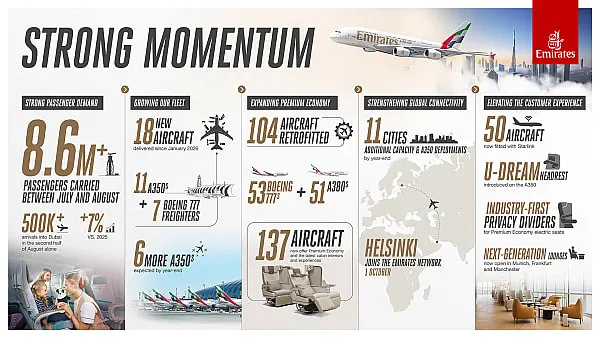
Emirates Winter Booking Momentum Grows Amid Fleet Expansion
Emirates carried 8.6 million passengers this summer and enters winter with strong demand as it accelerates fleet retrofits and network growth.
Air Arabia Consortium Gains AOC for New Dammam Budget Airline
A Saudi GACA-led consortium including Air Arabia has secured an AOC to launch a new budget airline based at Dammam's King Fahd International Airport.
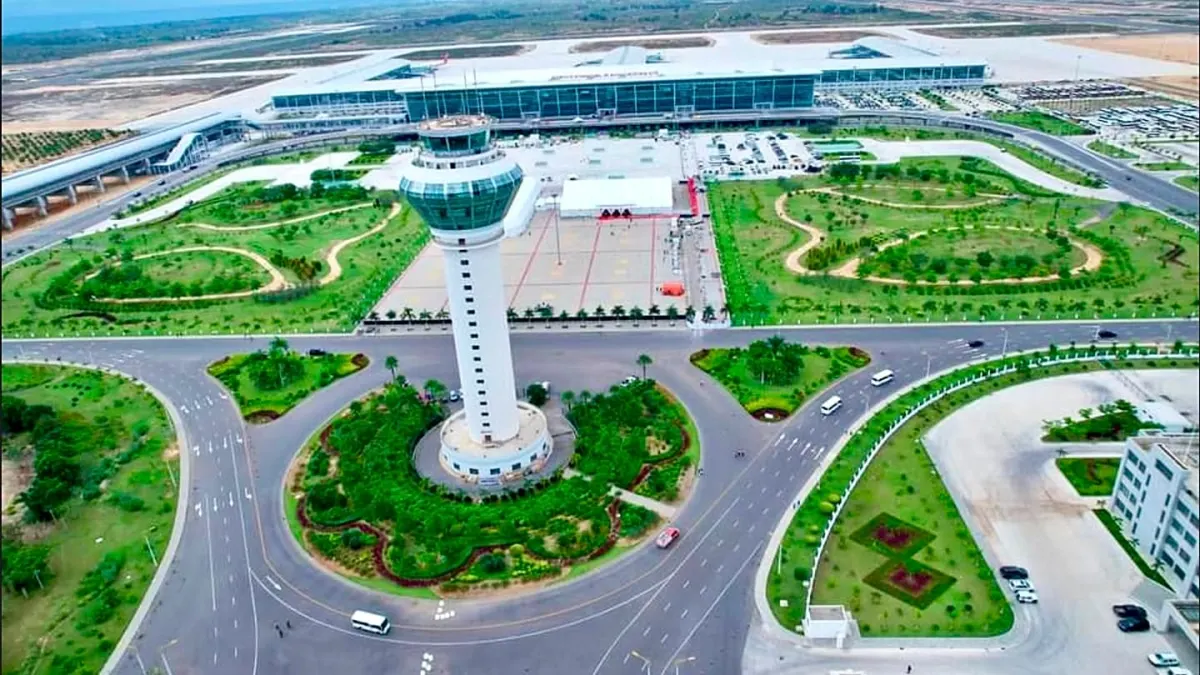
Turkish Airlines Exits Luanda as Angola Hub Struggles
Turkish Airlines dropped its Luanda route as Angola's new airport struggles to attract traffic, handling only 756,028 passengers in 2025.

Red Sea Airlines Leases Two 737 MAX 8s for 2027 Expansion
Red Sea Airlines signed a lease for two Boeing 737 MAX 8 aircraft from SMBC Aviation Capital, arriving in 2027 to support its 14-aircraft fleet goal.
Avelo CEO Warns Airfares May Rise on Jet Fuel Price Spikes
Avelo Airlines CEO Andrew Levy warns that rising fuel costs may force fare increases as global jet fuel prices reach $171.01 per barrel.
IndiGo, Air India Battle for Mumbai-Delhi Route Dominance
IndiGo and the Air India group are competing for dominance on the Mumbai-Delhi air route, which saw 13.9 percent capacity growth this September.