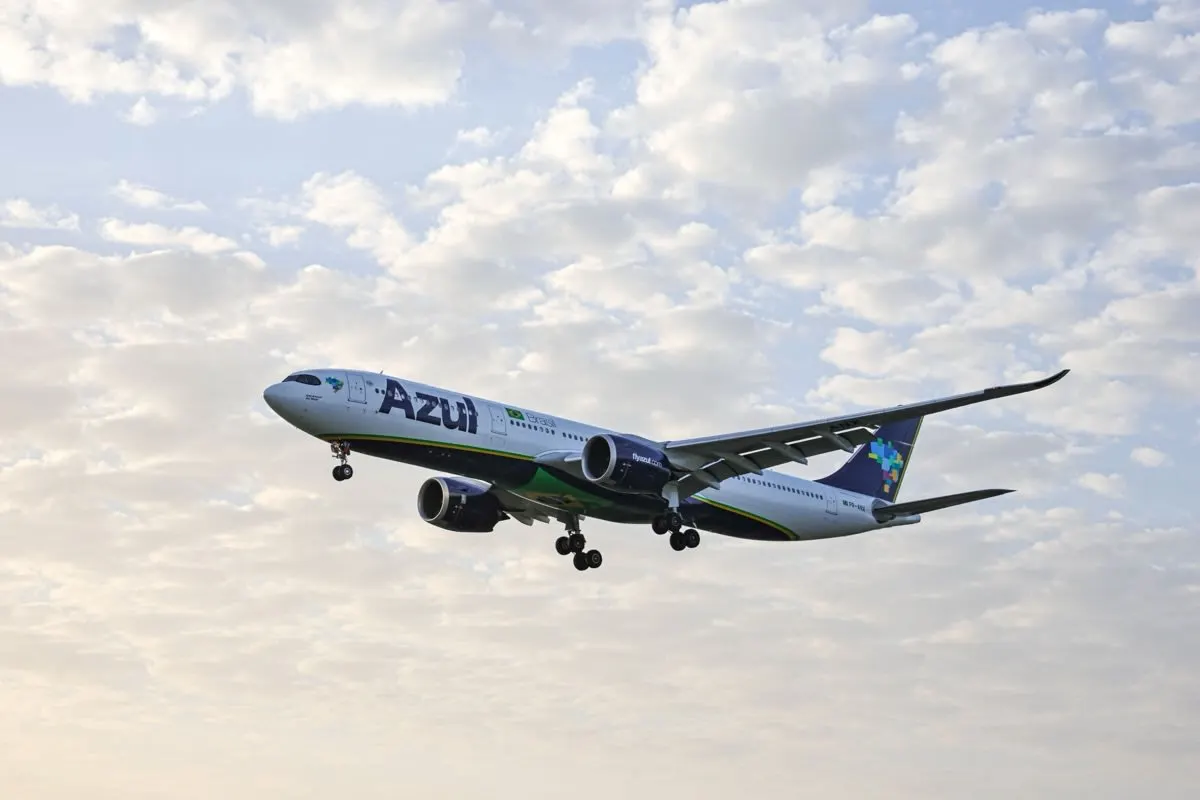
Oil Price Volatility Boosts Urgency for Sustainable Aviation Fuel Production

Recent oil price volatility highlights the urgent need to scale Sustainable Aviation Fuel production, though high costs and policy issues persist.
Key Takeaways
- •Surged 56% to $3.95 a gallon for spot jet fuel in March 2026, increasing airline operating costs.
- •Accounts for only 0.6% of global jet fuel consumption in 2025 despite production doubling from 2024.
- •Highlights conflicting regulatory approaches between U.S. incentives (IRA) and EU mandates (ReFuelEU).
- •Projects SAF production growth to slow from 100% in 2025 to just 26% in 2026 due to bottlenecks.
Recent volatility in conventional jet fuel markets is intensifying pressure on the aviation industry to accelerate the production of Sustainable Aviation Fuel (SAF). A 56% surge in spot jet fuel prices to $3.95 a gallon in early March 2026, driven by geopolitical instability, has underscored the economic vulnerability of airlines reliant on fossil fuels. This price shock provides a stark economic case for SAF, but significant production, cost, and policy hurdles remain, threatening to slow the industry's energy transition.
The financial impact on carriers is immediate and severe. According to a March 2026 internal memo, United Airlines faces an estimated $11 billion in additional annual expenses if the recent price spikes persist. United Airlines CEO Scott Kirby warned that ticket prices may need to rise by 20% to offset the increase. In response to the surge, airlines globally have begun trimming up to 5% of planned capacity on unprofitable routes to mitigate financial losses, directly affecting passengers through reduced schedules and higher fares.
SAF Production Lags Amid Surging Costs
Despite the clear need for an alternative, the supply of Sustainable Aviation Fuel (SAF), a jet fuel alternative made from renewable sources, remains critically low. According to the International Air Transport Association (IATA), global SAF production is expected to reach 1.9 million tonnes in 2025. While this doubles the 1 million tonnes from 2024, it still represents just 0.6% of the industry's total jet fuel consumption.
The cost premium for this limited supply is substantial. IATA data shows airlines paid a $2.9 billion premium for SAF in 2025. More concerning is the projected slowdown in production growth, which is expected to fall from a 100% year-over-year increase in 2025 to just 26% in 2026, yielding only 2.4 million tonnes. This supply bottleneck is forcing many airlines to reconsider their voluntary commitments to use 10% SAF by 2030.
Conflicting Regulatory Approaches
The global policy landscape for SAF is fragmented, creating further challenges. The European Union's ReFuelEU Aviation regulation mandates a minimum 2% SAF blend starting in 2025, a figure set to rise to 70% by 2050. IATA has criticized this approach, with Director General Willie Walsh stating, "If the goal of SAF mandates was to slow progress and increase prices, policymakers knocked it out of the park." The argument is that mandates in a supply-constrained market drive up compliance costs without guaranteeing production increases.
In contrast, the United States has focused on supply-side incentives through the Inflation Reduction Act (IRA). The IRA's 45Z Clean Fuel Production Tax Credit provides producers up to $1.75 per gallon, a policy aimed at stimulating domestic manufacturing as part of the broader Sustainable Aviation Fuel Grand Challenge. The United Kingdom has also implemented a 2% mandate for 2025, which industry bodies note has led to regional price spikes.
Historical Parallels and Technical Realities
The current situation mirrors previous energy crises. In mid-2008, a crude oil price spike to $147 per barrel drove multiple airlines into bankruptcy and served as a catalyst for early investments in biofuels and more fuel-efficient aircraft. This historical precedent demonstrates that extreme price volatility can force structural changes in the industry's approach to fuel dependency.
Technically, SAF offers a significant environmental benefit over its fossil-based counterpart, but at a steep cost. The most common production pathway (HEFA-SPK) is a drop-in fuel compatible with existing aircraft and infrastructure.
Sustainable Aviation Fuel (HEFA-SPK) vs. Conventional Jet-A
| Metric | Sustainable Aviation Fuel (HEFA-SPK) | Conventional Jet-A |
|---|---|---|
| Lifecycle GHG Emissions | Up to 80% reduction | Baseline |
| Energy Density | ~44 MJ/kg | 42.8 MJ/kg |
| Price Premium | 2x to 5x higher | Baseline |
What Comes Next
The industry faces several critical milestones that will shape the future of SAF. The crucial supply-side tax credits from the U.S. Inflation Reduction Act are set to expire at the end of 2027, creating uncertainty for producers planning long-term investments. Following that, the European Union's ReFuelEU mandate will introduce a specific requirement for Electro-Sustainable Aviation Fuel (e-SAF) in 2030, adding another layer of complexity for fuel suppliers and airlines operating in the region.
Why This Matters
The convergence of extreme oil price volatility and a lagging SAF supply chain places the airline industry at a critical crossroads. The current crisis highlights that SAF is not merely an environmental goal but a strategic imperative for achieving energy and economic security. How governments choose to balance production incentives against demand mandates will directly determine the pace of the industry's decarbonization and its resilience to future energy shocks.
Frequently Asked Questions
- How much more expensive is Sustainable Aviation Fuel (SAF) than conventional jet fuel?
- Sustainable Aviation Fuel (SAF) currently costs two to five times more than conventional Jet-A fuel. In 2025, airlines paid a collective premium of $2.9 billion for the limited supply available, according to data from the International Air Transport Association.
- What is the difference between US and EU policies for promoting SAF?
- The U.S. uses a supply-side incentive approach through the Inflation Reduction Act, offering tax credits directly to producers to stimulate manufacturing. In contrast, the European Union's ReFuelEU Aviation policy uses a demand-side mandate, legally requiring airlines to blend a minimum percentage of SAF into their fuel supply, which increases over time.
- How much of the world's jet fuel is SAF?
- According to IATA, Sustainable Aviation Fuel accounted for only 0.6% of total global jet fuel consumption in 2025. This share is projected to rise to just 0.8% in 2026 as production growth slows.
Access up-to-date commercial aviation news and airline industry developments via omniflights.com. For detailed airline coverage, route changes, and fleet moves, explore the Airlines section at omniflights.com/airlines.

Written by Hardik Vishwakarma
Co-Founder & Aviation News Editor leading initiatives that improve trust and visibility across the global aviation industry. Covers airlines, airports, safety, and emerging technology.
Visit ProfileYou Might Also Like
Delta TechOps Targets Doubling MRO Revenue
Delta Cuts 2026 Profit Forecast Amid $6B Fuel Cost Surge
Avolon Orders 250 Airbus and Boeing Jets for Fleet Growth

Avolon Orders 250 Boeing and Airbus Jets in Q4 2026 Deal
Southwest Evaluates Boeing 787 for Long-Haul International