NTSB Backs Revised House Aviation Safety Bill After DCA Crash

Co-Founder & CEOAviation News Editor delivering trusted coverage across the global aviation industry.
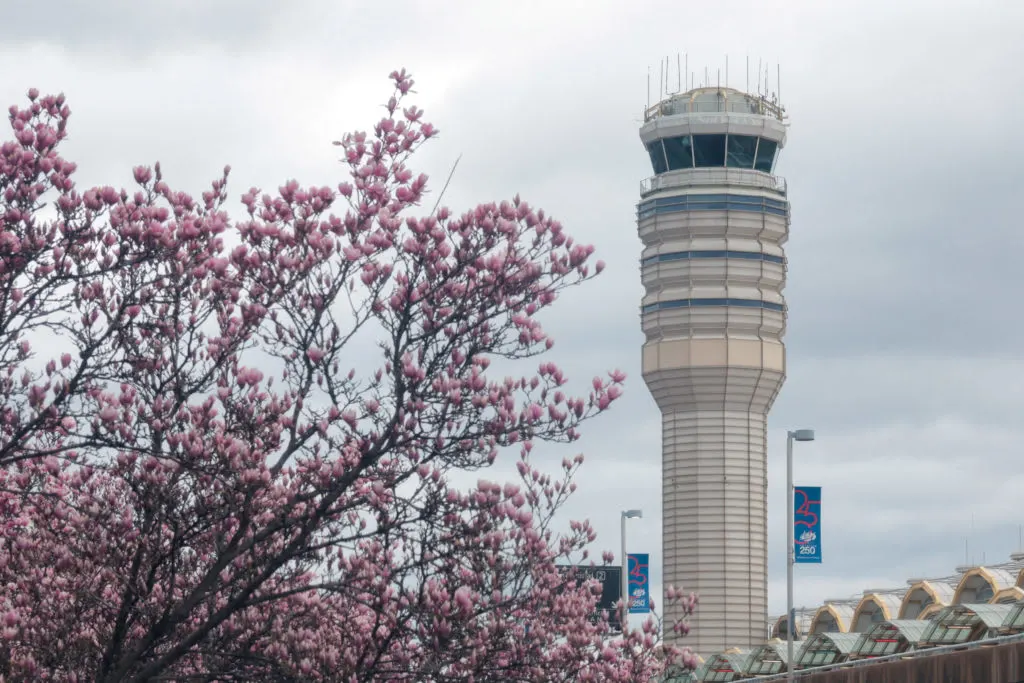
The NTSB now supports a revised House aviation safety bill following the 2025 DCA midair collision, but victims' families demand stricter reform timelines.
Key Takeaways
- •NTSB endorses revised House safety bill after initial criticism of its scope.
- •Legislation mandates ADS-B In technology to prevent midair collisions in busy airspace.
- •Families of 67 victims killed in the 2025 DCA crash advocate for stricter timelines.
- •Reforms could limit Department of Defense waivers for active aircraft tracking systems.
The National Transportation Safety Board (NTSB) has endorsed a revised version of the House aviation safety bill, a significant legislative effort prompted by the fatal midair collision near Washington, D.C. in 2025. The bill aims to mandate new collision avoidance technology. While the NTSB's support marks a crucial step forward, families of the 67 victims killed in the crash continue to advocate for stricter, non-negotiable timelines for implementation, arguing that discretionary deadlines could lead to dangerous delays.
The proposed legislation, known as the Alert Act, centers on preventing a recurrence of the January 29, 2025, tragedy. On that day, PSA Airlines Flight 5342, operating as an American Eagle flight, collided with a U.S. Army Black Hawk helicopter during a circling approach to Ronald Reagan Washington National Airport (DCA). The NTSB's preliminary report confirmed that 67 people were killed—64 on the commercial jet and 3 on the helicopter. Flight data recorder analysis showed the commercial jet was at an altitude of approximately 325 feet when the collision occurred. The incident has intensified scrutiny on the integration of military and civilian aircraft in congested airspace, particularly regarding tracking and situational awareness technologies.
Legislative and Regulatory Push
The core of the House bill and its Senate companion, the ROTOR Act, is a mandate for aircraft operating in busy airspace to be equipped with Automatic Dependent Surveillance-Broadcast In (ADS-B In). This technology allows pilots to see real-time traffic information from other aircraft on cockpit displays, a significant enhancement over the currently mandated ADS-B Out system, which only broadcasts an aircraft's position to air traffic control. According to NTSB records, the agency has been formally recommending locator systems like ADS-B In for aircraft near busy airports since 2008.
NTSB Chairwoman Jennifer Homendy, who initially criticized an earlier version of the bill as "watered down," stated that the revised text addresses the agency's primary safety recommendations. However, the families of the victims remain unconvinced that the bill goes far enough. In a public statement, they noted, "Any safety requirement that routes implementation through negotiated processes, administrative discretion, or multi-step rulemaking creates opportunities for delay that cost lives." Their position is that only strict statutory deadlines, similar to those in a failed Senate bill by Senators Ted Cruz and Maria Cantwell, can guarantee timely adoption of the life-saving technology.
The legislation also targets Section 373 of the National Defense Authorization Act, which permits the Pentagon to issue waivers for aviation safety requirements. This provision is under review as it may have allowed the military helicopter involved in the DCA collision to operate without an active locator system during its mission.
Industry and Stakeholder Impact
The proposed mandate for ADS-B In will have significant financial and operational consequences across the aviation sector. Commercial Airlines will face considerable capital expenditure to retrofit existing fleets with the necessary receivers and integrated cockpit displays. For the U.S. Department of Defense, the reforms could impose strict limitations on training flights that currently operate with disabled transponders in civilian Class B airspace, forcing changes to operational protocols to ensure national security readiness is maintained without compromising public safety. Conversely, Avionics Manufacturers are positioned to benefit from a surge in demand for ADS-B In equipment and related integration services.
Alternative perspectives highlight potential challenges. Aviation industry lobbyists have raised concerns that rigid statutory timelines could ground aircraft if supply chain constraints prevent them from meeting upgrade deadlines. The Department of Defense has argued that some military training requires operating without active tracking to simulate combat scenarios, a necessity for national security.
Technical Context and Historical Precedents
The debate over ADS-B In reflects a familiar pattern in aviation safety, where catastrophic events often serve as the catalyst for regulatory change. The situation mirrors the aftermath of the 1986 Aeroméxico Flight 498 midair collision over Cerritos, California. That incident, which also involved a small aircraft and a commercial jet, directly led to the Federal Aviation Administration mandating Traffic Collision Avoidance System (TCAS) II on commercial aircraft and Mode C transponders in Class B airspace. More recently, the families of victims from the 2009 Colgan Air Flight 3407 crash successfully lobbied Congress for the Airline Safety and Federal Aviation Administration Extension Act of 2010, which established the 1,500-hour rule for first officers. This history of family-driven advocacy sets a powerful precedent for the current push by the DCA crash victims' families.
ADS-B Out vs. ADS-B In
| Metric | ADS-B Out | ADS-B In |
|---|---|---|
| Primary Function | Broadcasts aircraft position to ATC | Receives data to display surrounding traffic to pilots |
| FAA Mandate Status | Required in most controlled airspace since Jan 2020 | Not universally mandated, proposed in Alert Act |
What Comes Next
The legislative process is moving forward, with several key milestones anticipated. The revised aviation safety bill is expected to face a full vote in the U.S. House of Representatives in Spring 2026. Following that, the bill would move to the U.S. Senate for reconciliation with its version and a subsequent vote, which is expected to occur in mid-to-late 2026. The final language concerning implementation timelines will be a critical point of negotiation and will determine the pace of safety upgrades across the U.S. national airspace system.
Why This Matters
This legislation represents a critical juncture for U.S. aviation safety. Its passage will determine the speed at which next-generation collision avoidance technology is adopted across commercial and military fleets. The outcome will set a lasting precedent for balancing technological advancement, operational cost, military readiness, and the public's demand for the highest possible safety standards in an increasingly crowded sky.
omniflights.com provides comprehensive commercial aviation news covering airlines, aircraft, and airports. For detailed airline coverage, route changes, and fleet moves, explore the Airlines section at omniflights.com/airlines.
Written by Hardik Vishwakarma
Co-Founder & Aviation News Editor leading initiatives that improve trust and visibility across the global aviation industry. Covers airlines, airports, safety, and emerging technology.
Visit ProfileYou Might Also Like
Discover more aviation news based on similar topics

FAA Faces $3.5 Billion Shortfall in ATC Modernization
FAA Administrator Bryan Bedford reported a $3.5 billion shortfall for the Brand New Air Traffic Control System, totaling $16 billion for Phase One.
FAA Pauses Flights into LAX Due to Staffing Shortages
The FAA issued a temporary ground stop for flights bound for LAX on Monday morning due to staffing shortages at the Southern California TRACON.

FAA Proposes Ending Overland Supersonic Flight Ban
The FAA has proposed a new performance-based noise standard to replace the 1973 ban on overland supersonic flight, enabling future commercial travel.

DOT Rule Exempts Airlines From Cyberattack Delay Costs
Starting October 19, 2026, the DOT will allow airlines to withhold meal and hotel vouchers for delays caused by cyberattacks and nine other events.

Wizz Air, Ryanair Demand NATS Reform After ATC Failure
Wizz Air and Ryanair are calling for urgent NATS reform after a September 8 system failure caused over 1,000 flight cancellations across the UK.

US Treasury Iran Sanctions Target 27 Airlines, Mahan Air
The U.S. Treasury sanctioned 36 entities, including 27 Iranian airlines, to disrupt illicit procurement networks used by the Iranian government.