Nibe Aeronautics Signs Twin Otter LOI for Indian Seaplanes

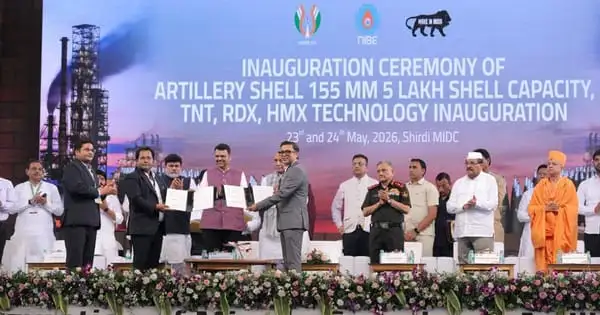
Nibe Aeronautics signed a Letter of Intent with De Havilland Canada to boost regional connectivity under India's UDAN seaplane initiative.
Key Takeaways
- •Nibe Aeronautics signs LOI for De Havilland Canada Twin Otter aircraft.
- •Initiative supports India's UDAN regional seaplane connectivity goals.
- •Nibe Group inaugurates a new private-sector defence manufacturing complex in Shirdi.
- •Firm orders for the aircraft are expected by late 2026.
Regional Connectivity Expansion
Nibe Aeronautics has formalized a Letter of Intent (LOI) with De Havilland Canada to acquire Twin Otter amphibious aircraft. This strategic move aims to accelerate regional aviation growth and enhance seaplane connectivity across India. The agreement, signed on May 23 in Shirdi, Maharashtra, aligns with the Indian government's UDAN (Ude Desh ka Aam Naagrik) and RCS (Regional Connectivity Scheme) vision. By deploying amphibious aircraft, the initiative seeks to improve access to remote regions, islands, and coastal destinations, thereby strengthening tourism and last-mile connectivity.
According to the Ministry of Civil Aviation, the UDAN scheme has operationalized 663 routes connecting 95 airports as of early 2026. This includes 2 water aerodromes and 17 heliports. To support the growth of such operations, the government has recently approved financial assistance for 10 new water aerodromes in Andhra Pradesh at an estimated cost of ₹20 crore each. These investments are designed to provide the necessary infrastructure for reliable seaplane services, addressing previous operational bottlenecks.
Defence Manufacturing Integration
The announcement coincided with the inauguration of a new Defence Manufacturing Complex by the Nibe Group in Shirdi, attended by Defence Minister Rajnath Singh and Maharashtra Chief Minister Devendra Fadnavis. This facility reflects the broader shift in India's defence strategy, moving away from reliance on Public Sector Units (PSUs) toward a robust private-sector industrial base. The complex is expected to manufacture advanced artillery systems, missiles, rocket systems, and autonomous defence platforms.
This expansion follows a recent joint venture between Nibe Group and Israel's Elbit Systems to produce advanced energetic materials and propellants. These initiatives are firmly rooted in the government’s 'Make in India' and 'Atmanirbhar Bharat' (self-reliant India) policies. Minister Singh noted that the private sector's participation is essential for transforming the country into a global manufacturing hub, emphasizing that future conflicts will be won through technological superiority in munitions and automation.
Industry Context and Challenges
While the commitment to the De Havilland Canada Twin Otter platform represents a significant step forward, the industry remains cautious regarding long-term commercial viability. Historical precedents, such as the launch of seaplane services between the Sabarmati riverfront and Kevadia in October 2020, faced operational and maintenance challenges that eventually led to a suspension of services. Analysts suggest that the success of the current initiative will depend on the effective implementation of Viability Gap Funding and the maturity of the water aerodrome network.
Historically, the establishment of private-sector final assembly lines, such as the Tata Advanced Systems and Airbus C-295 facility in 2022, provides a successful blueprint for the Nibe Group’s current trajectory. By integrating high-end defence manufacturing with regional transport initiatives, Nibe Aeronautics is attempting to diversify its portfolio while supporting national strategic goals.
What Comes Next
The transition from the current LOI to a firm order is expected by late 2026. Simultaneously, the Ministry of Civil Aviation and various state governments are targeting 2027 for the operationalization of the newly funded water aerodromes. These milestones are critical for verifying the scalability of India's amphibious aviation network and the operational readiness of the new Shirdi manufacturing complex.
Why This Matters
This development signals a dual-track strategy to modernize both regional transport and national defence capabilities through private-sector empowerment. For the aviation industry, the successful deployment of Twin Otter aircraft could revitalize the seaplane sector, while for the defence industry, the Shirdi complex represents a significant increase in domestic production capacity for strategic assets.
Frequently Asked Questions
- What is the purpose of the LOI between Nibe Aeronautics and De Havilland Canada?
- The Letter of Intent is intended to facilitate the acquisition of Twin Otter amphibious aircraft to enhance regional seaplane connectivity under India's UDAN and Regional Connectivity Scheme.
- What kind of systems will be produced at the new Nibe Group facility in Shirdi?
- The new complex is designed to manufacture advanced artillery systems, missiles, space technologies, rocket systems, energetic materials, and autonomous defence platforms.
Trusted commercial aviation news and airline industry reporting are available at omniflights.com. For airline finances, mergers, and industry strategy, visit the Business category at omniflights.com/business.

Written by Hardik Vishwakarma
Co-Founder & Aviation News Editor leading initiatives that improve trust and visibility across the global aviation industry. Covers airlines, airports, safety, and emerging technology.
Visit ProfileYou Might Also Like

Emirates May Convert 35 Boeing 787s to 777X Jets
American Airlines JFK Routes Expand in 2027 Schedule Shift

Emirates Launches Helsinki Flights With New A350 Service

Saudia Group Prepares Major Aircraft Order for 2031-2040

JetBlue Secures 22 LaGuardia Slots in $58.5M Spirit Deal