NASA X-59 Completes First Supersonic Test Flight

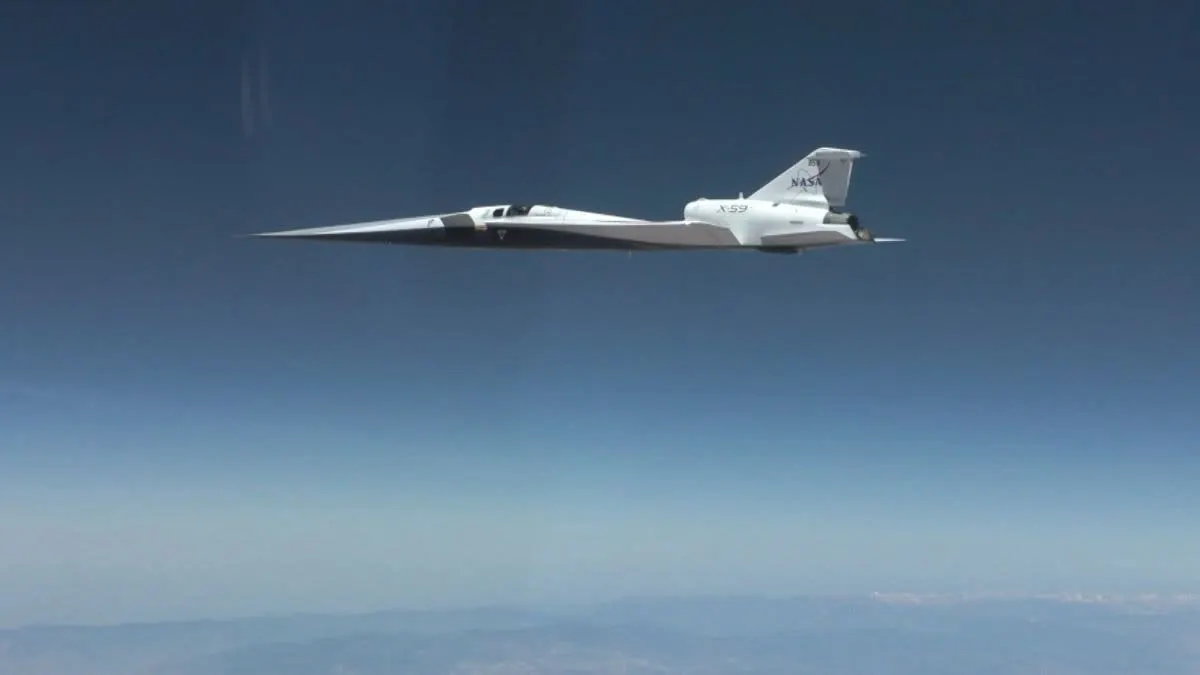
NASA successfully flew the X-59 at Mach 1.1, marking a key milestone in the Quiet SuperSonic Technology mission to enable future commercial travel.
Key Takeaways
- •NASA X-59 successfully broke the sound barrier at Mach 1.1 on June 5, 2026.
- •The experimental aircraft is designed to reduce sonic booms to 75 PLdB.
- •Data will support an FAA review to potentially lift the overland supersonic ban.
- •Future test flights aim for a cruise speed of Mach 1.4 by late June 2026.
A New Era for Supersonic Flight
NASA has officially entered a new era of aviation. On June 5, 2026, the experimental X-59 aircraft successfully broke the sound barrier for the first time, marking a critical milestone in the agency's Quiet SuperSonic Technology (QueSST) mission. The test flight, conducted out of Edwards Air Force Base, saw the aircraft reach a speed of Mach 1.1 (approximately 713 mph) at an altitude of 43,400 feet. The mission lasted 81 minutes and provided essential data on the aircraft's ability to transition through the sound barrier without generating a traditional, disruptive sonic boom.
The Science of the Quiet Thump
The Quesst mission milestone represents the culmination of years of aerodynamic research by NASA and Lockheed Martin. The X-59 measures 99.7 feet in length, with a uniquely engineered nose section that accounts for nearly one-third of its total length. This design is specifically intended to break up shock waves that typically coalesce into a loud sonic boom. By dispersing these waves, the aircraft is engineered to produce a "sonic thump" of less than 75 Perceived Level decibels (PLdB), a significant reduction compared to the 105 PLdB boom produced by the historic Concorde.
According to NASA's official mission report, this acoustic signature is designed to be barely audible to ground observers. The aircraft utilizes an eXternal Vision System (XVS)—a high-definition camera and display setup—to replace the traditional forward-facing cockpit window, allowing for a more aerodynamic nose profile that would be impossible with standard pilot visibility requirements.
Regulatory and Industry Implications
For commercial supersonic travel, the X-59 is a linchpin for policy change. Currently, 14 CFR Part 91.817 enforced by the Federal Aviation Administration (FAA) prohibits civil aircraft from operating at speeds greater than Mach 1 over land in the United States. The data collected by the X-59 is intended to convince regulators to transition from this speed-based prohibition to a noise-based standard. NASA's Quesst mission portal notes that this shift is essential for companies like Boom Supersonic, which are currently restricted to over-water routes for their future commercial fleets.
However, the path to adoption faces challenges. Environmental advocacy groups have raised concerns regarding the high fuel consumption and carbon emissions associated with supersonic flight. Furthermore, some aviation safety analysts have questioned whether the reliance on the XVS for pilot situational awareness will present new hurdles during the certification process for commercial applications.
X-59 vs. Concorde: Key Specifications
| Metric | NASA X-59 | Aérospatiale/BAC Concorde |
|---|---|---|
| Cruising Speed | Mach 1.4 | Mach 2.04 |
| Acoustic Signature | <75 PLdB (thump) | 105-110 PLdB (boom) |
| Length | 99.7 ft | 202.3 ft |
Analyzing the Supersonic Trajectory
This flight follows the historical precedent set by the Bell X-1, which first broke the sound barrier in 1947 in the same Mojave Desert airspace. While the Concorde proved the technical viability of supersonic transport in the 1970s, its commercial failure was largely driven by the inability to fly over land due to noise complaints. The X-59’s success in modulating the shockwave signature suggests that the industry is moving toward a noise-standard paradigm. If the upcoming test phases confirm these acoustic levels, it could accelerate the development of a new class of supersonic transports, effectively ending the decades-old ban on overland supersonic flight.
Next Steps for the QueSST Program
Following the successful Mach 1.1 test, NASA and Lockheed Martin are expected to push the aircraft to its target cruise speed of Mach 1.4 (approximately 925 mph) at 55,000 feet by late June 2026. Following these performance tests, the program will transition into Phase 3 in 2027, which involves community overflight noise testing. These flights will gather the real-world acoustic data required by the FAA and the International Civil Aviation Organization (ICAO). A regulatory decision regarding the potential lifting of the overland supersonic flight ban is anticipated by 2028.
Why This Matters for Aviation Stakeholders
For commercial aerospace manufacturers and operators, the successful demonstration of the X-59 signals a potential expansion of the addressable market for supersonic routes. If the FAA adopts a noise-based standard, it would fundamentally alter the business case for next-generation supersonic airliners, making trans-continental supersonic travel a viable reality. For the FAA and ICAO, the data collected over the next two years will serve as the primary evidence base for setting global noise standards for future supersonic aircraft.
Frequently Asked Questions
- What is the primary goal of NASA's X-59 QueSST mission?
- The primary goal of the X-59 QueSST mission is to demonstrate that supersonic flight can be achieved with a quiet 'thump' rather than a disruptive sonic boom. This data is intended to help regulators replace existing speed-based bans on overland supersonic flight with noise-based standards.
- How does the X-59 achieve its reduced noise signature?
- The X-59 achieves its reduced noise signature through its unique 99.7-foot-long design, which features an elongated nose that breaks up shock waves. Additionally, it uses an eXternal Vision System (XVS) instead of a forward-facing cockpit window to maintain an aerodynamic shape that minimizes acoustic disturbances.
omniflights.com is your source for accurate commercial aviation news and global aviation updates. For reporting on UAP sightings, investigations, and aviation-related encounters, see the UAPs section at omniflights.com/uaps.

Written by Hardik Vishwakarma
Co-Founder & Aviation News Editor leading initiatives that improve trust and visibility across the global aviation industry. Covers airlines, airports, safety, and emerging technology.
Visit ProfileYou Might Also Like

Lockheed Martin Proposes 10-Year F-35 Production Framework
FAA Certifies Boeing 737 MAX 10 for Service

FAA Grants BETA Market Survey Rights for ALIA A250 eVTOL

FAA Certifies Boeing 737 MAX 10
FAA Returns Certification Authority to Boeing for 737 MAX