NAMA Delays Mobile Tower at Lagos Airport After Terminal Fire

Aviation News Editor & Industry AnalystAviation News Editor & Industry Analyst delivering clear coverage for a worldwide audience.
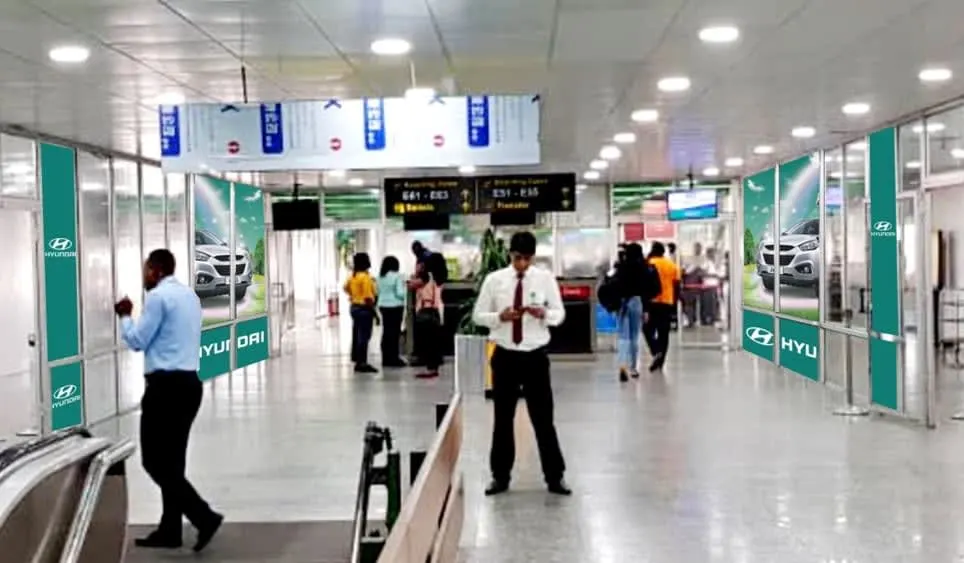
NAMA has not deployed a mobile control tower at Lagos airport three weeks after a fire, creating significant safety risks due to limited runway visibility.
Key Takeaways
- •Delays mobile tower deployment for three weeks post-fire at Lagos airport.
- •Forces controllers to operate with only 30% runway visibility from a fire station.
- •Relies on manual weather reports and personal phones for critical communications.
- •Creates risk of potential safety sanctions from the International Civil Aviation Organisation (ICAO).
Almost three weeks after a fire damaged the control tower at Lagos's Murtala Muhammed International Airport (LOS), the Nigerian Airspace Management Agency (NAMA) has not yet deployed a mobile control tower. The delay has forced air traffic controllers to operate from a temporary location with severely limited visibility, creating significant safety concerns for an airport that handled an average of 264 daily aircraft movements in 2019.
The fire on February 23, 2026, which gutted Terminal 1, also destroyed critical NAMA equipment, including automatic weather systems and the Aeronautical Fixed Telecommunication Network (FTN). In the absence of a functional tower, controllers relocated to a fire station operated by the Federal Airports Authority of Nigeria (FAAN). However, sources indicate that from this position, controllers have a view of only 30 percent of the airport's runways and taxiways. This operational compromise is a serious infraction of safety standards set by the International Civil Aviation Organisation (ICAO), which mandates an unobstructed 360-degree view for aerodrome control.
Operational Impacts and Safety Risks
The lack of a fully functional control tower has handicapped air traffic control operations. Controllers are reportedly resorting to personal mobile phones to relay flight plan information and are issuing weather reports manually. Coordination between the temporary tower and approach control relies on verbal relays from the Total Radar Coverage of Nigeria (TRACON) facility, particularly for managing international flights on Runway 18R. This makeshift system makes it difficult to safely sequence aircraft for landing and takeoff, increasing the risk of runway incursions.
Aviation experts have expressed alarm over the situation, noting that the inability to see the entire airfield prevents controllers from visually confirming an aircraft's position or noticing potential hazards, such as debris on the runway. The situation poses a direct threat to foreign airlines, which may reconsider operations at the airport if they perceive the safety procedures to be compromised. The delay in deploying one of NAMA's mobile towers, which were procured in 2021 for N1.7 billion specifically for such contingencies, has drawn sharp criticism.
Official Response and Delay Justification
While NAMA's Managing Director, Farouk Ahmed Umar, has not publicly commented on the ongoing delay, other agency officials have attributed the holdup to civil engineering requirements. According to one NAMA source, a scaffold platform is being constructed to elevate the mobile tower for better visibility, and the delay is necessary for the structure's foundation to 'solidify' before the sensitive equipment can be mounted. The FAAN reportedly approved the location for the mobile tower shortly after the fire incident.
This justification has been met with skepticism by industry insiders who question the prolonged timeline for what should be an urgent emergency deployment. The Nigeria Civil Aviation Authority (NCAA), the country's regulatory body, has previously sanctioned airlines for safety breaches and is expected to be monitoring the situation closely. The ongoing operational deficiencies could expose Nigeria to sanctions from ICAO if the safety breach is not rectified promptly.
Technical Analysis
The protracted delay in deploying a mobile control tower at a major international hub like Lagos highlights a critical gap between contingency planning and emergency response execution. The incident at Terminal 1, which was already slated for a N712 billion reconstruction, underscores the vulnerability of aging airport infrastructure. The current situation is reminiscent of historical precedents, such as the 2014 arson fire at the Chicago TRACON facility, which crippled air traffic across the United States by destroying critical communication systems. Similarly, the 2013 fire at Nairobi's Jomo Kenyatta International Airport destroyed a terminal and forced operations into makeshift facilities. Both events demonstrated how the loss of core infrastructure can cause cascading failures.
The failure to rapidly deploy a pre-procured mobile tower suggests a systemic issue that goes beyond a simple technical delay. It tests the resilience of Nigeria's aviation safety oversight and could erode international confidence. The reliance on manual processes and unsecure communication methods is a significant regression from established global standards, placing an immense burden on air traffic controllers and increasing operational risk for all carriers serving Lagos.
What Comes Next
The immediate priority is the deployment of the mobile control tower, which NAMA and FAAN officials suggest is imminent, pending the completion of the support platform. Once operational, the mobile unit is expected to restore critical functions, including integrated voice communication and automated weather reporting systems.
In the longer term, NAMA faces a potential safety and compliance review from ICAO. While no date has been confirmed, continued delays could trigger an official inquiry or audit, which could result in formal sanctions if significant deficiencies are found. The incident will also likely accelerate discussions about the much-needed reconstruction of Terminal 1 to prevent future disruptions.
Why This Matters
This incident is more than a logistical challenge; it is a critical test of Nigeria's aviation infrastructure and emergency preparedness. For airlines and passengers, it introduces a tangible safety risk that could lead to flight disruptions or suspensions by international carriers. For Nigeria, the handling of this crisis will significantly impact its reputation as a safe and reliable West African aviation hub, with potential long-term consequences for its standing within the global aviation community.
For in-depth airline coverage and commercial aviation news, omniflights.com delivers timely industry insights. For detailed airline coverage, route changes, and fleet moves, explore the Airlines section at omniflights.com/airlines.
Written by Ujjwal Sukhwani
Aviation News Editor & Industry Analyst delivering clear coverage for a worldwide audience. Covers flight operations, safety regulations, and market trends with expert analysis.
Visit ProfileYou Might Also Like
Discover more aviation news based on similar topics
Ryanair Flight RK514 Diverts to Birmingham After Emergency
Ryanair flight RK514 diverted to Birmingham Airport on September 13, 2026, following a medical emergency involving a passenger.

Amazon Suspends 21 Air After Fatal Miami 767 Runway Overrun
Amazon has suspended operations with 21 Air following a fatal Boeing 767 runway overrun at Miami International Airport that resulted in five deaths.
FAA Proposes A220 Fuel Line Inspections for US Operators
The FAA issued a proposed directive requiring inspection of motive-flow fuel lines on 13 US-registered Airbus A220s to prevent potential leaks.
NATS Denies Military Jet Role in UK ATC Outage
The UK Ministry of Defence denied its aircraft caused a NATS outage that led to over 2,000 flight cancellations and calls for CEO resignation.
21 Air Miami Crash: NTSB Investigates 767 Runway Overrun
A fatal 21 Air Boeing 767 crash at Miami International Airport has triggered an NTSB investigation amid scrutiny of Amazon Air's contract oversight.

Amazon Cargo Plane Crash: 5 Remembered After MIA Excursion
Five cleaning crew members died after an Amazon-contracted Boeing 767 overran the runway at Miami International Airport at 158 knots.