Kerala CM Urges PM Modi to Intervene in Surging Gulf Airfares

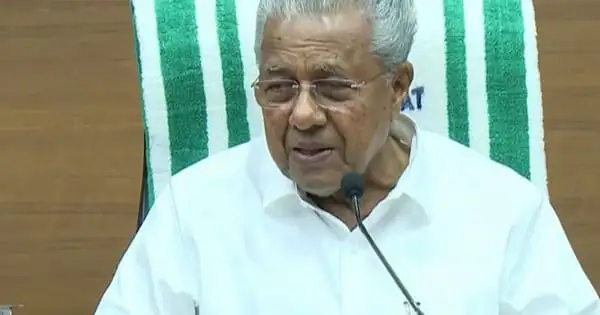
Kerala's CM urged PM Modi to intervene against predatory airfare hikes for Indians stranded in Gulf countries due to escalating regional conflict.
Key Takeaways
- •Urges Indian government intervention against 'predatory' airfare hikes from Gulf states.
- •Details airline response, including 58 planned repatriation flights on March 4.
- •Highlights SpiceJet's operation of 14 special flights from the UAE on March 6.
- •Cites over 1,600 flight cancellations by Indian and foreign carriers due to the conflict.
The Chief Minister of Kerala, Pinarayi Vijayan, has formally requested that India's central government intervene in what he termed the 'predatory hiking' of airfares. The request came in a letter to Prime Minister Narendra Modi, prompted by the stranding of thousands of Indian nationals in Gulf Cooperation Council (GCC) countries following a recent escalation of conflict in West Asia. The crisis has led to widespread flight shortages and airspace closures, severely impacting expatriate workers, known as Pravasis, seeking to return to India.
In his communication, Chief Minister Vijayan highlighted the acute distress faced by the Indian diaspora, a significant portion of which hails from Kerala. The sudden disruption has left many stranded, facing logistical and financial hardship. The Chief Minister urged the Union Government not only to address the sharp increase in ticket prices but also to augment the number of available flights to Indian cities to facilitate repatriation. This call for action underscores the significant economic and social ties between India and the Gulf region, where millions of Indians reside and work.
Government and Airline Response
In response to the growing crisis, India's Ministry of Civil Aviation (MoCA) has begun coordinating a significant repatriation effort. According to the MoCA, Indian carriers planned a total of 58 repatriation flights from the Gulf region on March 4 alone. Of these, 30 were scheduled by IndiGo and 23 by Air India and its subsidiary Air India Express. The ministry confirmed it is continuously monitoring the situation and providing assistance for flight operations.
Indian airlines have initiated limited special services to bring citizens home. SpiceJet has been particularly active, announcing it would operate 14 special flights from the United Arab Emirates on March 6. A statement from SpiceJet detailed that these services would include nine flights from Fujairah to Mumbai, four from Fujairah to Delhi, and one from Dubai to Pune. This followed an earlier push where, in the three days prior to March 6, SpiceJet had already operated 25 special flights, successfully repatriating nearly 7,000 Indian nationals stranded in the UAE. The use of alternate airports like Fujairah (FJR) has become crucial as major hubs face operational constraints.
To manage passenger concerns, the Directorate General of Civil Aviation (DGCA), India's aviation regulator, has activated a Passenger Assistance Control Room. This initiative aims to help stranded travelers and ensure airlines comply with regulations regarding refunds and rescheduling.
Impact of Regional Conflict
The root of the disruption is an escalating conflict in West Asia, which has led to significant airspace closures. These closures have forced airlines to cancel or reroute flights, dramatically increasing operational costs and flight times. For example, a standard 3.5-hour flight from Dubai to Delhi can now take almost six hours. The ripple effects have been substantial; up to March 4, a total of 1,221 flights by Indian carriers and 388 flights by foreign carriers were cancelled, according to MoCA data. This large-scale cancellation is the primary driver behind the capacity shortage and subsequent fare increases.
Chief Minister Vijayan's letter also proposed the creation of a centralised registration system to prioritise the evacuation of the most vulnerable individuals, including the elderly, pregnant women, and those in financial distress. He specifically noted the plight of transit passengers who are stranded mid-journey without local support.
This situation is reminiscent of past crises where the Indian government has mounted large-scale repatriation efforts, most notably the 'Vande Bharat Mission' during the COVID-19 pandemic. The current challenge again tests the logistics and coordination between government bodies like the Ministry of Civil Aviation and commercial airlines under immense pressure.
Why This Matters
This incident highlights the acute vulnerability of the large Indian expatriate population in the Gulf to regional geopolitical instability. It places a spotlight on the recurring issue of alleged predatory pricing by airlines during crises, prompting calls for greater regulatory oversight. The government's ability to coordinate a rapid and large-scale humanitarian evacuation while managing airline interests will serve as a key test of its crisis management framework.
Stay ahead of the airline industry with commercial aviation news from omniflights.com. Follow aviation sustainability efforts, emissions research, and green initiatives in the Environmental section at omniflights.com/environmental.

Written by Ujjwal Sukhwani
Aviation News Editor & Industry Analyst delivering clear coverage for a worldwide audience. Covers flight operations, safety regulations, and market trends with expert analysis.
Visit ProfileYou Might Also Like

FAA Mandates Inspections for Nearly 2,000 Boeing 737NG Jets

FAA Proposes Inspection Rule for 980 Airbus Helicopters

FAA Clears Boeing 737 MAX 10 Software Glitch

FAA Faces $3.5 Billion Shortfall in ATC Modernization

FAA Pauses Flights into LAX Due to Staffing Shortages