ITA Airways Launches Rome-Houston Route with A330-900

Co-Founder & CEOAviation News Editor delivering trusted coverage across the global aviation industry.

ITA Airways launched a new direct Rome-Houston route with its A330-900, expanding its North American network and leveraging a United Airlines codeshare.
Key Takeaways
- •Launches new nonstop service between Rome (FCO) and Houston (IAH) on May 1, 2026.
- •Operates an Airbus A330-900 with 291 seats, initially flying 3 times per week.
- •Increases flight frequency to 5 times weekly starting from June 1, 2026.
- •Leverages a new DOT-approved codeshare agreement with Star Alliance partner United Airlines.
Italia Trasporto Aereo (ITA Airways), Italy's flag carrier, has inaugurated a new nonstop service connecting its primary hub at Rome Fiumicino / Leonardo da Vinci International Airport (FCO) with George Bush Intercontinental Airport (IAH) in Houston. The inaugural flight departed on May 1, 2026, marking a significant expansion of the airline's transatlantic network and establishing the first-ever direct air link between the two cities.
The route will be operated by one of the airline's Airbus A330-900 aircraft. This service addresses a notable gap in the market, as data from Cirium Diio shows over 56,000 passengers traveled between Rome and Houston in 2025 without a nonstop option. The new flight is strategically timed to leverage ITA's pending integration into the Lufthansa Group and its subsequent entry into the Star Alliance, strengthening connectivity through United Airlines' major Houston hub.
Route Details and Strategic Importance
The new service will initially operate three times per week. According to an ITA Airways press release, the frequency is scheduled to increase to five times weekly beginning June 1, 2026, to meet anticipated summer demand. The Airbus A330-900 deployed on the route features a 291-seat configuration, comprising 30 Business Class lie-flat seats, 24 Premium Economy seats, and 237 Economy seats.
This expansion is a key component of ITA's strategy to connect Italy with major North American gateways, following the successful launch of services to Chicago and Toronto in 2024. Joerg Eberhart, CEO and General Manager of ITA Airways, stated that Houston's status as a global energy capital was a primary driver for the route. The presence of approximately 40 Italian multinational subsidiaries in Texas, including major energy firms like Eni and Saipem, creates substantial corporate travel demand. For these stakeholders, the direct flight reduces typical travel times by four to six hours.
Jim Szczesniak, Director of Aviation for Houston Airports, commented on the route's value, stating it reinforces IAH's position as a premier global gateway. The service is expected to significantly boost international passenger volumes and associated revenue for the Houston Airport System.
Regulatory and Alliance Context
A crucial enabler for the route's success is a reciprocal codeshare agreement with United Airlines, which was granted blanket authorization by the US Department of Transportation (DOT). This approval allows both carriers to market and sell seats on the flight, facilitating seamless connections for passengers traveling from across United's extensive domestic and international network via Houston. The partnership provides United with valuable feed to Italy ahead of ITA's formal entry into Star Alliance, which is expected in late 2026.
Historically, a direct link between Rome and Houston has been a long-standing goal for an Italian carrier. In the early 1990s, Alitalia, ITA's predecessor, had a partnership with Continental Airlines to launch the route but never commenced operations. ITA's launch finally fulfills this ambition, enabled by the superior economics of next-generation widebody aircraft and a more robust alliance structure.
The industry trend of European carriers expanding into major secondary U.S. hubs is exemplified by this launch. Airlines are increasingly using efficient twin-engine aircraft like the A330-900 to make long-haul routes economically viable without the high capacity of larger jets like the Airbus A380 or Boeing 747.
Technical Analysis
The launch of the FCO-IAH service is a textbook example of a modern, data-driven network expansion strategy. By selecting Houston, ITA Airways is not just targeting point-to-point traffic, which Cirium data confirms is substantial, but is also executing a strategic maneuver to align with its future alliance partners. Placing a new route into a fortress hub of a key partner like United Airlines allows ITA to build market presence and operational experience before its formal induction into Star Alliance. This preemptive integration de-risks the transition and allows both carriers to capitalize on network synergies from day one.
The choice of the Airbus A330-900 is equally critical. Its efficiency and capacity are well-matched for a long, thin route that previously could not support larger, less efficient aircraft. This aligns with the broader industry trend of using next-generation widebodies to unlock new city pairs. The launch contradicts the historical precedent set by Alitalia, whose failure to launch highlights the operational and financial challenges of the past. ITA's success demonstrates how improved aircraft technology and deeper alliance partnerships have fundamentally changed the economics of transatlantic travel.
What Comes Next
The immediate next step for the route is the planned frequency increase. As confirmed by ITA Airways, the service will ramp up to five weekly flights on June 1, 2026.
Looking further ahead, the most significant milestone will be ITA Airways' formal entry into the Star Alliance, which is widely expected to be finalized in late 2026 following the completion of its acquisition by the Lufthansa Group. This will fully integrate the Rome-Houston service into the alliance's global network, offering enhanced loyalty program benefits and connectivity for frequent flyers.
Why This Matters
For ITA Airways, this route solidifies its post-restructuring growth strategy, reinforcing its role as a key transatlantic carrier and accelerating its integration into the Star Alliance framework. For business and leisure travelers, it opens a convenient and efficient new corridor between the southern United States and Italy, eliminating the need for connections in other European or U.S. hubs. On an industry level, the route's launch underscores the strategic value of modern, mid-size widebody aircraft in building resilient and profitable long-haul networks.
Frequently Asked Questions
- What aircraft does ITA Airways use on the Rome to Houston route?
- ITA Airways operates the Rome to Houston route using an Airbus A330-900. This aircraft is configured with 291 seats, including 30 in Business Class, 24 in Premium Economy, and 237 in Economy.
- How often does the ITA Airways flight from Rome to Houston operate?
- The service initially operates three times per week. ITA Airways has confirmed that the frequency will increase to five times weekly starting from June 1, 2026, to meet seasonal demand.
- Does ITA Airways have a partnership with United Airlines for this route?
- Yes, the U.S. Department of Transportation has approved a reciprocal codeshare agreement between ITA Airways and United Airlines. This allows both airlines to sell seats on the new Rome-Houston flight and provides seamless connections for passengers through United's hub at IAH.
For global airline trends and commercial aviation news, turn to omniflights.com. From aircraft production to supply chains, commercial aviation manufacturing news is covered at omniflights.com/manufacturing.
Written by Hardik Vishwakarma
Co-Founder & Aviation News Editor leading initiatives that improve trust and visibility across the global aviation industry. Covers airlines, airports, safety, and emerging technology.
Visit ProfileYou Might Also Like
Discover more aviation news based on similar topics
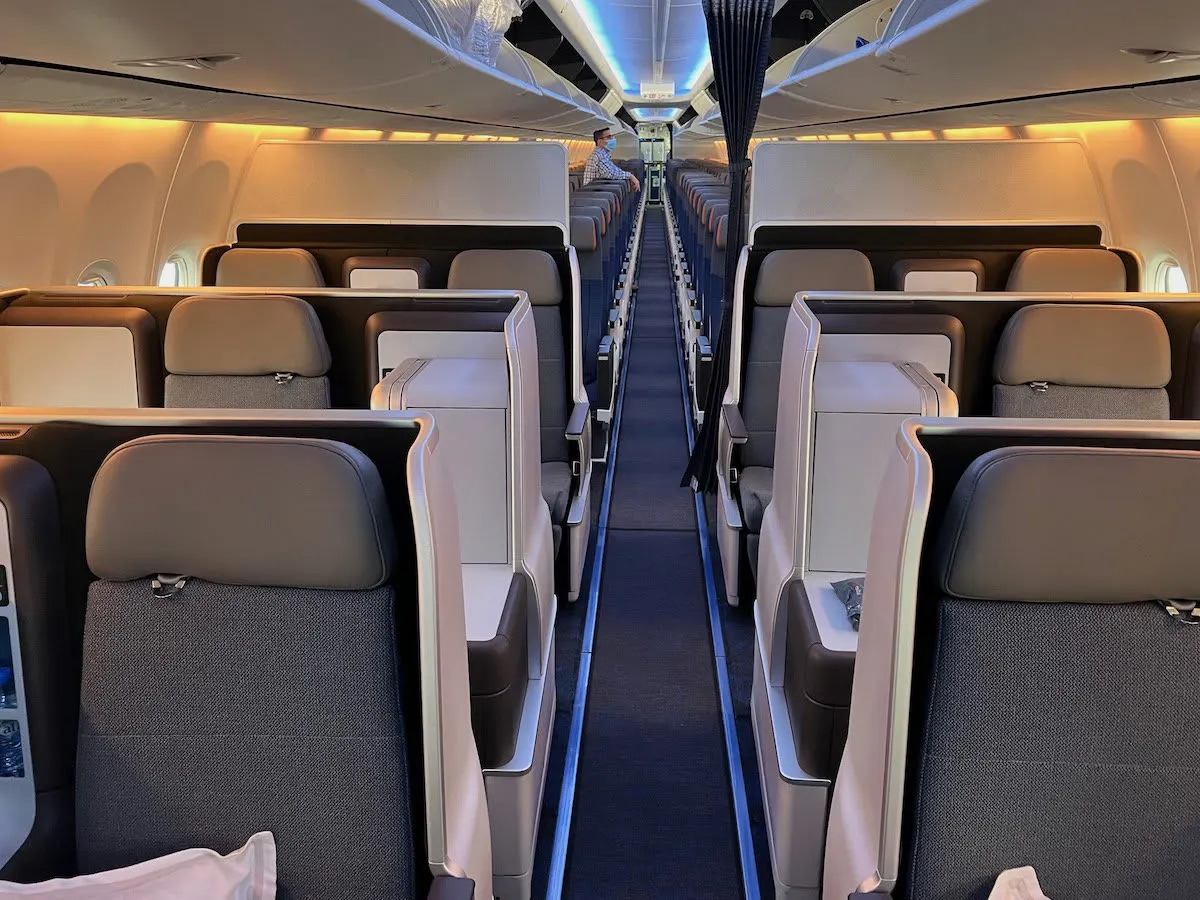
Flydubai Upgrading 21 Boeing 737 MAX 8s to Flat Bed Seats
Flydubai is retrofitting 21 Boeing 737 MAX 8 aircraft with lie-flat business class seats to standardize its premium product by late 2027.
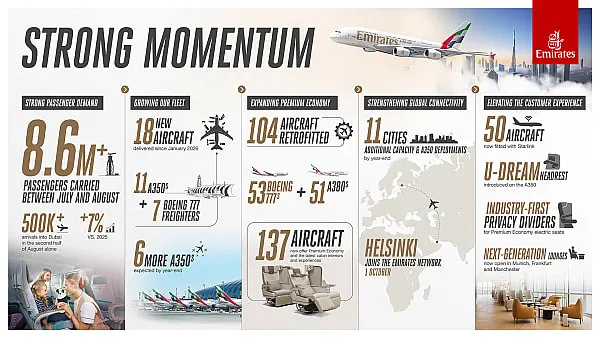
Emirates Winter Booking Momentum Grows Amid Fleet Expansion
Emirates carried 8.6 million passengers this summer and enters winter with strong demand as it accelerates fleet retrofits and network growth.
Air Arabia Consortium Gains AOC for New Dammam Budget Airline
A Saudi GACA-led consortium including Air Arabia has secured an AOC to launch a new budget airline based at Dammam's King Fahd International Airport.

Turkish Airlines Exits Luanda as Angola Hub Struggles
Turkish Airlines dropped its Luanda route as Angola's new airport struggles to attract traffic, handling only 756,028 passengers in 2025.

Red Sea Airlines Leases Two 737 MAX 8s for 2027 Expansion
Red Sea Airlines signed a lease for two Boeing 737 MAX 8 aircraft from SMBC Aviation Capital, arriving in 2027 to support its 14-aircraft fleet goal.
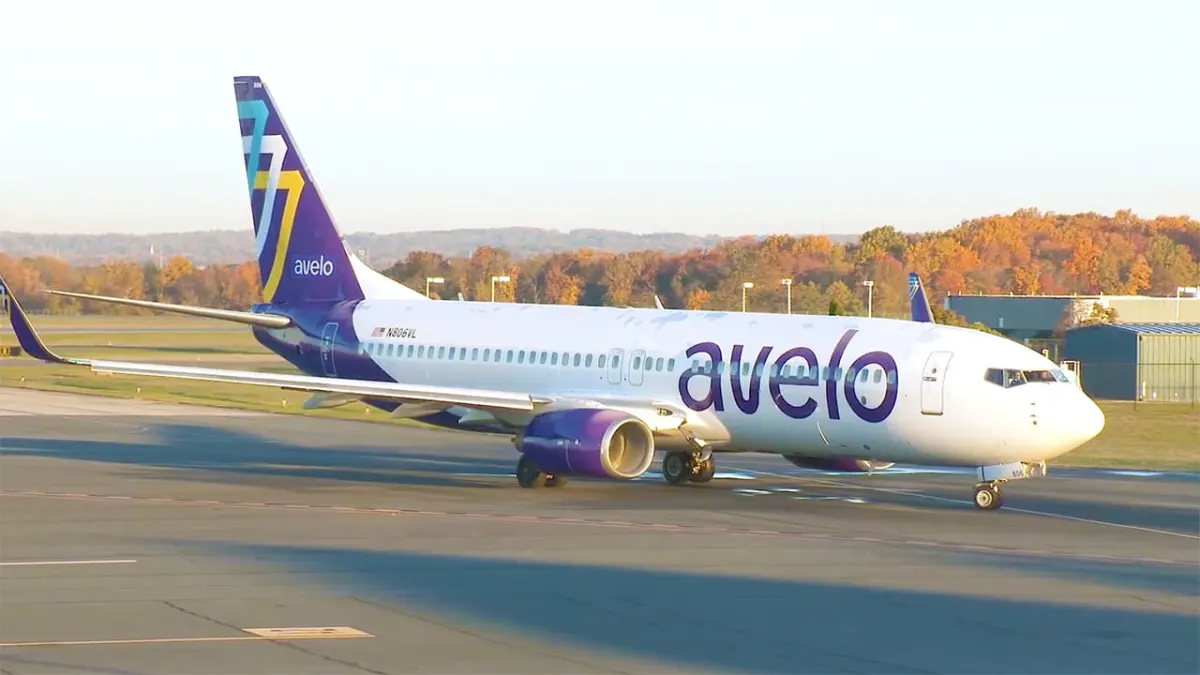
Avelo CEO Warns Airfares May Rise on Jet Fuel Price Spikes
Avelo Airlines CEO Andrew Levy warns that rising fuel costs may force fare increases as global jet fuel prices reach $171.01 per barrel.