IndiGo Selects Honeywell Systems for 810 Airbus Aircraft

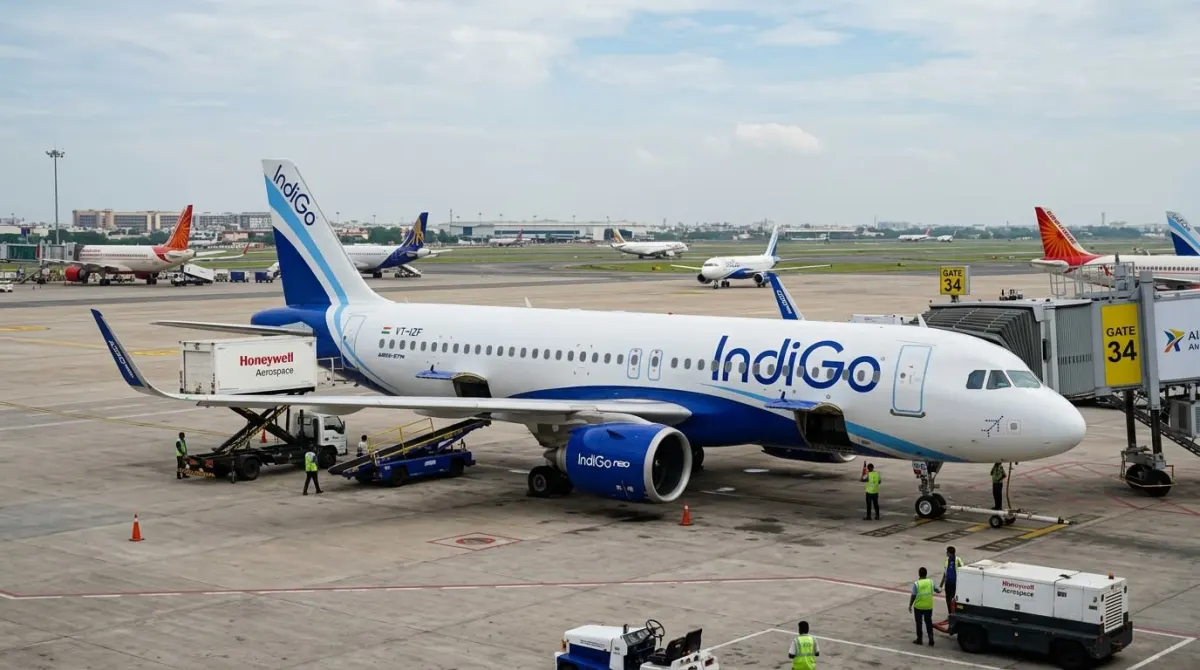
IndiGo selected Honeywell Aerospace to equip 810 Airbus A320neo family aircraft, marking the supplier's largest commercial equipment win.
Key Takeaways
- •IndiGo selects Honeywell systems for 810 new Airbus A320neo family aircraft.
- •The agreement represents the largest commercial equipment win in Honeywell history.
- •Deliveries of the newly equipped aircraft will extend through 2035.
- •The contract includes Honeywell 131-9A APUs, EGPWS, and TCAS suites.
Indian low-cost carrier IndiGo has finalized the IndiGo Honeywell avionics deal to support its massive Airbus A320neo fleet expansion of 810 aircraft. The multi-decade agreement includes the selection of the Honeywell 131-9A auxiliary power unit and advanced flight safety systems. This strategic fleet decision, announced as Willie Walsh IndiGo CEO Designate prepares to lead the airline, represents the largest commercial equipment selection in Honeywell Aerospace's history.
This unprecedented agreement secures critical flight deck technologies and auxiliary systems for an order backlog that will stretch well into the 2030s. By standardizing its incoming narrowbody fleet with common avionics and power systems, IndiGo aims to streamline its maintenance planning, reduce spare parts inventory costs, and simplify pilot training. For the broader aviation industry, this massive commitment underscores the rapid growth of the Indian aviation market and highlights how major airlines are leveraging long-term aftermarket support agreements to shield themselves from ongoing global aerospace supply chain disruptions.
Core Systems and Regulatory Compliance
According to the Honeywell Aerospace press release issued on July 20, 2026, the carrier currently operates a fleet of more than 400 aircraft and served over 123 million customers during the 2026 fiscal year. The newly selected equipment suite includes Honeywell's 131-9A APU (Auxiliary Power Unit), alongside critical flight safety systems such as the EGPWS (Enhanced Ground Proximity Warning System) and the TCAS (Traffic Collision Avoidance System). These systems are designed to improve situational awareness and prevent controlled flight into terrain.
The integration of these systems on the incoming Airbus A320neo (Airbus A320 New Engine Option) fleet must comply with rigorous continuous airworthiness standards. These regulatory requirements are overseen by Europe's EASA (European Union Aviation Safety Agency), as the primary certifying authority for Airbus, and India's DGCA (Directorate General of Civil Aviation).
To ensure high operational reliability, the contract bundles the hardware acquisition with a comprehensive aftermarket and maintenance planning program. This structure directly addresses the industry-wide trend of securing long-term support to mitigate supply chain volatility.
Stakeholder and Market Impact
For Honeywell Aerospace, this agreement secures the largest commercial equipage and service deal in its corporate history, locking in decades of high-margin aftermarket revenue and solidifying its dominance in the Indian subcontinent. For IndiGo, the deal guarantees strict fleet commonality across its massive 810-aircraft backlog, significantly lowering long-term operating costs. Conversely, competitor APU manufacturers, such as Pratt & Whitney and Safran, have missed the opportunity to outfit the largest single-airline narrowbody order in history, losing out on substantial maintenance, repair, and overhaul (MRO) potential. Airbus Commercial Aircraft will coordinate the physical integration of these Honeywell systems onto the A320neo final assembly lines.
While the partnership represents a major milestone, it also highlights the delicate balance of power between airlines and aerospace manufacturers. Willie Walsh, speaking at an International Air Transport Association annual general meeting prior to his transition to IndiGo, previously noted that airlines are increasingly frustrated with aerospace original equipment manufacturers over supply chain failures, high maintenance costs, and excessive pricing power, demanding better reliability and life-cycle value from their partners.
Scaling the Decade-Long Honeywell Partnership
This landmark agreement builds directly upon a long-standing relationship between the two companies. In May 2015, IndiGo completed its initial Honeywell A320neo avionics and APU selection, choosing Honeywell's SmartRunway and SmartLanding systems alongside 131-9A APUs for its earlier batches of A320neo aircraft. The 2026 agreement represents a massive scale-up of the same fundamental technology choices. By maintaining this technological continuity, IndiGo avoids the operational friction of managing a split-system fleet, replicating a proven operational blueprint on a scale nearly double its current operating fleet.
Economic and Operational Efficiencies of Fleet Commonality
The selection of the 131-9A auxiliary power unit and standard Honeywell avionics across 810 aircraft illustrates a highly defensive operational strategy. In the modern commercial aerospace aftermarket, managing diverse component types across a rapidly expanding fleet introduces severe cost penalties. By committing to a single supplier for both flight deck safety systems and auxiliary power, IndiGo minimizes its line-maintenance training hours and optimizes its rotable component pooling.
The 131-9A APU is widely recognized for its reliability and fuel efficiency on narrowbody platforms, which directly impacts ground-operation costs by reducing main-engine run times during gate turns. Furthermore, integrating standardized EGPWS and TCAS software across such a vast fleet reduces the risk of software-version fragmentation, simplifying regulatory compliance updates with the DGCA. This development indicates that as Indian carriers scale to unprecedented sizes, operational simplicity and supply chain predictability are being prioritized over short-term purchasing competition.
Delivery and Integration Timeline Through 2035
The delivery and entry-into-service of the 810 Honeywell-equipped Airbus A320neo family aircraft is expected to stretch from the late 2020s through 2035. Airbus and IndiGo will coordinate the delivery schedules to match the airline's long-term growth plans. Over this multi-year window, Honeywell will deliver the avionics suites and APUs directly to Airbus assembly lines for installation. IndiGo and Honeywell will also begin establishing the localized maintenance planning infrastructure in India to support the incoming fleet's lifecycle needs, ensuring that regional MRO capabilities scale in tandem with the physical aircraft deliveries.
The Long-Term Read for the Indian Aviation Market
This transaction highlights the maturing infrastructure of the Indian aviation sector, which is rapidly transitioning from a regional market to a global powerhouse. For industry professionals, IndiGo's decision demonstrates that fleet commonality and long-term aftermarket protection are now the primary levers for managing growth-associated risks. Ultimately, securing these critical systems ensures that India's largest carrier can maintain its low-cost structure while executing one of the most aggressive fleet expansions in commercial aviation history.
Frequently Asked Questions
- What equipment did IndiGo select from Honeywell Aerospace?
- IndiGo selected Honeywell's 131-9A auxiliary power units (APUs), Enhanced Ground Proximity Warning Systems (EGPWS), and Traffic Collision Avoidance Systems (TCAS) for its new aircraft.
- How many Airbus aircraft are included in the IndiGo Honeywell deal?
- The agreement covers 810 new Airbus A320neo family aircraft, making it the largest commercial equipment selection in Honeywell Aerospace's history.
- What is the delivery timeline for IndiGo's new Honeywell-equipped fleet?
- The delivery and entry-into-service of the 810 Airbus A320neo family aircraft are expected to stretch from the late 2020s through 2035.
Get breaking commercial aviation news and expert airline analysis at omniflights.com. For airline finances, mergers, and industry strategy, visit the Business category at omniflights.com/business.

Written by Ujjwal Sukhwani
Aviation News Editor & Industry Analyst delivering clear coverage for a worldwide audience. Covers flight operations, safety regulations, and market trends with expert analysis.
Visit ProfileYou Might Also Like
Southwest Reports Record Q3 Revenue Amid Transformation
American Airlines Reports Record Q3 Revenue Amid Fuel Costs
American Airlines Projects 2026 Loss on Rising Fuel Costs
American Airlines to Nearly Triple Premium 787-9 Fleet

Airline Shares Rise Following United Revenue Guidance