Hindon Airport Loses 16 Routes as Jewar Hub Opens

Co-Founder & CEOAviation News Editor delivering trusted coverage across the global aviation industry.

Hindon Airport has lost 16 routes as airlines consolidate operations at the new Noida International Airport, which began commercial flights on June 15,...
Key Takeaways
- •Noida International Airport launched commercial flights on June 15, 2026.
- •Hindon Airport lost 16 routes due to airline consolidation at Jewar.
- •NIA Phase 1 capacity is 12 million passengers annually.
- •International operations at Jewar are expected by late 2026.
The Shift to Noida International Airport
Noida International Airport (NIA) in Jewar officially commenced commercial flight operations on June 15, 2026, marking a pivotal transition for the National Capital Region (NCR) aviation landscape. The facility, developed with an estimated investment of ₹11,200 crore, is designed to manage the region's long-term capacity requirements. According to an Right to Information (RTI) response, the opening of this greenfield hub has triggered a significant contraction at the nearby Hindon Airport. Hindon, which served as a regional hub under the Ude Desh ka Aam Naagrik (UDAN) scheme, has reportedly lost at least 16 flight routes as airlines consolidate their networks at the larger, more efficient Jewar facility.
Operational Consolidation and Infrastructure
The migration of capacity from Hindon to the new airport reflects a broader trend in Indian aviation: the shift from restricted military enclaves to purpose-built, large-scale civilian terminals. While Hindon provided essential regional connectivity since 2019, it faced operational constraints inherent to its status as a military-owned site. In contrast, the Noida International Airport offers unrestricted operating hours and superior multimodal logistics. The airport received its aerodrome license from the Directorate General of Civil Aviation (DGCA) on March 6, 2026, and secured mandatory Aerodrome Security Program (ASP) approval from the Bureau of Civil Aviation Security (BCAS) prior to its launch.
Stakeholder Impact and Regional Growth
For regional carriers previously operating at Hindon, such as Star Air and Heritage Aviation, the shift poses significant challenges to network viability. Passenger preference is rapidly moving toward the new hub, which boasts an initial Phase 1 capacity of 12 million passengers annually. Conversely, residents in Western Uttar Pradesh and Greater Noida benefit from reduced travel times compared to the commute to Delhi's Indira Gandhi International Airport. The project, overseen by the Ministry of Civil Aviation, serves as a cornerstone for the Yamuna Expressway Industrial Development Authority's growth strategy, drawing logistics and manufacturing investment to the region.
Historical Context and Precedents
This transition mirrors the 2008 closure of HAL Airport in Bengaluru to commercial traffic following the opening of Kempegowda International Airport. Historically, the Indian market has consistently favored large-scale greenfield airports over military-adjacent sites once sufficient civilian capacity is established. This pattern suggests that Hindon’s role will likely revert to military, testing, and general aviation purposes as the Jewar hub scales toward its ultimate design capacity of 70 million annual passengers.
What Comes Next for Jewar
Following the successful launch of domestic operations, the airport is tracking toward the commencement of international flight services. While the Directorate General of Civil Aviation has not confirmed a specific date, industry expectations point to the launch of international connectivity by late 2026. This expansion will be a critical milestone in establishing the airport as a primary gateway for the northern Indian market, further cementing the dual-airport strategy for the Delhi-NCR area.
Why This Matters for the NCR Hub
The emergence of a second major civilian airport in the Delhi-NCR area represents a structural shift in how the region handles peak-hour congestion. By providing an alternative to the capacity-constrained Indira Gandhi International Airport, the Jewar facility enables airlines to optimize their fleet utilization and hub-and-spoke models. For the aviation industry, this development signals the maturity of the Indian greenfield model, where infrastructure investment is directly linked to the rapid redistribution of traffic away from legacy, constrained nodes.
Frequently Asked Questions
- What is the annual passenger capacity of the new Noida International Airport?
- Noida International Airport has an initial Phase 1 capacity of 12 million passengers annually, with a design capacity to handle up to 70 million passengers upon final build-out.
- Why did Hindon Airport lose 16 routes?
- Hindon Airport lost 16 routes as airlines consolidated their operations at the new Noida International Airport in Jewar, which offers superior infrastructure and unrestricted operating hours compared to the military-enclave facility at Hindon.
Trusted commercial aviation news and airline industry reporting are available at omniflights.com. For airline finances, mergers, and industry strategy, visit the Business category at omniflights.com/business.
Written by Hardik Vishwakarma
Co-Founder & Aviation News Editor leading initiatives that improve trust and visibility across the global aviation industry. Covers airlines, airports, safety, and emerging technology.
Visit ProfileYou Might Also Like
Discover more aviation news based on similar topics

Flydubai Upgrading 21 Boeing 737 MAX 8s to Flat Bed Seats
Flydubai is retrofitting 21 Boeing 737 MAX 8 aircraft with lie-flat business class seats to standardize its premium product by late 2027.
Emirates Winter Booking Momentum Grows Amid Fleet Expansion
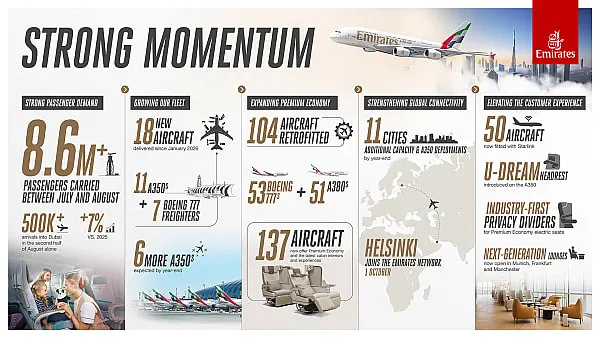
Emirates carried 8.6 million passengers this summer and enters winter with strong demand as it accelerates fleet retrofits and network growth.
Air Arabia Consortium Gains AOC for New Dammam Budget Airline
A Saudi GACA-led consortium including Air Arabia has secured an AOC to launch a new budget airline based at Dammam's King Fahd International Airport.

Turkish Airlines Exits Luanda as Angola Hub Struggles
Turkish Airlines dropped its Luanda route as Angola's new airport struggles to attract traffic, handling only 756,028 passengers in 2025.

Red Sea Airlines Leases Two 737 MAX 8s for 2027 Expansion
Red Sea Airlines signed a lease for two Boeing 737 MAX 8 aircraft from SMBC Aviation Capital, arriving in 2027 to support its 14-aircraft fleet goal.

Avelo CEO Warns Airfares May Rise on Jet Fuel Price Spikes
Avelo Airlines CEO Andrew Levy warns that rising fuel costs may force fare increases as global jet fuel prices reach $171.01 per barrel.