Hermeus Secures FAA Certificate for Quarterhorse Mk 2.1 Flight Tests

Co-Founder & CEOAviation News Editor delivering trusted coverage across the global aviation industry.

Hermeus secured an FAA experimental certificate for its Quarterhorse Mk 2.1, clearing the unmanned aircraft for high-speed supersonic flight testing.
Key Takeaways
- •Receives FAA Special Airworthiness Certificate for Quarterhorse Mk 2.1
- •Cleared for high-speed supersonic flight tests at Spaceport America
- •Follows the F-16-sized prototype's first flight on March 3, 2026
- •Advances rapid prototyping model for hypersonic aircraft development
Hermeus has secured a Special Airworthiness Certificate in the Experimental Category (SAC-EC) from the Federal Aviation Administration (FAA) for its Quarterhorse Mk 2.1 unmanned prototype. The regulatory clearance, announced on March 12, 2026, is a critical milestone that permits the company to proceed with high-speed flight testing at Spaceport America in New Mexico.
The certification enables the next phase of development for Hermeus's hypersonic aircraft program, which aims to validate its rapid prototyping and iterative design philosophy. The F-16-sized Quarterhorse Mk 2.1 is designed to push the boundaries of high-speed flight, gathering essential data that will inform subsequent vehicle designs. This approval follows the aircraft's first flight, which, according to Hermeus, took place on March 3, 2026. The test campaign will be conducted within the restricted airspace of the White Sands Missile Range, providing a secure environment for supersonic and hypersonic test profiles.
Jay Wagemann, Hermeus' Director of Mission Operations, commented on the regulatory process. "The rigor of the FAA's inspection process gives our team the confidence to continue our flight test campaign and push the limits of high-speed flight," Wagemann stated. The company's CEO, AJ Piplica, also emphasized the program's velocity, noting that speed is a fundamental requirement for both their flight systems and their corporate timeline.
Stakeholder Impact
The FAA's approval has a direct and significant impact on several key stakeholders. For Hermeus Corporation, the certificate is the primary enabler for its flight test campaign, allowing it to validate its aircraft design and rapid development model, which is crucial for securing future funding and contracts. The test program also reinforces Spaceport America's position as a key facility for advanced aerospace testing, attracting high-profile technology demonstrators. Furthermore, the progress is significant for the U.S. Department of Defense and the Defense Innovation Unit (DIU), which have funded Hermeus to accelerate the development of hypersonic technologies with potential dual-use applications.
Context and Comparison
Hermeus's iterative approach is evident when comparing its prototypes. The Quarterhorse Mark (Mk) 1 demonstrator, which completed its first flight in May 2025, served as a subsonic testbed. The Mk 2.1 represents a significant evolution, designed from the outset with supersonic capabilities.
Quarterhorse Mk 1 vs. Mk 2.1
| Metric | Quarterhorse Mk 1 | Quarterhorse Mk 2.1 |
|---|---|---|
| First Flight | May 2025 | March 2026 |
| Capability | Subsonic demonstrator | Supersonic-capable |
The regulatory path taken by Hermeus mirrors that of other private supersonic developers. In August 2023, Boom Supersonic's XB-1 demonstrator received a similar FAA experimental airworthiness certificate. That clearance resulted in the XB-1's first flight in March 2024 and its first supersonic flight in January 2025, establishing a precedent for moving from regulatory approval to flight validation in the modern supersonic era. Hermeus's milestone with the Mk 2.1 suggests a similar trajectory, validating the FAA's framework for overseeing novel high-speed aircraft programs.
Technical Analysis
This development indicates a maturation of the rapid prototyping model within the advanced aerospace sector. By designing, building, and flying successive iterations—from the subsonic Mk 1 to the supersonic Mk 2.1 and planned Mk 2.2—Hermeus is accelerating the data-gathering loop for hypersonic flight. This strategy contrasts sharply with legacy government-led programs, which often involved longer development timelines and fewer physical prototypes. The FAA's certification of the Mk 2.1 effectively endorses this faster, iterative approach for complex systems. The precedent set by Boom Supersonic and now advanced by Hermeus suggests that this model is becoming the standard for private firms aiming to break into the high-speed and hypersonic markets, leveraging proven regulatory pathways to de-risk technology in a piecemeal, yet swift, fashion.
What Comes Next
With the SAC-EC secured for the Mk 2.1, Hermeus will proceed with its high-speed flight test campaign throughout 2026 at Spaceport America. The data collected will be directly applied to the company's next aircraft. According to Hermeus, the first flight of the Quarterhorse Mk 2.2, the subsequent iteration in the program, is expected to occur in late 2026 or early 2027. This next vehicle is anticipated to incorporate further refinements based on the performance of the Mk 2.1 during its supersonic test flights.
Why This Matters
This FAA certification is more than a procedural step; it is a validation of Hermeus's rapid development strategy for hypersonic technology. By clearing the Quarterhorse Mk 2.1 for flight, regulators have enabled a critical data-gathering phase that will directly influence the future of U.S. high-speed military and potential commercial aircraft. The milestone signals growing momentum in the private sector's pursuit of operational hypersonic systems.
From airline operations to fleet updates, commercial aviation news lives at omniflights.com. Get the latest updates on major hubs, regional terminals, and airport operations via the Airports section at omniflights.com/airports.
Written by Hardik Vishwakarma
Co-Founder & Aviation News Editor leading initiatives that improve trust and visibility across the global aviation industry. Covers airlines, airports, safety, and emerging technology.
Visit ProfileYou Might Also Like
Discover more aviation news based on similar topics
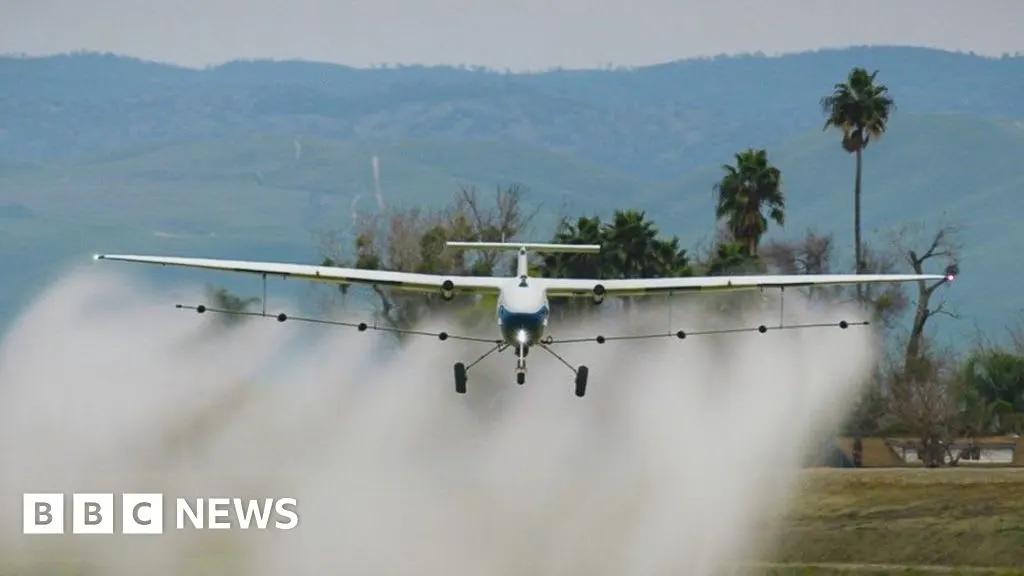
Autonomous Fixed-Wing Aircraft Development Gains Momentum
Start-ups are advancing autonomous fixed-wing aircraft for agricultural and cargo tasks, aiming to prove safety before pursuing passenger operations.

Boeing 787-9 Completes Short Inlet Tests in Montana
Boeing completed 52 hours of flight tests on a 787-9 with an experimental 30% shorter engine inlet to evaluate noise and fuel efficiency.
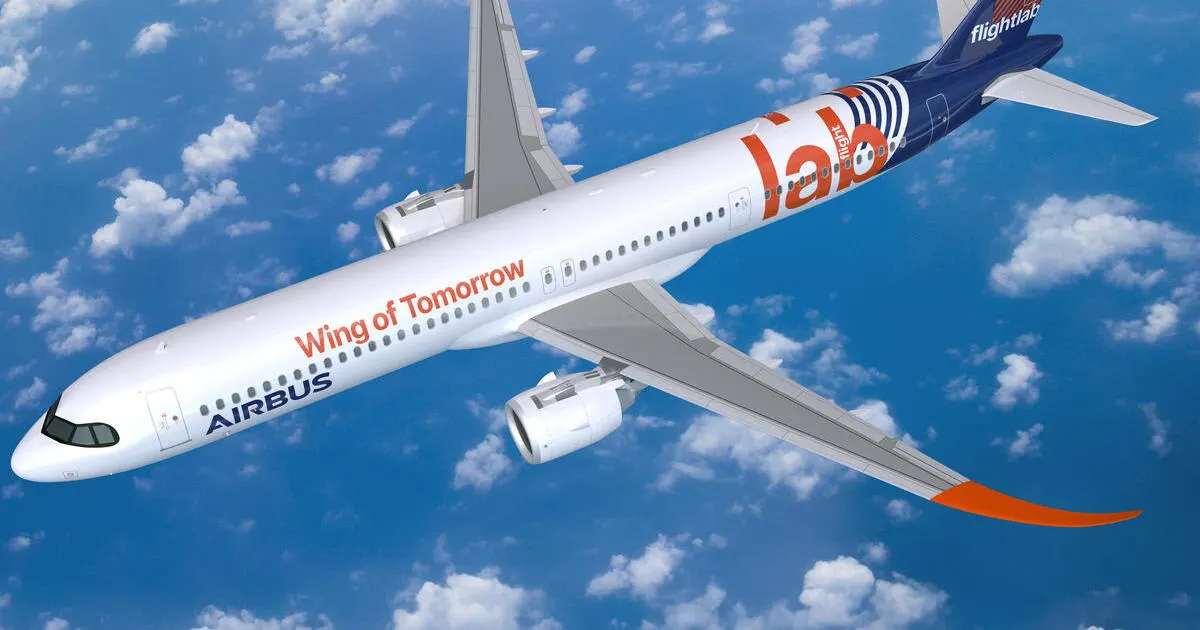
Airbus A321neo to Test Folding Wings of Tomorrow Project
Airbus launched a three-year flight-test campaign using an A321neo to evaluate folding wings that extend up to five meters.
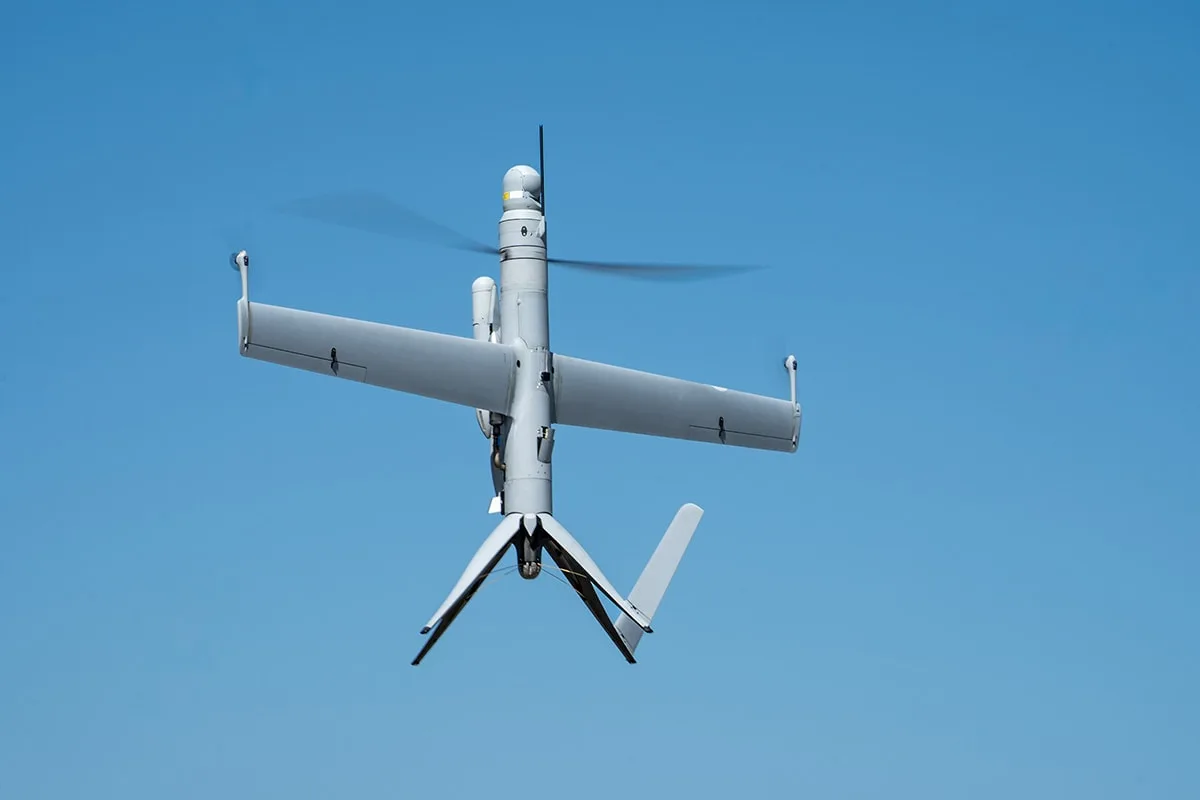
Voyageur Orders Canada's First Airbus U030 Flexrotor
Voyageur Aviation ordered Canada's first Airbus U030 Flexrotor, a 25 kg tactical drone, to expand its maritime and Arctic surveillance capabilities.
LATAM Selects SES Multi-Orbit Wi-Fi for 60+ New Jets
LATAM Airlines signed a multi-year deal with SES to equip more than 60 incoming Airbus and Embraer aircraft with multi-orbit satellite Wi-Fi.
Lufthansa 787-9 Tests Tech to Cut Fuel and Noise
Boeing, Lufthansa, and Rolls-Royce partnered to test emissions-reducing technologies on a 787-9, targeting a 20% fuel efficiency improvement.