Global Aerospace Details Essential Drone Insurance for Commercial Operators

Co-Founder & CEOAviation News Editor delivering trusted coverage across the global aviation industry.

Global Aerospace highlights why standard business policies fail to cover commercial drone risks, necessitating specialized UAS aviation insurance.
Key Takeaways
- •Highlights common aviation exclusions in general liability policies, creating uninsured risks for operators.
- •Details essential coverages including third-party liability, hull, payload, and non-owned drones.
- •Addresses the shift from single-drone policies to scalable fleet insurance for enterprise operations.
- •Emphasizes that contractual requirements often mandate insurance despite no federal FAA mandate.
As commercial drone use expands across industries, specialized aviation insurer Global Aerospace is outlining the critical need for dedicated Unmanned Aircraft Systems (UAS) insurance. The guidance emphasizes that standard Commercial General Liability (CGL) policies frequently contain aviation exclusions, creating significant uninsured risks for businesses deploying drones for tasks ranging from construction surveys to infrastructure inspection.
The core issue for corporate risk managers is the misperception that existing business insurance covers drone operations. According to the Insurance Information Institute, aviation exclusions are a standard feature in CGL policies. This leaves a coverage gap for incidents involving bodily injury or property damage caused by a UAS, legally defined as an aircraft. Without specialized coverage, companies could face substantial financial liability for accidents occurring within the National Airspace System (NAS).
Core Components of UAS Insurance
A comprehensive commercial drone insurance policy is structured to cover the entire operational system, not just the aircraft. The foundational coverage is third-party liability, which addresses legal responsibility for bodily injury or property damage. Beyond liability, physical damage protection is broken into several key areas.
Hull coverage protects the physical Unmanned Aerial Vehicle (UAV) from loss or damage. Crucially, payload coverage insures the expensive sensors and equipment the drone carries. This is vital as advanced payloads, such as Light Detection and Ranging (LiDAR) or thermal cameras, can often be more valuable than the drone itself. Policies also typically include coverage for ground equipment, including controllers and transport cases, and non-owned drone coverage for operations using rented or leased aircraft.
From Single Drones to Enterprise Fleets
The insurance market is adapting to the increasing scale of commercial drone use, marking a clear trend away from single-drone policies toward enterprise-level fleet insurance. While a single-drone policy suits individual operators with a simple risk profile, it lacks the flexibility required by larger organizations.
Fleet drone insurance is designed for scale, allowing multiple aircraft to be insured under a single, flexible policy. These enterprise solutions often feature blanket liability coverage, which can automatically extend protection to new drones as they are added to the fleet. This model simplifies administration and provides a more robust risk management framework for companies managing dozens or even hundreds of UAS. According to Global Aerospace, which traces its aviation insurance history back to 1924, this scalable approach is essential for supporting complex global operations.
Regulatory and Contractual Demands
While the FAA (Federal Aviation Administration) does not federally mandate insurance for commercial drone operations under Part 107, the practical reality is that insurance is a prerequisite for most professional work. Client contracts, particularly in sectors like construction, energy, and film, routinely require operators to provide proof of significant liability coverage before commencing flights. Government agencies and public sector entities also mandate insurance to protect against public liability.
Furthermore, securing coverage is essential for complex operations, such as flights Beyond Visual Line of Sight (BVLOS), which require special waivers and a higher level of risk scrutiny from underwriters. An insurer with deep aviation experience is often better equipped to underwrite these advanced operations and support international projects that must comply with varying national laws. Operators can find official U.S. regulatory information at the FAA Unmanned Aircraft Systems (UAS) portal.
Stakeholder Impact
The requirement for specialized insurance directly impacts several key groups. For Commercial Drone Operators, it is a critical cost of doing business, necessary to win contracts and mitigate liability. Corporate Risk Managers are tasked with auditing their organizations' insurance portfolios to identify and close the gaps left by standard CGL aviation exclusions. This shift also benefits Payload Manufacturers, as dedicated payload coverage protects high-value sensors, encouraging wider adoption of advanced technology. Specialized providers like Global Aerospace are positioned to capture this growing market segment, which may be underserved by general insurers unfamiliar with aviation-specific risks.
Why This Matters
The increasing integration of drones into commercial workflows elevates UAS from a niche tool to a core business asset. This transition necessitates a corresponding evolution in risk management, moving drone coverage from an afterthought to a central component of corporate insurance strategy. For the aviation industry, the growth of a robust, specialized drone insurance market is a key enabler for the continued expansion of safe and complex unmanned operations, particularly in enterprise and BVLOS applications.
Stay ahead of the airline industry with commercial aviation news from omniflights.com. From aircraft production to supply chains, commercial aviation manufacturing news is covered at omniflights.com/manufacturing.
Written by Hardik Vishwakarma
Co-Founder & Aviation News Editor leading initiatives that improve trust and visibility across the global aviation industry. Covers airlines, airports, safety, and emerging technology.
Visit ProfileYou Might Also Like
Discover more aviation news based on similar topics

Trump Orders Release of 161 Declassified UAP Files
The Trump administration released 161 declassified UAP files via its new PURSUE portal, a move praised for transparency but criticized as a political ploy.

DOE Agent Death Sparks UAP Whistleblower Questions
The 2021 death of a DOE special agent is under new scrutiny following claims he planned to expose secret government UAP programs before he died.

Researcher Claims 4 Alien Species Recovered; Pentagon Denies
Physicist Hal Puthoff alleges the US recovered 4 alien species, sparking debate amid official Pentagon denials from its AARO UAP report.

Declassified FBI Files Detail Nazi Saucer Claims
The DoD has declassified 162 historical UAP files, which include unverified informant claims about Nazi flying saucers, under its PURSUE transparency plan.
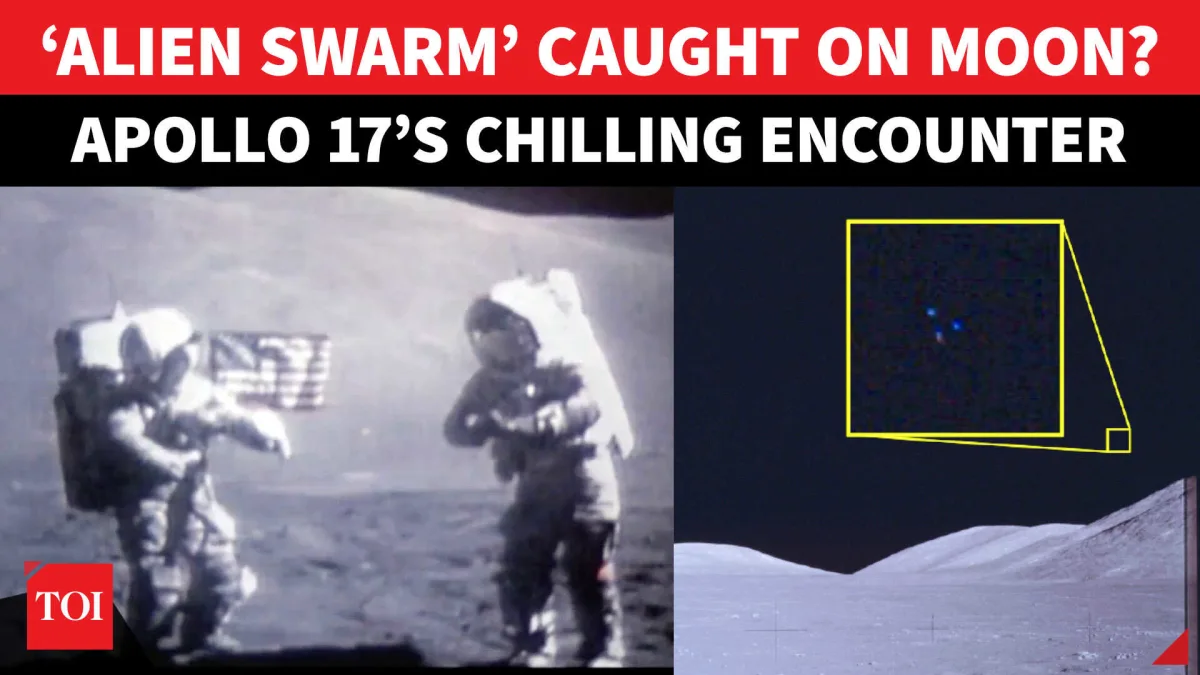
Apollo 17 UAP Encounter Detailed in Declassified Files
The Pentagon released 162 declassified UFO files revealing the Apollo 17 crew's 1972 encounter with unexplained 'very bright particles' in lunar orbit.
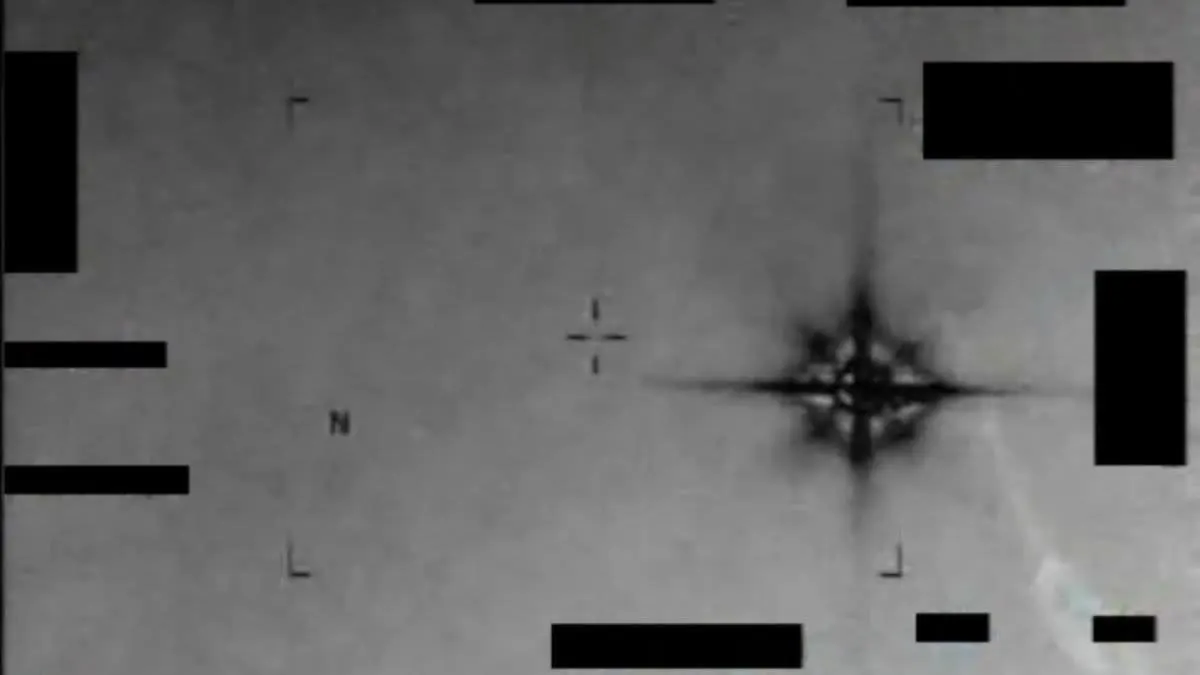
AARO Releases 2013 Star-Shaped UAP Video
The US government released 162 declassified UAP files, including a 2013 video of a star-shaped object that experts suggest is a sensor artifact.