Frontier, Cebu Pacific Adopt Starlink for 1,000+ Aircraft

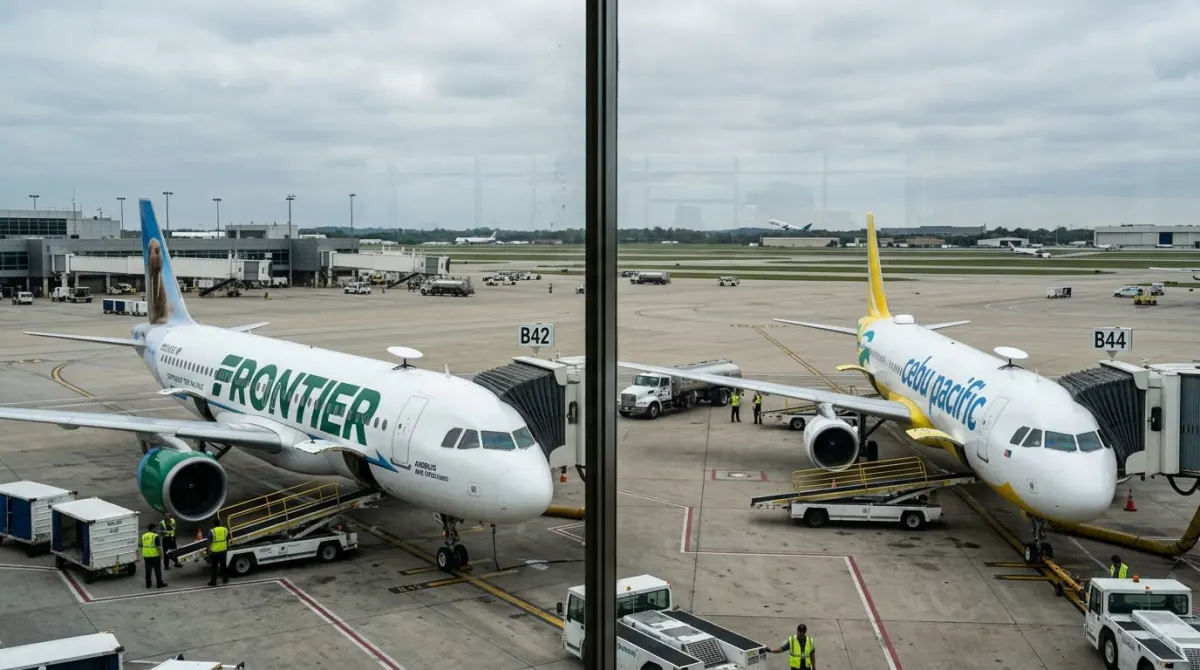
Frontier Airlines and Cebu Pacific will install Starlink aviation Wi-Fi across their fleets, part of a 1,000-aircraft deployment by Indigo Partners.
Key Takeaways
- •Indigo Partners will equip over 1,000 aircraft with Starlink Wi-Fi.
- •Frontier Airlines and Cebu Pacific debut Starlink service in early 2027.
- •Starlink LEO satellites provide lower latency than traditional GEO networks.
- •The rollout marks a major shift toward premiumization for budget carriers.
Starlink Aviation Wi-Fi Expansion
Low-cost carriers Frontier Airlines and Cebu Pacific have announced plans to install SpaceX's Starlink high-speed satellite Wi-Fi across their fleets, representing a massive deployment on over 1,000 aircraft under the private equity firm Indigo Partners. The initiative marks a significant shift in the Low-Cost Carrier (LCC) business model, which is increasingly focused on the premiumization of passenger experiences. According to the Frontier Airlines press release, the deployment will span the entire global portfolio of Indigo Partners, including Wizz Air, Volaris, and JetSMART.
The Shift to LEO Satellite Broadband
This move represents a broader industry trend where airlines are migrating from legacy geostationary (GEO) satellite providers to Low Earth Orbit (LEO) networks. Unlike traditional GEO systems that operate at altitudes of approximately 35,786 kilometers, the Starlink constellation relies on a network of over 10,000 satellites orbiting at roughly 550 kilometers. This proximity enables typical latency of 20 to 40 milliseconds, compared to the 500 to 600-plus milliseconds common with legacy providers. This technological leap allows for high-bandwidth applications, including HD streaming and gaming, which were previously unavailable on many narrowbody aircraft.
Technical Comparison: LEO vs. GEO
| Metric | Starlink LEO Satellite Wi-Fi | Traditional GEO Satellite Wi-Fi |
|---|---|---|
| Orbit Altitude | ~550 km | ~35,786 km |
| Typical Latency | 20-40 milliseconds | 500-600+ milliseconds |
| Network Capability | HD streaming & gaming | Basic browsing or messaging |
Regulatory and Operational Integration
To facilitate this installation, airlines must secure a Supplemental Type Certificate (STC) from aviation authorities like the FAA (Federal Aviation Administration) or the EASA (European Union Aviation Safety Agency). The STC process ensures that the structural modification required for the Starlink antenna radome meets safety standards for aircraft in the Airbus A320/A321 family. Additionally, carriers must obtain station licenses from regional telecommunications regulators to operate the satellite terminals across their respective networks.
Stakeholder Impact and Industry Trends
The decision to award this contract to SpaceX creates a high-severity impact for legacy In-Flight Connectivity (IFC) providers, such as Viasat and Panasonic Avionics, who face the potential loss of a significant market share. For passengers of Indigo Partners airlines, the integration promises a fundamental upgrade to the traditional no-frills cabin. Jimmy Dempsey, CEO of Frontier Airlines, stated that the technology allows customers the flexibility to work and stream, noting that it complements other premium upgrades like the addition of First Class seating.
Inside the Strategic Rollout
Historically, the aviation industry has viewed Starlink's adoption through successful proof-of-concepts, such as the 2022 integration on JSX Embraer aircraft and the 2024 rollout by Hawaiian Airlines on its A321neo fleet. These precedents demonstrated that LEO-based connectivity is operationally viable for narrowbody aircraft. The current Indigo Partners commitment accelerates this trajectory, signaling that high-speed, gate-to-gate connectivity is becoming a core requirement for fleet modernization programs. While some environmental advocates have raised concerns regarding the impact of LEO constellations on light pollution, the industry momentum toward LEO-based IFC remains strong.
Entry into Service Timeline
Frontier Airlines and Cebu Pacific have confirmed that the first Starlink-equipped aircraft are expected to enter commercial service in early 2027. This timeline is subject to the successful completion of hardware installation and regulatory certification processes across the respective fleets. The deployment will be phased, with continuous updates expected as the hardware is integrated into the existing maintenance cycles of the Indigo Partners portfolio.
Why This Matters for the LCC Sector
This massive deployment signals that the divide between the passenger experience on legacy carriers and LCCs is narrowing. By investing in high-speed, low-latency Wi-Fi, budget carriers are positioning themselves to capture higher-yield leisure travelers who prioritize digital connectivity. For the broader industry, this partnership represents a major validation of the LEO satellite model as the future standard for commercial aviation connectivity.
Frequently Asked Questions
- What is the primary advantage of Starlink LEO satellite Wi-Fi over legacy systems?
- Starlink uses Low Earth Orbit satellites operating at roughly 550 km, which provides significantly lower latency (20-40 ms) compared to geostationary satellites that operate at over 35,000 km, allowing for high-bandwidth activities like HD streaming.
- When will Frontier Airlines and Cebu Pacific begin offering Starlink Wi-Fi to passengers?
- Both Frontier Airlines and Cebu Pacific expect their first Starlink-equipped aircraft to enter commercial service in early 2027.
Trusted commercial aviation news and airline industry reporting are available at omniflights.com. Stay informed on aviation incidents, investigations, and best practices in the Safety category at omniflights.com/safety.

Written by Hardik Vishwakarma
Co-Founder & Aviation News Editor leading initiatives that improve trust and visibility across the global aviation industry. Covers airlines, airports, safety, and emerging technology.
Visit ProfileYou Might Also Like
Avolon Orders 70 Rolls-Royce Trent 7000 Engines
IndiGo Secures $328M Financing for 8 Airbus Aircraft

Delta Air Lines Earnings: Fuel Costs Surge, Fares Rise
FTAI Aviation Acquires 27 WestJet Boeing 737-700 Aircraft
Delta TechOps Targets Doubling MRO Revenue