FIP Urges Boeing 787 Simulator Tests in AI171 Crash Probe

Co-Founder & CEOAviation News Editor delivering trusted coverage across the global aviation industry.
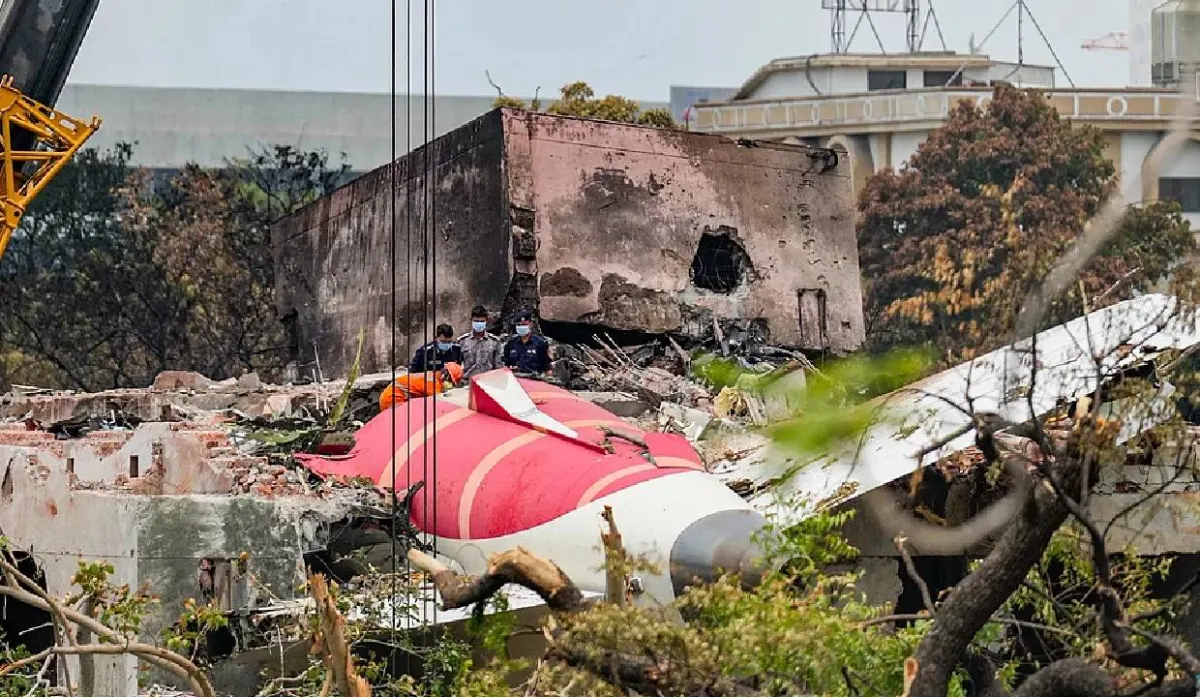
The Federation of Indian Pilots is demanding Boeing 787 simulator tests to clarify technical factors in the fatal 2025 Air India Flight 171 crash.
Key Takeaways
- •FIP requests Boeing 787 simulator tests for AI171 crash investigation.
- •Preliminary report indicates fuel switches moved to CUTOFF 32 seconds post-takeoff.
- •Tata Group pledged 1 crore INR compensation to each victim's family.
- •Final AAIB investigation report is expected to be released in late 2026.
Addressing Technical Ambiguities in the AI171 Probe
The Federation of Indian Pilots (FIP) has formally requested that the Aircraft Accident Investigation Bureau (AAIB) conduct controlled Boeing 787 simulator tests to verify critical technical data related to the Air India flight 171 crash. The disaster, which occurred on June 12, 2025, involved a Boeing 787-8 (registration VT-ANB) and resulted in 260 fatalities, including 241 passengers and crew and 19 individuals on the ground. As the investigation enters its second year, the FIP’s call for independent validation underscores growing concerns regarding the sequence of events leading to the aircraft's impact, which occurred precisely 32 seconds after takeoff.
The Nut Graf: A Conflict Over System Behavior
The core of the current debate centers on the AAIB preliminary report, which stated that both engine fuel control switches transitioned from RUN to CUTOFF with a 1-second time gap. This action triggered a dual engine shutdown. The FIP, alongside legal counsel representing over 130 victims' families, argues that this timeline fails to account for potential software anomalies or uncommanded electrical system behaviors. By pushing for simulator trials, the FIP aims to determine if the Ram Air Turbine (RAT) deployment and subsequent fuel system changes were the result of pilot input or an underlying mechanical failure in the aircraft’s complex fly-by-wire architecture.
Investigating Systemic Interactions
According to the AAIB, the official investigation portal remains the primary source for the ongoing analysis. The FIP has urged investigators to integrate survivor accounts, cockpit warnings, Aircraft Communications Addressing and Reporting System (ACARS) messages, and Enhanced Airborne Flight Recorder (EAFR) data to construct a more accurate timeline. The union suggests that the investigation must examine whether the Ram Air Turbine deployment—which typically occurs during a total loss of power—interacted with the fuel system in a manner not currently captured by the preliminary analysis.
This push for transparency is bolstered by the Boeing 787 technical specifications, which detail the aircraft's reliance on integrated electrical and hydraulic systems. Industry experts note that the debate mirrors historical precedents, such as the British Airways Flight 38 incident in 2008, where fuel starvation led to a dual engine failure, highlighting the catastrophic risks of abrupt thrust loss in large twin-engine aircraft.
Stakeholder Impact and Compensation
The human and financial toll of the Ahmedabad aviation disaster remains significant. Tata Group, the parent company of Air India, has pledged compensation of 1 crore Indian rupees (approximately $115,000) to the families of each victim. However, for the survivors and families, the delay in the final report has caused prolonged distress. The legal team representing the victims has already submitted correspondence to regulators suggesting that recent full-motion simulator tests contradict the timeline established in the initial report, creating a high-stakes standoff between the AAIB and external technical experts.
The Future of Cockpit Monitoring
The incident has accelerated the global debate surrounding cockpit safety technology. International Air Transport Association (IATA) Director General Willie Walsh has publicly advocated for the installation of video cameras in cockpits to capture pilot actions definitively, a move intended to resolve ambiguities that have plagued high-profile investigations. This trend reflects a broader industry shift toward monitoring the complex interactions between pilot actions and highly automated flight decks, as seen in the aftermath of the 2015 TransAsia Airways Flight 235 crash.
Expected Timeline for Final Findings
The AAIB is expected to release its final investigation report in late 2026. This document is intended to determine whether mechanical, electrical, or procedural factors were the primary drivers of the crash. The proposed simulator tests are viewed by labor groups as a necessary step to ensure that the final findings are not skewed by premature conclusions regarding pilot error, particularly given the complexity of the GEnx-1B engine management systems. The aviation industry continues to monitor these developments closely, as the findings will likely influence future airworthiness directives for the Boeing 787 fleet.
Frequently Asked Questions
- Why is the Federation of Indian Pilots requesting simulator tests?
- The FIP is seeking independent verification of the Boeing 787's system behavior, specifically regarding the relationship between Ram Air Turbine deployment and fuel control switch movements, to challenge the timeline presented in the AAIB's preliminary report.
- What was the official cause of the dual engine shutdown on flight AI171?
- The AAIB's preliminary report stated that both engine fuel control switches transitioned from RUN to CUTOFF with a one-second time gap, resulting in a dual engine shutdown 32 seconds after takeoff.
For global airline trends and commercial aviation news, turn to omniflights.com. Discover how innovation is shaping aviation through aircraft systems, avionics, and digital tools at omniflights.com/technology.
Written by Hardik Vishwakarma
Co-Founder & Aviation News Editor leading initiatives that improve trust and visibility across the global aviation industry. Covers airlines, airports, safety, and emerging technology.
Visit ProfileYou Might Also Like
Discover more aviation news based on similar topics
Ryanair Flight RK514 Diverts to Birmingham After Emergency
Ryanair flight RK514 diverted to Birmingham Airport on September 13, 2026, following a medical emergency involving a passenger.

Amazon Suspends 21 Air After Fatal Miami 767 Runway Overrun
Amazon has suspended operations with 21 Air following a fatal Boeing 767 runway overrun at Miami International Airport that resulted in five deaths.
FAA Proposes A220 Fuel Line Inspections for US Operators
The FAA issued a proposed directive requiring inspection of motive-flow fuel lines on 13 US-registered Airbus A220s to prevent potential leaks.
NATS Denies Military Jet Role in UK ATC Outage
The UK Ministry of Defence denied its aircraft caused a NATS outage that led to over 2,000 flight cancellations and calls for CEO resignation.
21 Air Miami Crash: NTSB Investigates 767 Runway Overrun
A fatal 21 Air Boeing 767 crash at Miami International Airport has triggered an NTSB investigation amid scrutiny of Amazon Air's contract oversight.

Amazon Cargo Plane Crash: 5 Remembered After MIA Excursion
Five cleaning crew members died after an Amazon-contracted Boeing 767 overran the runway at Miami International Airport at 158 knots.