FAA Rule Change Cuts SFO Arrival Capacity, Increases Flight Delays

Co-Founder & CEOAviation News Editor delivering trusted coverage across the global aviation industry.
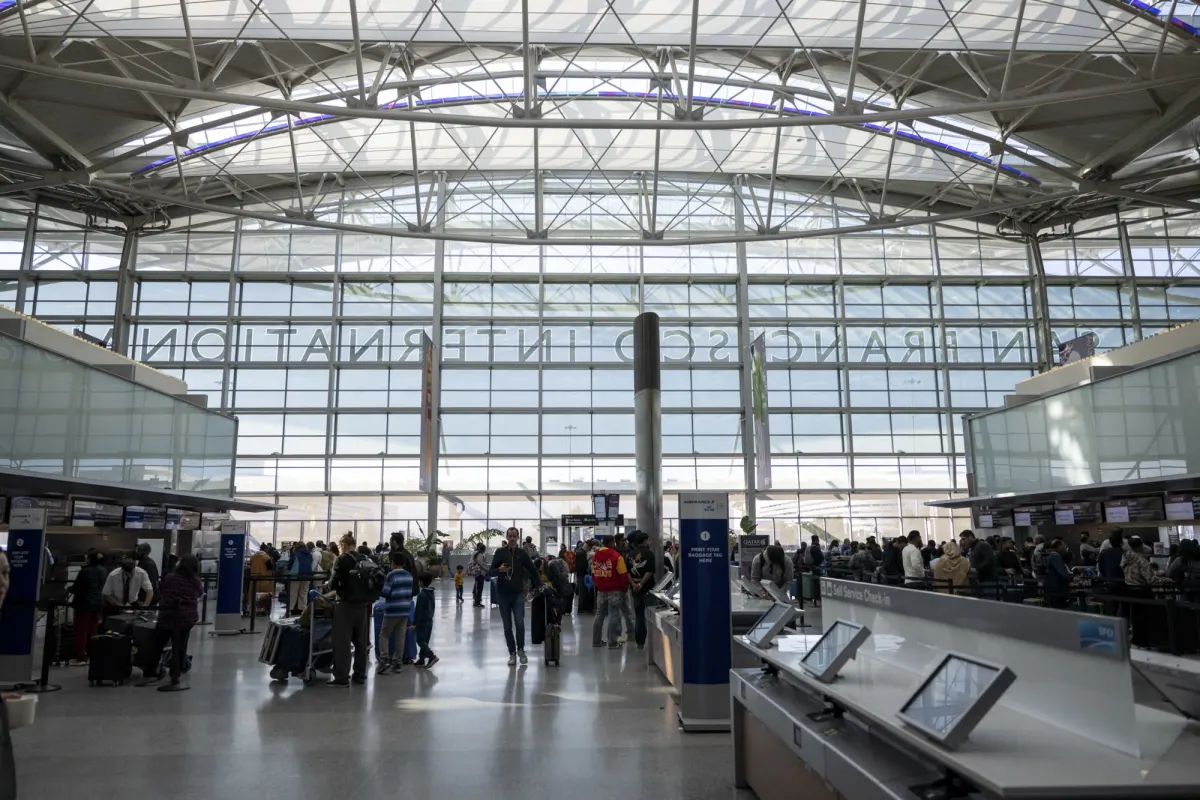
The FAA has permanently banned side-by-side landings at SFO, cutting arrival capacity by 33% and increasing expected flight delays for travelers.
Key Takeaways
- •Reduces SFO's maximum arrival capacity by 33%, from 54 to 36 flights per hour.
- •Increases projected delays to affect 25% of all arriving flights, up from a 15% forecast.
- •Bans a decades-old practice of side-by-side visual landings on runways 750 feet apart.
- •Coincides with a six-month runway repaving project, compounding disruption through October 2026.
A new directive from the Federal Aviation Administration (FAA) has permanently altered landing procedures at San Francisco International Airport (SFO), leading to a significant reduction in the airport's arrival capacity and increased flight delay projections. The rule change, which took effect in early April 2026, eliminates a long-standing practice of simultaneous side-by-side visual landings, cutting the airport's maximum arrival rate by 33% from 54 flights per hour to just 36.
The operational change coincides with a six-month runway repaving project, compounding disruptions for passengers. According to SFO Spokesperson Doug Yakel, the combination of the FAA mandate and construction work is now expected to cause delays for approximately 25% of all arriving flights, a significant increase from the 15% originally forecasted for the construction project alone. For passengers, especially those connecting through SFO, this means a higher likelihood of delays averaging 30 minutes or more during the peak travel season.
FAA Mandate and Operational Changes
The core of the issue lies with SFO's unique airfield geometry. The airport's two primary landing runways, 28L and 28R, are a set of Closely Spaced Parallel Runways (CSPR), with their centerlines separated by only 750 feet. This is substantially less than the FAA's standard of 2,500 feet or more for unrestricted parallel operations. For decades, the FAA permitted SFO to conduct simultaneous visual approaches in clear weather, where pilots would maintain separation by sight, allowing for an arrival rate of up to 60 aircraft per hour. In foggy or low-visibility conditions, the airport would switch to staggered, radar-guided approaches, which slowed operations.
The new FAA directive makes the staggered approach procedure mandatory in all weather conditions. FAA spokesman Ian Gregor stated the previous practice was deemed "too dangerous" following a nationwide safety review. This review was initiated after several recent near-misses and the January 2025 American Airlines Flight 5342 collision, which prompted heightened regulatory scrutiny on aircraft separation standards. Air traffic controllers at the Northern California Terminal Radar Approach Control (TRACON) facility are now required to manage all arrivals using radar-based separation, increasing their sequencing workload.
The impact is most acute for United Airlines, which operates its largest West Coast hub at SFO. The airline is currently reviewing the updated FAA guidance to determine if future flight schedule adjustments are necessary to mitigate the effects of the capacity reduction. Other major carriers, such as Alaska Airlines, also face significant scheduling challenges.
SFO Runways vs. FAA Standards
| Metric | SFO Parallel Runways | Standard FAA Parallel Runways |
|---|---|---|
| Runway Centerline Separation | 750 feet | 2,500+ feet |
| Clear Weather Arrival Capacity | 36 flights/hour | N/A (Varies) |
Technical Analysis
This development represents a fundamental, safety-driven shift in air traffic management at one of the nation's busiest airports. The FAA's decision prioritizes systemic safety over operational efficiency, effectively ending the era of visual separation as a primary capacity-enhancing tool at SFO. The change institutionalizes a permanent operational constraint on the airport, forcing airlines to adapt to a lower-capacity reality. Historically, similar situations following major safety reviews have led to lasting changes in procedure, as seen after the 2013 implementation of staggered approaches at SFO for bad weather, a procedure that has now become the all-weather standard. This move accelerates the industry trend towards greater reliance on radar-based separation and de-conflicting traffic, even at the cost of on-time performance. For airlines, particularly hub-and-spoke carriers like United, this artificial capacity cap may force strategic network adjustments, such as upgauging aircraft to larger models or shifting some connecting traffic to secondary airports like Oakland (OAK) or San Jose (SJC).
What Comes Next
The current period of heightened delays is expected to persist through the summer. The repaving project on Runway 1 Right (1R/19L) is scheduled for completion around October 2, 2026. SFO officials have indicated that once construction is finished, the airport's arrival rate is expected to recover slightly to approximately 45 flights per hour. However, this rate remains significantly below the previous maximum of 54-60 per hour, meaning SFO will operate with a permanently reduced capacity compared to historical levels.
Why This Matters
For the aviation industry, the FAA's decision at SFO is a clear signal that safety regulators are willing to impose permanent capacity reductions at major hubs to mitigate perceived risks. This move has long-term implications for airline network planning, potentially making SFO a more challenging and expensive airport for operations. For travelers, the change means that flight delays are likely to become a more common feature of flying into San Francisco, regardless of the weather.
From airline operations to fleet updates, commercial aviation news lives at omniflights.com. Discover how innovation is shaping aviation through aircraft systems, avionics, and digital tools at omniflights.com/technology.
Written by Hardik Vishwakarma
Co-Founder & Aviation News Editor leading initiatives that improve trust and visibility across the global aviation industry. Covers airlines, airports, safety, and emerging technology.
Visit ProfileYou Might Also Like
Discover more aviation news based on similar topics

FAA Clears Boeing 737 MAX 10 Software Glitch
The FAA determined a software glitch in 737 MAX flight computers poses no safety risk, clearing a path for MAX 10 certification by late 2026.

FAA Faces $3.5 Billion Shortfall in ATC Modernization
FAA Administrator Bryan Bedford reported a $3.5 billion shortfall for the Brand New Air Traffic Control System, totaling $16 billion for Phase One.
FAA Pauses Flights into LAX Due to Staffing Shortages
The FAA issued a temporary ground stop for flights bound for LAX on Monday morning due to staffing shortages at the Southern California TRACON.

FAA Proposes Ending Overland Supersonic Flight Ban
The FAA has proposed a new performance-based noise standard to replace the 1973 ban on overland supersonic flight, enabling future commercial travel.

DOT Rule Exempts Airlines From Cyberattack Delay Costs
Starting October 19, 2026, the DOT will allow airlines to withhold meal and hotel vouchers for delays caused by cyberattacks and nine other events.

Wizz Air, Ryanair Demand NATS Reform After ATC Failure
Wizz Air and Ryanair are calling for urgent NATS reform after a September 8 system failure caused over 1,000 flight cancellations across the UK.