TSA Tests Private Security, Remote Screening After Shutdowns

Co-Founder & CEOAviation News Editor delivering trusted coverage across the global aviation industry.
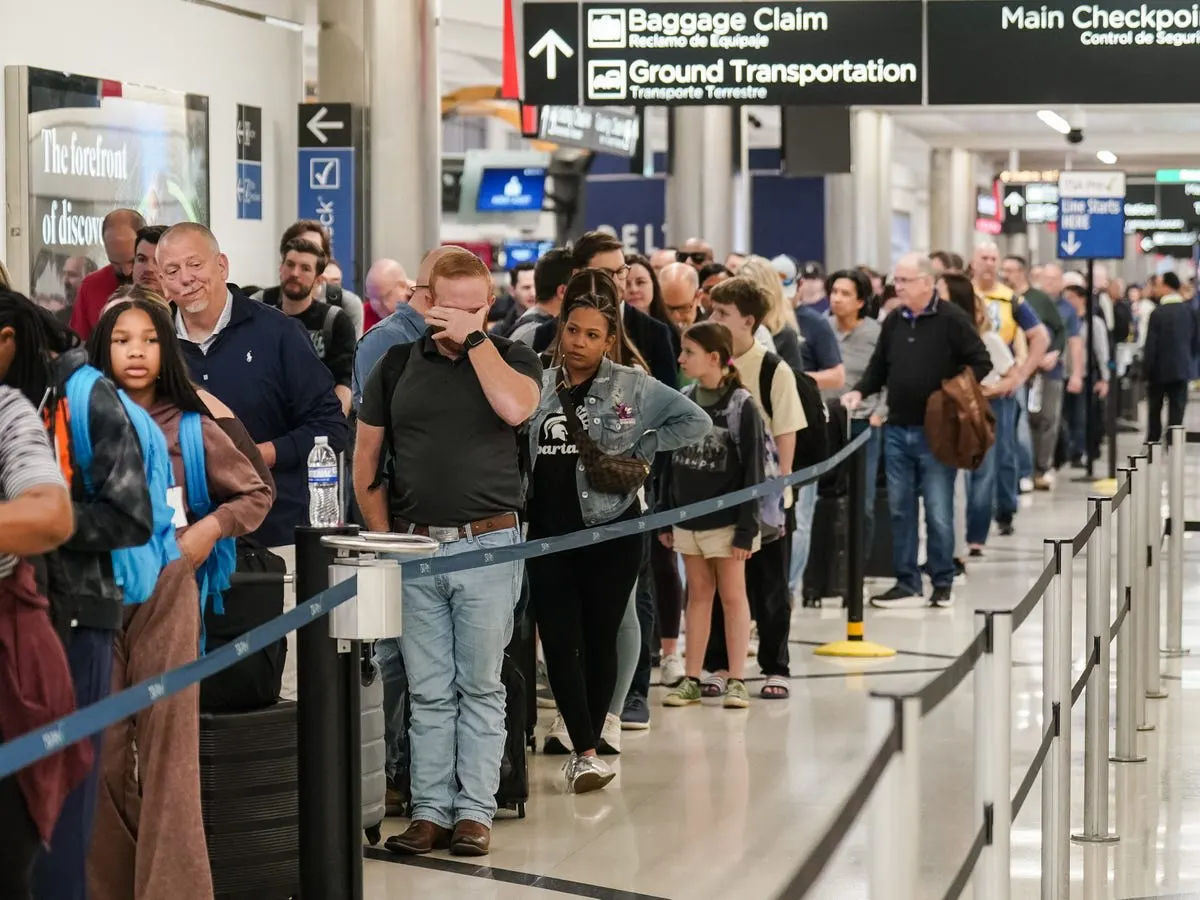
The TSA is testing private contractors and remote screening in Boston to prevent security chaos seen during recent government shutdowns.
Key Takeaways
- •TSA launches 'Gold+' to expand private airport security nationwide.
- •Boston Logan opens a remote TSA screening terminal 23 miles away.
- •Move follows major disruptions during recent government shutdowns.
- •Initiatives could impact 50,000 federal TSA officer positions.
Following major operational disruptions during recent government shutdowns, the Transportation Security Administration (TSA) is launching two experiments designed to increase the role of private companies in airport security. The initiatives, a new TSA Gold+ program and an off-airport TSA screening trial at Boston Logan International Airport (BOS), represent a significant push toward airport security privatization.
The new policies aim to create a more resilient security infrastructure, less vulnerable to federal funding disputes that have previously led to chaos for travelers. One initiative, TSA Gold+, is a major expansion of the existing Screening Partnership Program (SPP). The second is a pilot program launching in June that allows some passengers to clear security at a Logan remote terminal in Framingham, Massachusetts, approximately 23 miles from the airport, before being transported to their gate on a secure bus.
Background: Shutdowns Expose System Vulnerability
The catalyst for this strategic shift stems from the severe operational challenges during government shutdowns in late 2025 and early 2026. As thousands of federal Transportation Security Officers (TSOs) worked without pay, widespread call-outs and resignations led to drastically thinned staffing and hours-long security lines at major airports. In contrast, the 20 U.S. airports participating in the TSA Screening Partnership Program (SPP), such as San Francisco International Airport (SFO), utilized private security contractors and experienced minimal disruptions. This disparity highlighted the operational benefits of a security model not directly tied to congressional funding appropriations.
This is not the first time such vulnerabilities have been exposed. The 2018-2019 federal government shutdown similarly saw mass sickouts among TSOs, forcing checkpoint closures at hubs like Miami and Houston and reinforcing the case for alternative security models. The SPP itself, established in 2004 under the authority of 49 U.S.C. § 44920, provided the foundational framework for these privatization efforts.
The Two New Experiments
TSA Gold+ Program
The TSA Gold+ program builds directly on the existing SPP. While the current program allows airports to use private contractors for screening staff, Gold+ expands this to include the procurement, installation, and maintenance of screening equipment. This shift is intended to accelerate technology upgrades and further insulate airport security operations from the federal budget process. By handing over equipment management, the TSA aims to create a more agile system where contractors can innovate more quickly.
However, this move has drawn concern from labor advocates. The American Federation of Government Employees (AFGE), which represents many of the approximately 50,000 TSOs, warns that widespread privatization could erode federal jobs, lower wages, and weaken worker protections. According to the Office of Personnel Management (OPM), TSOs currently have a starting salary around $40,000 but can earn an average of $60,000 to $75,000 annually with experience and locality pay.
Boston's Remote Screening Pilot
The second experiment, launching June 1, 2026, at Boston Logan International Airport (Massport), tests the concept of off-airport processing. In partnership with the ground transport company The Landline Company, passengers flying on Delta Air Lines and JetBlue can check their bags and clear a TSA checkpoint in Framingham. After clearing security, they board a bus that operates as a sterile transit vehicle, taking them directly to the secure side of the terminal at Logan.
This model aligns with the growing industry trend of off-airport passenger processing, which helps airports manage terminal congestion without costly physical expansion. It also leverages the precedent set by Landline's earlier partnerships, which established sterile bus connections from smaller regional airports to major hubs. While TSA officers will still conduct the screening, the program relies on Landline to maintain a secure environment during the 45 to 60-minute drive on public roads, a requirement governed by the TSA's Sterile Transit Area Requirements.
Technical Analysis
These initiatives signal a convergence of several key industry trends: the privatization of security operations, the use of off-airport processing to manage capacity, and the integration of multi-modal transport into airline networks. The move represents a strategic pivot from a centralized, federally-managed security apparatus to a more distributed, public-private hybrid model. Proponents argue this insulates critical infrastructure from political volatility and bureaucratic delays. According to Sheldon Jacobson, a computer science professor at the University of Illinois Urbana-Champaign who contributed to the development of TSA PreCheck, privatization can work if standards and training are rigorous.
However, the Boston pilot introduces new operational risks. Jacobson notes that transporting cleared passengers on public highways creates uncontrollable variables. A traffic accident or medical emergency on the bus could compromise the sterile environment, forcing a full rescreening of all passengers and potentially causing them to miss their flights. The challenge lies in extending the secure airport perimeter to a moving vehicle on public infrastructure, a concept that introduces a potential weak point in the security chain.
What Comes Next
The Boston remote screening terminal is confirmed to launch on June 1, 2026. Meanwhile, the TSA is moving forward with the Gold+ program, with a pre-solicitation response deadline for potential contractors set for May 25, 2026. The performance of these two pilot programs will likely determine the future direction and pace of airport security privatization across the United States.
Why This Matters
These TSA experiments could fundamentally reshape the passenger experience and the business of airport security in the U.S. A successful rollout could lead to a nationwide expansion of private screening contractors and the proliferation of remote check-in facilities in suburban areas. For the aviation industry, this shift promises greater operational stability and efficiency, but it also raises critical questions about labor standards, security oversight, and the introduction of new logistical complexities.
Frequently Asked Questions
- What is the TSA Gold+ program?
- TSA Gold+ is an expansion of the Screening Partnership Program (SPP). It allows private contractors to manage not only security screening staff but also the procurement and maintenance of screening equipment at U.S. airports, aiming to reduce reliance on federal funding.
- How does the Boston Logan remote screening terminal work?
- Passengers for Delta and JetBlue can clear TSA security at a facility in Framingham, 23 miles from the airport. They then board a secure bus operated by Landline, which transports them directly to their gate inside the airport's sterile area.
- Why is the TSA considering more privatization for airport security?
- The TSA is exploring privatization to prevent the widespread disruptions and long security lines experienced during recent government shutdowns, when federal TSA officers worked without pay. Airports with private screeners, like San Francisco, saw minimal impact during those periods.
From airline operations to fleet updates, commercial aviation news lives at omniflights.com. Discover how innovation is shaping aviation through aircraft systems, avionics, and digital tools at omniflights.com/technology.
Written by Hardik Vishwakarma
Co-Founder & Aviation News Editor leading initiatives that improve trust and visibility across the global aviation industry. Covers airlines, airports, safety, and emerging technology.
Visit ProfileYou Might Also Like
Discover more aviation news based on similar topics

FAA Faces $3.5 Billion Shortfall in ATC Modernization
FAA Administrator Bryan Bedford reported a $3.5 billion shortfall for the Brand New Air Traffic Control System, totaling $16 billion for Phase One.
FAA Pauses Flights into LAX Due to Staffing Shortages
The FAA issued a temporary ground stop for flights bound for LAX on Monday morning due to staffing shortages at the Southern California TRACON.

FAA Proposes Ending Overland Supersonic Flight Ban
The FAA has proposed a new performance-based noise standard to replace the 1973 ban on overland supersonic flight, enabling future commercial travel.

DOT Rule Exempts Airlines From Cyberattack Delay Costs
Starting October 19, 2026, the DOT will allow airlines to withhold meal and hotel vouchers for delays caused by cyberattacks and nine other events.

Wizz Air, Ryanair Demand NATS Reform After ATC Failure
Wizz Air and Ryanair are calling for urgent NATS reform after a September 8 system failure caused over 1,000 flight cancellations across the UK.

US Treasury Iran Sanctions Target 27 Airlines, Mahan Air
The U.S. Treasury sanctioned 36 entities, including 27 Iranian airlines, to disrupt illicit procurement networks used by the Iranian government.