FAA Proposes Lifting 1973 Ban on Supersonic Overland Flight

Co-Founder & CEOAviation News Editor delivering trusted coverage across the global aviation industry.
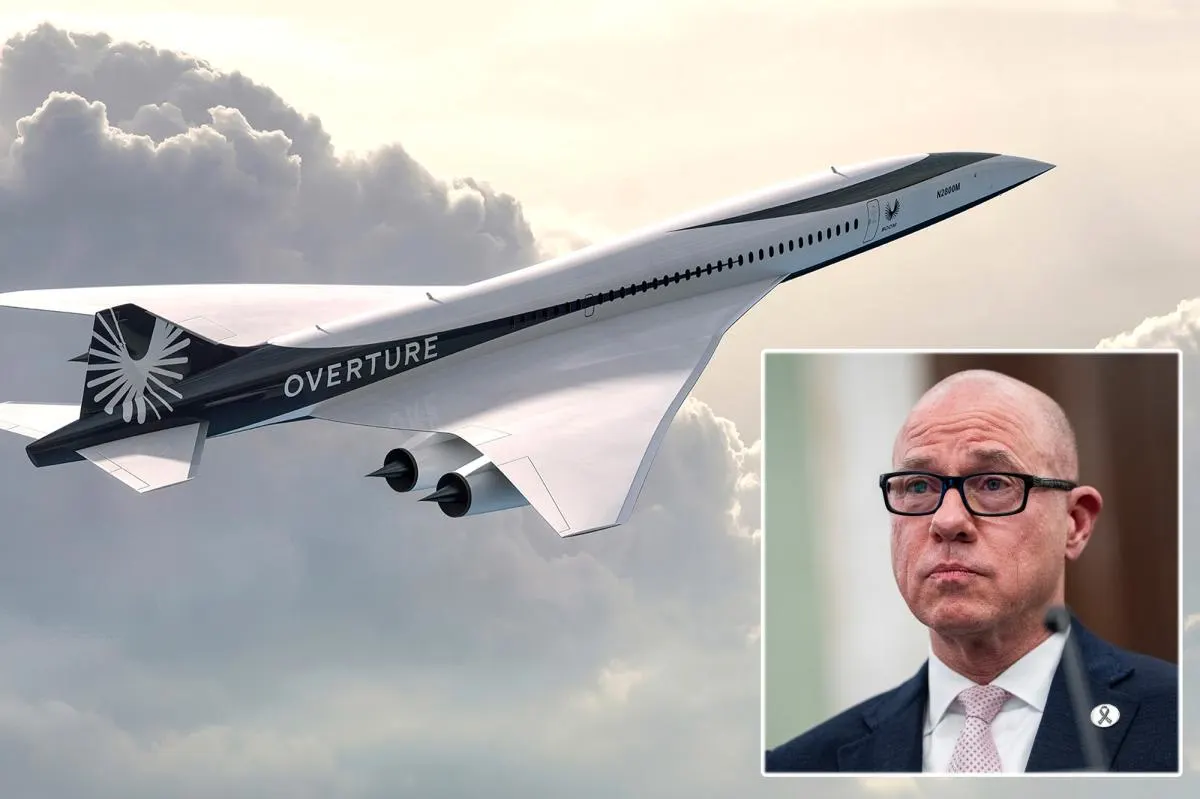
The FAA proposed replacing the 1973 supersonic overland flight ban with a 0.11 psf noise limit to enable faster transcontinental travel.
Key Takeaways
- •FAA proposed lifting the 1973 ban on supersonic overland flight.
- •New noise limit set at 0.11 psf to allow supersonic operations.
- •Boom Supersonic Overture targets entry into service by 2030.
- •Final rule for supersonic overland flight expected by mid-2027.
FAA Supersonic Flight Proposal Advances
The Federal Aviation Administration (FAA) has initiated a major regulatory shift that could fundamentally alter transcontinental travel. According to the Enabling Supersonic Overland Flight proposal released in July 2026, the agency is seeking to repeal the 53-year-old blanket ban on civil supersonic flight over the continental United States. This FAA supersonic flight proposal replaces the existing speed-based prohibition with a performance-based noise standard, marking a critical milestone for civil supersonic travel.
The Shift to Noise-Based Standards
The proposed rule, formally titled Enabling Supersonic Overland Flight (Docket FAA-2026-6935), establishes a maximum allowable sonic boom overpressure of 0.11 pounds per square foot (psf) at the surface. This move is designed to foster aerospace innovation while providing a legal framework for the industry. FAA Administrator Bryan Bedford stated that advances in materials science and noise reduction will allow for the repeal of the 1970s-era ban while minimizing community impacts. The policy follows Executive Order 14304, signed in June 2025, which mandated the agency to modernize its regulatory stance on high-speed flight.
Industry Impact and Technical Evolution
For aircraft manufacturers, the new rule provides the regulatory certainty required to certify next-generation airliners for domestic routes. Industry leaders are currently developing aircraft capable of Mach cutoff operation, a technique that refracts shock waves upward to reduce the traditional sonic boom to a quieter 'sonic thump.' Manufacturers such as Boom Supersonic are targeting entry into service for the Overture airliner by 2030, with designs currently intended to carry 64 to 80 passengers at speeds up to Mach 1.7.
Boom Overture vs. Concorde: Key Specifications
| Metric | Boom Overture | Concorde |
|---|---|---|
| Cruising Speed | Mach 1.7 | Mach 2.04 |
| Passenger Capacity | 64-80 | 92-128 |
Regulatory and Environmental Context
While the industry views the proposal as a catalyst for growth, some groups have raised concerns. The International Council on Clean Transportation (ICCT) has argued that the 0.11 psf limit may not adequately address human annoyance levels. Historically, the 1973 ban was enacted following widespread public complaints regarding noise and property damage. The retirement of the Concorde in 2003 was also heavily influenced by these restrictive route limitations, which confined supersonic operations primarily to transoceanic paths. By shifting to a performance-based standard, the FAA aims to reconcile technological advancement with community noise management.
Certification and Operational Timeline
The FAA is currently soliciting public comment on the Enabling Supersonic Overland Flight docket. The agency expects to finalize the rule by mid-2027. Additionally, a separate proposal regarding landing and takeoff noise standards for supersonic aircraft is expected to be released in late 2026. These milestones are essential for creating a viable commercial ecosystem for high-speed domestic flights, including the potential for a three-hour transcontinental transit.
Why This Matters for Aviation Stakeholders
For airlines and premium passengers, the potential for significantly reduced flight times represents a major shift in the competitive landscape of transcontinental routes. For communities situated along flight paths, the rule signals a transition to a new noise profile that will require ongoing monitoring and potential localized adjustments. The move positions the U.S. at the forefront of the next era of high-speed commercial aviation, provided that manufacturers can meet the stringent overpressure requirements during the certification process.
Frequently Asked Questions
- What is the new noise limit for supersonic overland flights?
- The FAA's proposed rule limits sonic boom overpressure at the surface to a maximum of 0.11 pounds per square foot (psf).
- When is the Boom Supersonic Overture expected to enter service?
- Boom Supersonic is targeting an entry-into-service date of 2030 for its Overture airliner, subject to regulatory approvals.
For in-depth airline coverage and commercial aviation news, omniflights.com delivers timely industry insights. Get the latest updates on major hubs, regional terminals, and airport operations via the Airports section at omniflights.com/airports.
Written by Hardik Vishwakarma
Co-Founder & Aviation News Editor leading initiatives that improve trust and visibility across the global aviation industry. Covers airlines, airports, safety, and emerging technology.
Visit ProfileYou Might Also Like
Discover more aviation news based on similar topics

FAA Faces $3.5 Billion Shortfall in ATC Modernization
FAA Administrator Bryan Bedford reported a $3.5 billion shortfall for the Brand New Air Traffic Control System, totaling $16 billion for Phase One.
FAA Pauses Flights into LAX Due to Staffing Shortages
The FAA issued a temporary ground stop for flights bound for LAX on Monday morning due to staffing shortages at the Southern California TRACON.
FAA Proposes Ending Overland Supersonic Flight Ban
The FAA has proposed a new performance-based noise standard to replace the 1973 ban on overland supersonic flight, enabling future commercial travel.

DOT Rule Exempts Airlines From Cyberattack Delay Costs
Starting October 19, 2026, the DOT will allow airlines to withhold meal and hotel vouchers for delays caused by cyberattacks and nine other events.

Wizz Air, Ryanair Demand NATS Reform After ATC Failure
Wizz Air and Ryanair are calling for urgent NATS reform after a September 8 system failure caused over 1,000 flight cancellations across the UK.

US Treasury Iran Sanctions Target 27 Airlines, Mahan Air
The U.S. Treasury sanctioned 36 entities, including 27 Iranian airlines, to disrupt illicit procurement networks used by the Iranian government.