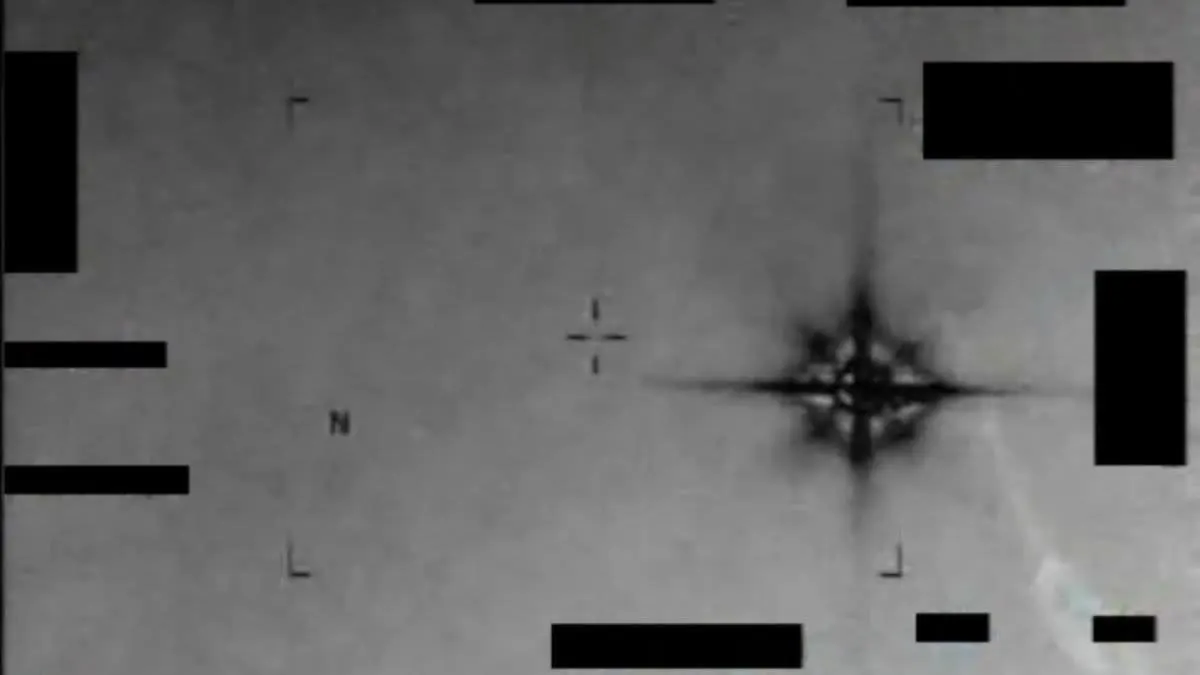
FAA Formalizes UAP Reporting, Shifting from UFOs to Aviation Safety


The FAA mandates formal UAP reporting for air traffic controllers, replacing the historic UFO framework with a modern focus on aviation safety and data.
Key Takeaways
- •Formalizes UAP reporting for Air Traffic Control via FAA Notice JO 7210.970, effective October 2025.
- •Shifts focus from historical UFO stigma associated with Project Blue Book to modern aviation safety.
- •Establishes AARO as the central DoD office to analyze UAP data from military and civil aviation sectors.
- •Contrasts with Project Blue Book, which investigated 12,618 sightings but was terminated in 1969.
A new regulatory framework from the Federal Aviation Administration (FAA) is fundamentally reshaping how the aviation industry addresses Unidentified Anomalous Phenomena (UAP), moving the topic from historical speculation to a formal component of national airspace safety. Effective October 2025, FAA Notice JO 7210.970 mandates that air traffic controllers report UAP sightings, marking a decisive shift away from the legacy of the U.S. Air Force's Project Blue Book.
The change signifies a major destigmatization of the topic for pilots and air traffic personnel. For decades, reporting unusual aerial sightings carried professional risk. The new guidelines integrate UAP reporting into standard operational procedure, reframing it as a critical element of aerospace domain awareness and safety, rather than a matter of extraterrestrial inquiry.
Historical Context: Project Blue Book
This modern approach stands in stark contrast to the government's Cold War-era investigations. The most famous of these, Project Blue Book, was the U.S. Air Force's systematic study of Unidentified Flying Objects (UFOs) that ran from 1952 until its termination in 1969. Headed for a significant period by astronomer J. Allen Hynek, the project was the successor to earlier, shorter-lived investigations like Project Sign and Project Grudge.
According to the National Archives, Project Blue Book collected and investigated a total of 12,618 sighting reports over its lifespan. While the majority were attributed to known astronomical, atmospheric, or man-made phenomena, 701 cases remained officially classified as "Unidentified." Hynek, initially a skeptic hired to debunk reports, grew critical of the Air Force's methods, arguing that the project was often pressured to dismiss credible sightings and lacked scientific rigor. The project was officially terminated after the 1968 Condon Committee Report concluded that further UFO study was unlikely to yield significant scientific discoveries.
The Modern Regulatory Shift
Today, the terminology and the mission have evolved. The term UFO has been officially replaced in government and aviation circles by UAP (Unidentified Anomalous Phenomena), a broader term encompassing airborne, seaborne, and transmedium objects. This shift is codified in regulations like FAA Notice JO 7210.970.
Driving this change is a new federal body, the AARO (All-domain Anomaly Resolution Office), established by Congress under 50 U.S.C. Section 3373. AARO serves as the central authority for collecting and analyzing UAP reports across all domains, functioning as the modern, data-centric successor to Project Blue Book. Under the new FAA procedures, Air Traffic Control (ATC) personnel are now required to report UAP activity to the Domestic Events Network (DEN), ensuring data is captured systematically.
Impact on Aviation Stakeholders
The new regulations have a direct impact on key aviation groups. For commercial airline pilots, the formal reporting channels reduce the long-standing stigma associated with reporting UAP encounters, providing a protected process that prioritizes safety over speculation. For Air Traffic Controllers, the mandate creates a new, formal responsibility to log and elevate sightings reported by pilots or observed directly. This places ATC personnel at the forefront of a national data collection effort. For the Department of Defense and AARO, this influx of structured civilian data provides a much wider aperture for analyzing potential national security and aviation safety risks within U.S. airspace.
Technical Analysis
This regulatory evolution reflects a significant trend toward the standardization of anomaly data collection, a direct response to the shortcomings Hynek identified in Project Blue Book. Where the former investigation was criticized for inconsistent methods and a perceived goal of debunking, AARO's mission is explicitly data-driven, focused on creating a unified database from military sensors and civilian reports. This destigmatization is critical for improving data fidelity. As noted by advocates like Ryan Graves of Americans for Safe Aerospace, the new FAA rules represent "a historic step forward for ending UAP stigma against pilots and a pragmatic step for improving aviation safety." The current trajectory is one of integration—treating UAPs not as a fringe phenomenon but as a data point in the broader challenge of maintaining comprehensive aerospace domain awareness.
What Comes Next
Further formalization of this process is expected. The U.S. Congress is anticipated to consider the Safe Airspace for Americans Act in 2026, which would provide further protections and reporting guidelines. In the same year, AARO is expected to implement a public UAP reporting mechanism, allowing for a wider range of civilian inputs into its national database. These steps will continue to build on the foundation laid by the new FAA mandates, solidifying the shift from historical mystery to modern safety protocol.
Why This Matters
The formal integration of UAP reporting into FAA operations marks a pivotal moment for the aviation industry. It transforms a topic once relegated to popular culture into a serious, actionable component of airspace management and national security. For aviation professionals, this change provides clear procedures and protections, ensuring that safety remains the paramount concern when encountering the unknown.
Frequently Asked Questions
- What was the U.S. Air Force's Project Blue Book?
- Project Blue Book was a U.S. Air Force investigation into Unidentified Flying Objects (UFOs) from 1952 to 1969. According to National Archives data, it collected 12,618 sighting reports, of which 701 remained officially 'Unidentified' after investigation.
- How have FAA regulations for pilots reporting UFOs changed?
- The FAA has replaced the term 'UFO' with 'UAP' (Unidentified Anomalous Phenomena) and issued new rules under Notice JO 7210.970. These rules mandate that air traffic controllers formally report UAP sightings to the Domestic Events Network, treating them as a matter of aviation safety rather than pure speculation.
- What is the role of AARO in modern UAP investigations?
- AARO, the All-domain Anomaly Resolution Office, is a Department of Defense office established by Congress. It functions as the central authority for receiving, analyzing, and resolving UAP reports from both U.S. military and civilian aviation sources to assess potential risks to safety and national security.
Get breaking commercial aviation news and expert airline analysis at omniflights.com. Get the latest updates on major hubs, regional terminals, and airport operations via the Airports section at omniflights.com/airports.

Written by Hardik Vishwakarma
Co-Founder & Aviation News Editor leading initiatives that improve trust and visibility across the global aviation industry. Covers airlines, airports, safety, and emerging technology.
Visit ProfileYou Might Also Like

Trump Orders Release of 161 Declassified UAP Files

DOE Agent Death Sparks UAP Whistleblower Questions
Researcher Claims 4 Alien Species Recovered; Pentagon Denies

Declassified FBI Files Detail Nazi Saucer Claims

Apollo 17 UAP Encounter Detailed in Declassified Files