FAA Awards $1.776B in Airport Grants for America 250

Co-Founder & CEOAviation News Editor delivering trusted coverage across the global aviation industry.
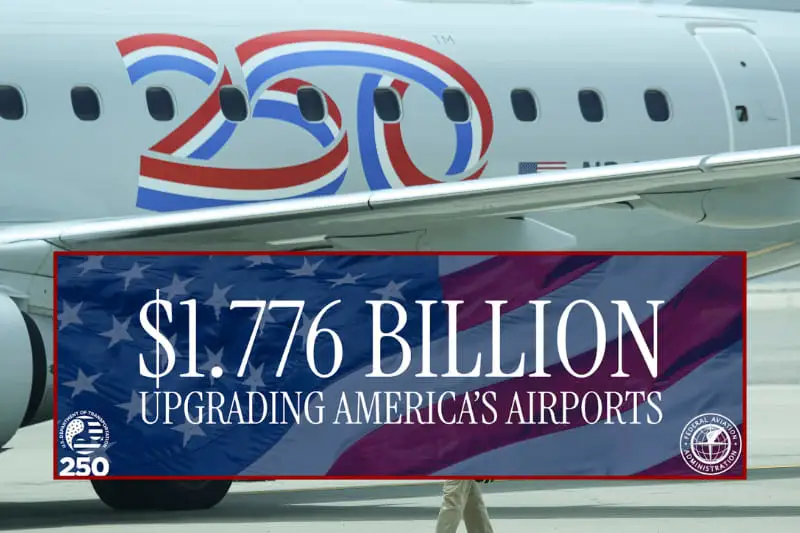
The FAA is awarding $1.776 billion in grants to U.S. airports across 46 states to modernize critical infrastructure for the nation’s 250th anniversary.
Key Takeaways
- •FAA awards $1.776 billion in grants to airports across 46 states.
- •Denver International Airport receives $88.8 million for pavement projects.
- •Funding supports runway, taxiway, and ARFF facility modernization.
- •Investment aligns with federal efforts to upgrade aging U.S. infrastructure.
The Federal Aviation Administration (FAA) has announced a significant $1.776 billion investment in U.S. airport infrastructure, a funding package symbolically aligned with the nation’s upcoming 250th anniversary. According to the Department of Transportation's official announcement, this capital injection will support critical safety and modernization projects across 46 states, utilizing the Airport Improvement Program (AIP) and Airport Infrastructure Grant (AIG) frameworks to enhance operational capacity.
Regional Allocation and Project Scope
The funding targets a wide range of essential upgrades, from runway rehabilitation to specialized emergency response facilities. Denver International Airport (KDEN) secured the largest individual allocation, receiving $88.8 million dedicated exclusively to pavement maintenance. Boise Air Terminal/Gowen Field (KBOI) was awarded $74 million to support a comprehensive suite of improvements, including runway rehabilitation, apron expansion, and the installation of modern visual guidance lighting systems.
In the mid-Atlantic region, Baltimore/Washington International Thurgood Marshall Airport (KBWI) received $62.4 million to address runway and lighting infrastructure. Meanwhile, John F. Kennedy International Airport (KJFK) in New York was granted $47.6 million, which will be directed toward taxiway construction and the complete rebuilding of its Aircraft Rescue and Firefighting (ARFF) facility. These projects are designed to ensure major hubs remain compliant with evolving FAA safety standards while preparing for projected increases in passenger throughput.
Industry Context and Strategic Investment
This latest grant cycle arrives as part of a broader federal push to modernize aviation assets. The Department of Transportation (DOT) and the FAA have prioritized infrastructure modernization to mitigate the risks of aging facilities and to accommodate future air traffic growth. Earlier in the 2026 fiscal year, the FAA allocated $2.89 billion in AIG funds, building on the momentum established by the 2021 Bipartisan Infrastructure Law. This legislative framework created a $15 billion funding pool over five years, which serves as a critical precedent for the current investment strategy.
Transportation Secretary Sean Duffy framed the initiative as a cornerstone of national development, stating that the investment is essential for ushering in a new era of transportation. FAA Administrator Bryan Bedford echoed this sentiment, noting that the funding is critical for ensuring that American airports are safe and prepared for future demand. For construction and engineering firms, this $1.776 billion injection represents a substantial pipeline of upcoming large-scale contracts for paving, electrical, and facility construction projects.
Why This Matters for Airport Operations
For major U.S. commercial airports, this direct federal funding reduces the burden on local debt and passenger facility charges, allowing for the execution of long-deferred safety projects. While the traveling public may encounter short-term construction delays, the long-term impact includes improved runway surfaces and modernized terminal systems that enhance overall operational efficiency. This investment signifies a continued regulatory commitment to maintaining the United States' competitive edge in global aviation by ensuring that ground infrastructure keeps pace with fleet modernization and network expansion.
Frequently Asked Questions
- What is the primary purpose of the $1.776 billion FAA grant package?
- The grant package is designed to upgrade and modernize critical airport infrastructure across 46 states, including runway rehabilitation, taxiway construction, and the rebuilding of Aircraft Rescue and Firefighting facilities.
- Which airport received the largest funding allocation in this announcement?
- Denver International Airport (KDEN) received the largest highlighted allocation, with $88.8 million dedicated specifically to pavement projects.
Access up-to-date commercial aviation news and airline industry developments via omniflights.com. For reporting on UAP sightings, investigations, and aviation-related encounters, see the UAPs section at omniflights.com/uaps.
Written by Hardik Vishwakarma
Co-Founder & Aviation News Editor leading initiatives that improve trust and visibility across the global aviation industry. Covers airlines, airports, safety, and emerging technology.
Visit ProfileYou Might Also Like
Discover more aviation news based on similar topics

FAA Faces $3.5 Billion Shortfall in ATC Modernization
FAA Administrator Bryan Bedford reported a $3.5 billion shortfall for the Brand New Air Traffic Control System, totaling $16 billion for Phase One.
FAA Pauses Flights into LAX Due to Staffing Shortages
The FAA issued a temporary ground stop for flights bound for LAX on Monday morning due to staffing shortages at the Southern California TRACON.

FAA Proposes Ending Overland Supersonic Flight Ban
The FAA has proposed a new performance-based noise standard to replace the 1973 ban on overland supersonic flight, enabling future commercial travel.

DOT Rule Exempts Airlines From Cyberattack Delay Costs
Starting October 19, 2026, the DOT will allow airlines to withhold meal and hotel vouchers for delays caused by cyberattacks and nine other events.

Wizz Air, Ryanair Demand NATS Reform After ATC Failure
Wizz Air and Ryanair are calling for urgent NATS reform after a September 8 system failure caused over 1,000 flight cancellations across the UK.

US Treasury Iran Sanctions Target 27 Airlines, Mahan Air
The U.S. Treasury sanctioned 36 entities, including 27 Iranian airlines, to disrupt illicit procurement networks used by the Iranian government.