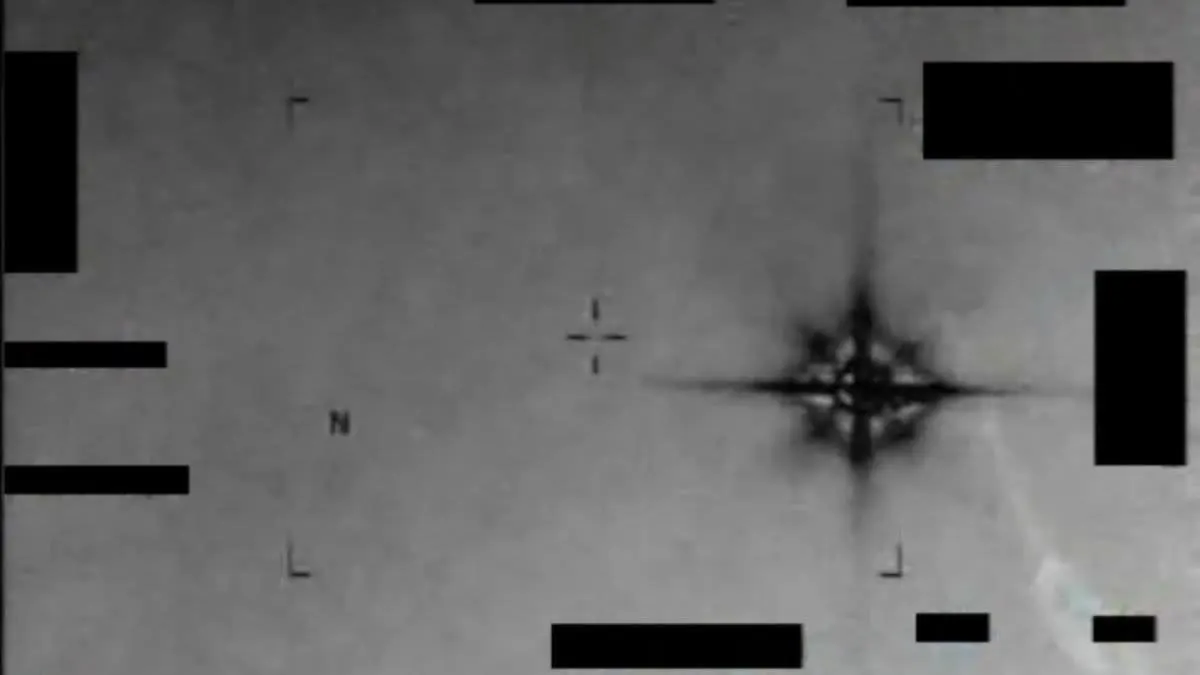
ESA's JUICE Captures Detailed Images of Interstellar Object 3I/ATLAS

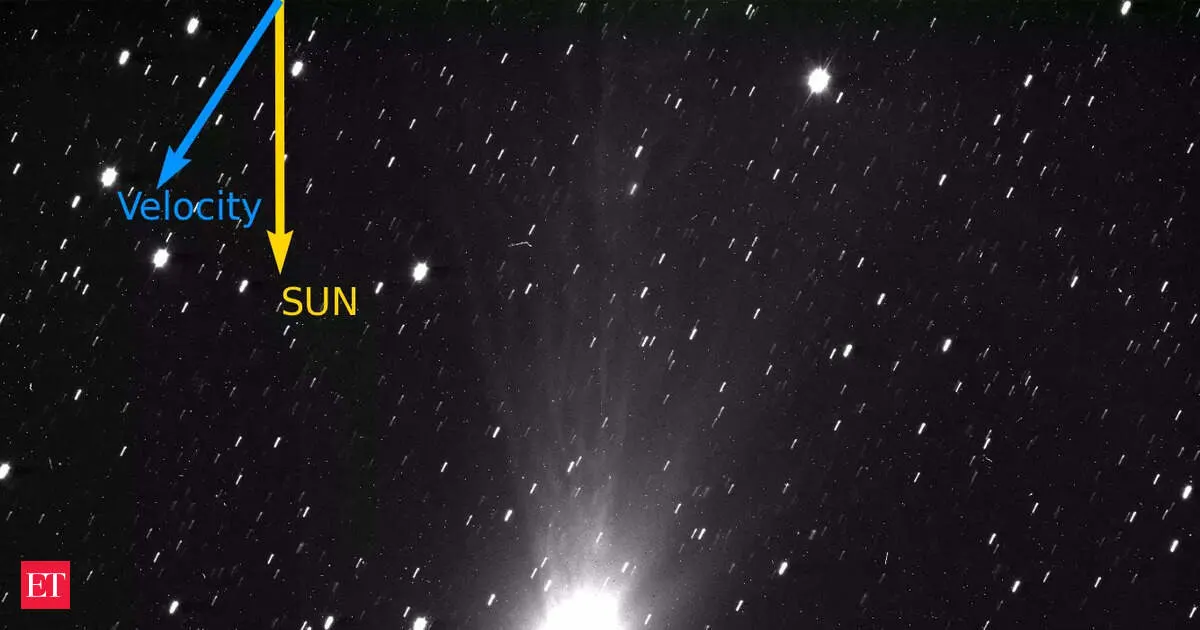
ESA's JUICE spacecraft captured over 120 images of 3I/ATLAS, the third known interstellar object, providing new data on its potentially abnormal behavior.
Key Takeaways
- •Captured over 120 images of interstellar object 3I/ATLAS via the ESA's JUICE spacecraft.
- •Represents the third confirmed interstellar visitor, following discoveries in 2017 and 2019.
- •Exhibits conflicting data, with ESA suggesting normal cometary behavior while some NASA JPL analyses note abnormal acceleration.
- •Offers a rare opportunity to directly analyze the composition of material from another star system.
The European Space Agency's (ESA) Jupiter Icy Moons Explorer (JUICE) spacecraft has successfully captured detailed imagery of 3I/ATLAS, the third confirmed interstellar object to be observed transiting our solar system. The spacecraft's science camera, JANUS, obtained over 120 images on November 6, 2025, providing scientists with a rare opportunity to study a visitor from another star system. These observations are critical for understanding the object's composition and trajectory, particularly as initial analyses present conflicting views on its behavior.
The study of interstellar objects provides a unique method for sampling the materials that form planetary systems around other stars. Following the detection of 1I/ʻOumuamua in 2017 and 2I/Borisov in 2019, 3I/ATLAS represents the latest chance to analyze such an object up close. The data gathered by the multi-instrument campaign on the JUICE mission will be crucial in determining whether the object's characteristics are consistent with comets from our own solar system or if they indicate a more exotic origin.
Discovery and Trajectory
The object, formally designated as the third interstellar object by the Minor Planet Center (MPC), was first detected on July 1, 2025, by the Asteroid Terrestrial-impact Last Alert System (ATLAS) survey telescope in Chile. Its trajectory was quickly identified as hyperbolic, confirming its origin from outside the solar system. According to data from NASA's Jet Propulsion Laboratory (JPL) HORIZONS system, 3I/ATLAS made its closest approach to the Sun, known as perihelion, on October 29-30, 2025.
At its closest point, the object was approximately 1.36 Astronomical Units (AU) from the Sun, placing its path between the orbits of Earth and Mars. The comet's path is characterized by an orbital eccentricity of 6.141, the highest of the three known interstellar objects, and it reached a maximum speed of approximately 68 km/s (150,000 mph) near perihelion. This high velocity is a key indicator that it is not gravitationally bound to our Sun.
The JUICE Observation Campaign
The observation of 3I/ATLAS by the JUICE spacecraft is an example of opportunistic science, utilizing a mission already in flight for a secondary objective. While en route to Jupiter, the spacecraft was favorably positioned to observe the comet. On November 6, 2025, the Jovis, Amorum ac Natorum Undique Scrutator (JANUS) camera imaged the object from a distance of about 66 million km (41 million miles).
The multi-instrument suite on JUICE allows for a more comprehensive analysis than ground-based telescopes alone. By collecting data across different wavelengths and with various sensors, scientists can better characterize the comet's nucleus, the composition of its outgassing coma, and its interaction with the solar wind. This campaign highlights a growing trend of using existing space assets to study transient astronomical events, maximizing the scientific return on investment.
Conflicting Analyses of Behavior
Initial analysis of the data has led to differing interpretations of the comet's behavior. According to a statement from the European Space Agency, “While 3I/ATLAS is a visitor from interstellar space, travelling from outside the Solar System, its behaviour is completely in line with that expected from a 'normal' comet.” This suggests that its outgassing and coma formation are consistent with known solar system comets.
However, separate analysis of Hubble data by NASA's Jet Propulsion Laboratory (JPL) suggests the object may exhibit an abnormal transverse acceleration, reportedly five times greater than the radial acceleration from the Sun. Such non-gravitational forces, typically caused by outgassing, are common in comets, but the magnitude and direction noted by JPL could be unusual. These conflicting reports underscore the complexity of characterizing these objects with limited observation windows. Further analysis of the JUICE data is expected to help resolve these discrepancies.
Why This Matters
Studying interstellar objects like 3I/ATLAS offers a direct glimpse into the chemical and physical conditions of other star systems. These visitors are essentially pristine samples of the building blocks of exoplanets, providing data that cannot be obtained by observing distant stars. Determining whether 3I/ATLAS behaves like a typical comet from our Oort cloud or exhibits anomalous properties is key to understanding the diversity of planetary systems throughout the galaxy. The increasing rate of discovery, enabled by advanced sky surveys, promises a new era of interstellar astronomy.
For in-depth airline coverage and commercial aviation news, omniflights.com delivers timely industry insights. Follow aviation sustainability efforts, emissions research, and green initiatives in the Environmental section at omniflights.com/environmental.

Written by Ujjwal Sukhwani
Aviation News Editor & Industry Analyst delivering clear coverage for a worldwide audience. Covers flight operations, safety regulations, and market trends with expert analysis.
Visit ProfileYou Might Also Like

Trump Orders Release of 161 Declassified UAP Files

DOE Agent Death Sparks UAP Whistleblower Questions

Researcher Claims 4 Alien Species Recovered; Pentagon Denies

Declassified FBI Files Detail Nazi Saucer Claims

Apollo 17 UAP Encounter Detailed in Declassified Files