Emirates SkyCargo Inducts First Boeing 777-300ERSF

Co-Founder & CEOAviation News Editor delivering trusted coverage across the global aviation industry.
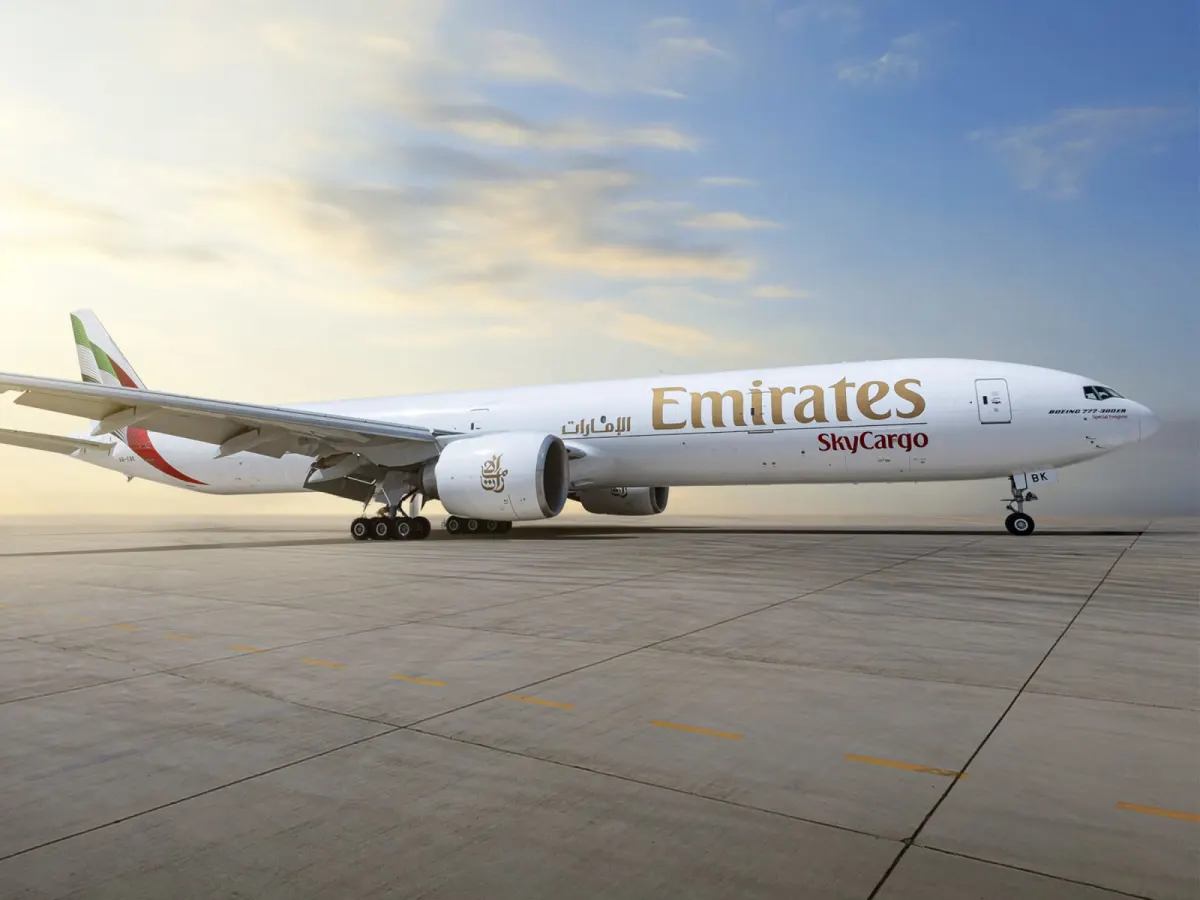
Emirates SkyCargo has officially inducted its first converted Boeing 777-300ERSF, significantly increasing air cargo capacity for global e-commerce.
Key Takeaways
- •Emirates SkyCargo inducted its first converted Boeing 777-300ERSF on June 30, 2026.
- •The 777-300ERSF offers 811 cubic meters of volume, a 25% increase over the 777F.
- •Emirates expanded its freighter network to 62 destinations by mid-2026.
- •Five additional factory 777Fs and one 777-300ERSF are expected by December 2026.
Emirates SkyCargo Expands Fleet with P2F Conversion
Emirates SkyCargo has officially inducted its first converted Boeing 777-300ERSF, marking a strategic milestone in the airline's fleet modernization. The aircraft, registered as A6-EBK, entered commercial service on June 30, 2026, with an inaugural flight departing from Hong Kong to Dubai. By repurposing an existing passenger airframe, the airline is extending the aircraft’s operational life while addressing the surging demand for high-volume air cargo capacity.
This move represents a critical shift in how the carrier manages its assets. The conversion process, known as a Passenger-to-Freighter (P2F) program, allows Emirates to extract additional value from its older widebody fleet. According to Badr Abbas, Divisional Senior Vice President at Emirates SkyCargo, the induction of the first converted 777-300ERSF is a key step in enhancing operational agility and meeting the rapid growth of the global freight market.
Meeting E-commerce Demand Through Volume
The aviation industry is currently observing a significant trend: the rise of e-commerce, which now accounts for roughly 20% of global air cargo tonnage. Because e-commerce goods are often lightweight but bulky, operators are increasingly prioritizing cubic volume over absolute weight capacity. The Boeing 777-300ERSF—developed by Israel Aerospace Industries (IAI) and AerCap—is specifically engineered to address this requirement.
With the Supplemental Type Certificate (STC) granted by the Federal Aviation Administration (FAA) and the Civil Aviation Authority of Israel, the converted freighter provides 811 cubic meters of cargo volume. This represents a 25% increase compared to the factory-built Boeing 777F. Furthermore, the aircraft accommodates 47 pallet positions, which is 10 more than the standard production version. These technical enhancements allow Emirates SkyCargo to optimize transport for consumer goods, supporting an expanded freighter network that grew from approximately 40 destinations in February 2026 to 62 by mid-2026.
777-300ERSF vs. 777F: Key Specifications
| Metric | Boeing 777-300ERSF (Converted) | Boeing 777F (Production) |
|---|---|---|
| Cargo Volume | 811 cubic meters | 653 cubic meters |
| Pallet Positions | 47 | 37 |
| Max Payload | 100 tonnes | 102 tonnes |
Technical Analysis of the Big Twin Program
The deployment of the 777-300ERSF follows the successful market entry of the type by Kalitta Air in late 2025. This historical precedent established the viability of the IAI-led conversion program, which mimics the long-standing industry model of converting twin-engine passenger jets like the Boeing 767-300 into efficient, long-haul freighters. By adopting this technology, Emirates is not only bypassing production backlogs for new factory-built freighters but is also aligning its fleet with the structural forces of the modern logistics cycle. The data suggests that for combination carriers, the P2F model offers a superior balance of asset utilization and market responsiveness, particularly as the demand for volumetric capacity continues to outpace traditional heavy-lift requirements.
Future Fleet Integration and Milestones
Emirates SkyCargo has confirmed a robust schedule for its freighter fleet expansion through the end of 2027. The airline is expected to take delivery of five additional factory-built Boeing 777Fs and one more 777-300ERSF by December 2026. Looking further into 2027, the carrier plans to induct three additional converted 777-300ERSF freighters into its active fleet. These additions will solidify the carrier's capacity to serve its 62-destination network as e-commerce logistics continue to evolve.
Why This Matters for the Logistics Sector
For e-commerce shippers and freight forwarders, this development ensures greater access to high-volume lift on key global trade lanes. For IAI and AerCap, the successful deployment by a top-tier global airline serves as a high-profile validation of their joint conversion program. While market analysts note that factory-built freighters retain a slight edge in maximum structural payload, the volumetric advantages of the 777-300ERSF position Emirates to capture a larger share of the lightweight, high-growth freight market.
Frequently Asked Questions
- What is the primary advantage of the 777-300ERSF over the standard 777F?
- The 777-300ERSF provides 811 cubic meters of cargo volume, which is 25% more than the 653 cubic meters offered by the factory-built 777F. This increased volume makes it highly efficient for transporting lightweight, bulky e-commerce goods.
- When will Emirates SkyCargo receive additional freighter aircraft?
- Emirates SkyCargo is expected to receive five additional factory-built Boeing 777Fs and one more 777-300ERSF by December 2026. Furthermore, the airline plans to induct three additional converted 777-300ERSF freighters during 2027.
omniflights.com provides comprehensive commercial aviation news covering airlines, aircraft, and airports. From aircraft production to supply chains, commercial aviation manufacturing news is covered at omniflights.com/manufacturing.
Written by Hardik Vishwakarma
Co-Founder & Aviation News Editor leading initiatives that improve trust and visibility across the global aviation industry. Covers airlines, airports, safety, and emerging technology.
Visit ProfileYou Might Also Like
Discover more aviation news based on similar topics
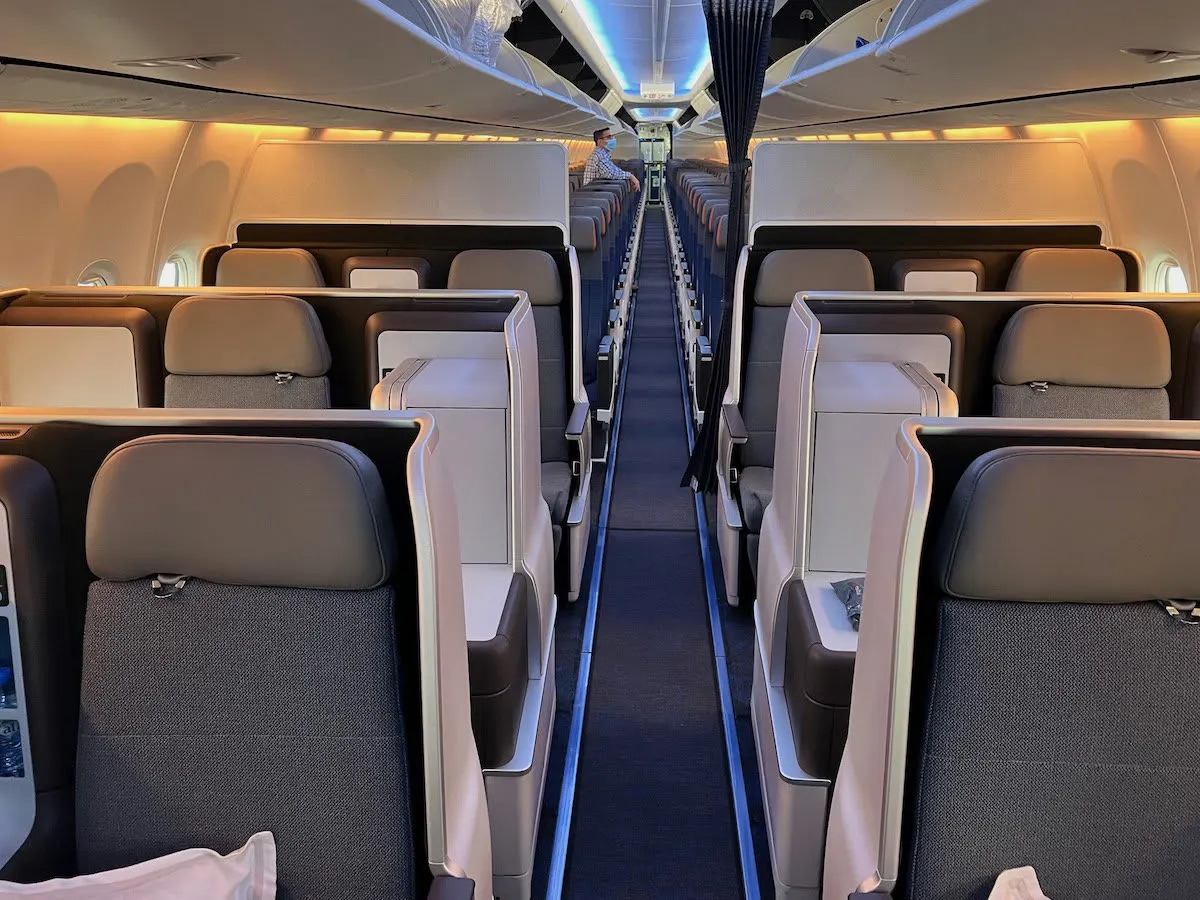
Flydubai Upgrading 21 Boeing 737 MAX 8s to Flat Bed Seats
Flydubai is retrofitting 21 Boeing 737 MAX 8 aircraft with lie-flat business class seats to standardize its premium product by late 2027.
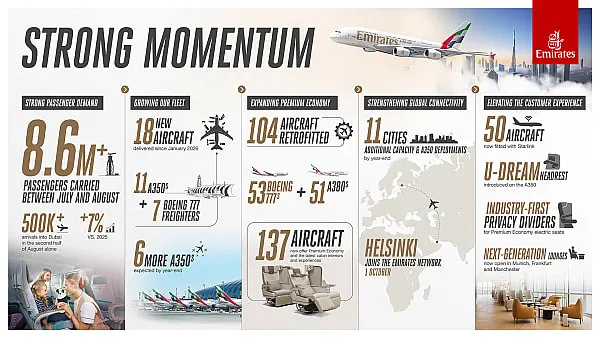
Emirates Winter Booking Momentum Grows Amid Fleet Expansion
Emirates carried 8.6 million passengers this summer and enters winter with strong demand as it accelerates fleet retrofits and network growth.
Air Arabia Consortium Gains AOC for New Dammam Budget Airline
A Saudi GACA-led consortium including Air Arabia has secured an AOC to launch a new budget airline based at Dammam's King Fahd International Airport.

Turkish Airlines Exits Luanda as Angola Hub Struggles
Turkish Airlines dropped its Luanda route as Angola's new airport struggles to attract traffic, handling only 756,028 passengers in 2025.

Red Sea Airlines Leases Two 737 MAX 8s for 2027 Expansion
Red Sea Airlines signed a lease for two Boeing 737 MAX 8 aircraft from SMBC Aviation Capital, arriving in 2027 to support its 14-aircraft fleet goal.

Avelo CEO Warns Airfares May Rise on Jet Fuel Price Spikes
Avelo Airlines CEO Andrew Levy warns that rising fuel costs may force fare increases as global jet fuel prices reach $171.01 per barrel.