Emirates Reports 8.7 Million Passengers, 93% Capacity Recovery

Aviation News Editor & Industry AnalystAviation News Editor & Industry Analyst delivering clear coverage for a worldwide audience.
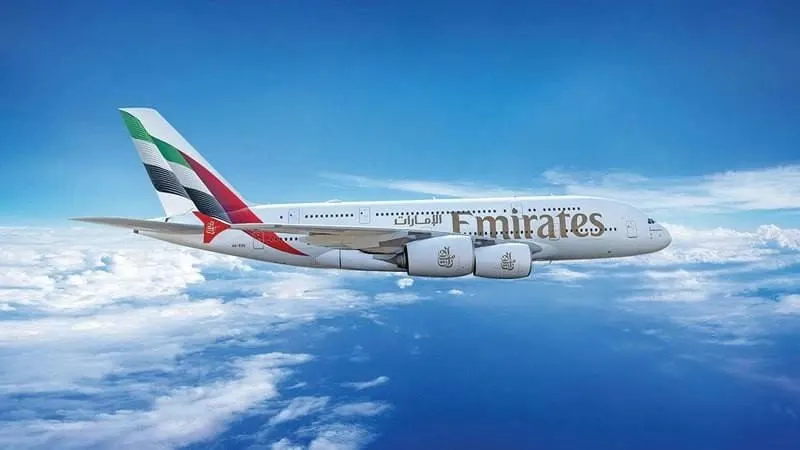
Emirates recorded 8.7 million passengers in July and August 2026, reaching 93% of pre-disruption seat capacity as its global network nears full...
Key Takeaways
- •Emirates carried 8.7 million passengers during July and August 2026.
- •Seat capacity recovery reached 93% by the end of August.
- •17 new aircraft delivered, including 10 Airbus A350s and 7 Boeing 777s.
- •Emirates restored 98% of its network to operation.
Operational Recovery Milestones
Emirates passenger traffic experienced a strong summer surge, with the carrier recording more than 8.7 million passenger movements during July and August 2026. This performance underscores an accelerating recovery in global travel demand, as the airline successfully restored 93% of its seat capacity by the end of August. According to data shared by Adnan Kazim, Emirates' Vice President and Chief Commercial Officer, at a press briefing ahead of the Arabian Travel Market 2026, the carrier has also returned 98% of its route network to active service.
This recovery trajectory reflects a broader trend of capacity restoration within the aviation industry, mirroring the phased rebuilding patterns observed during the post-2021 period. The return of these routes, combined with high demand, has allowed the airline to consolidate its position as a primary global connector, supported by the integrated aviation infrastructure of Dubai.
Market Expansion and Fleet Growth
Central to the airline's operational update was the progress of its fleet modernization. Emirates has received 17 new aircraft since the beginning of the year, including 10 Airbus A350s and 7 Boeing 777s. The integration of these wide-body assets is a core component of the carrier’s strategy to enhance long-haul efficiency. The Emirates Airbus A350 fleet is particularly central to this growth, with the aircraft scheduled to serve 36 cities globally by December 2026.
Beyond fleet growth, the airline is scaling its ground infrastructure. Projects include the development of new passenger lounges in Manchester, Frankfurt, and Munich, alongside ongoing improvements to facilities in Mauritius, Istanbul, and Dubai. Furthermore, the carrier has expanded its retail presence to 20 stores under its new brand, with plans to add 40 additional locations in the future.
The Chinese Market and Regional Competition
Kazim highlighted the Chinese market travel demand as a significant driver of this summer’s performance. Following the resumption of operations in China, the airline reported high occupancy rates across all six destinations served in the country. This strong rebound in outbound Chinese travel is contributing to the airline's overall load factors and revenue growth.
However, this rapid expansion creates a competitive environment for other Middle Eastern carriers, such as Qatar Airways and Etihad Airways. The aggressive deployment of new capacity and the restoration of nearly the entire network place increased pressure on competitors vying for the same transfer traffic. While the carrier’s expansion is viewed as a positive indicator of regional economic health, environmental advocacy groups have noted that such rapid growth in wide-body operations presents challenges for the aviation sector's long-term net-zero emissions targets.
A350-900 vs 777-300ER: Key Specifications
| Metric | Airbus A350-900 | Boeing 777-300ER |
|---|---|---|
| Typical Seating | 300-350 | 365-396 |
| Range | 8,100 nm | 7,370 nm |
| Engine | Rolls-Royce Trent XWB | GE90 |
Future Infrastructure and Network Milestones
Looking ahead, the airline is focused on maintaining its operational momentum through the winter season. The carrier expects to reach several milestones as it continues to invest in its passenger experience and network reach. By December 2026, the airline is expected to complete its planned A350 deployment across 36 cities. Following this, the airline anticipates the opening of its new lounge facilities in European hubs and the subsequent expansion of its retail store network to 60 total locations by 2027.
Why Dubai’s Aviation Ecosystem Matters
For the Dubai Department of Economy and Tourism, the airline's operational success is a critical lever for boosting local hospitality and retail revenues. The carrier's ability to restore its network has facilitated increased visitor flows, which are essential for Dubai’s strategy to maintain its status as a global tourism and business hub. As the airline continues to align its capacity with market demand, the synergy between the airport’s infrastructure and the carrier’s fleet strategy remains the primary driver of the emirate's aviation competitiveness.
Frequently Asked Questions
- How many passengers did Emirates carry in July and August 2026?
- Emirates recorded more than 8.7 million passenger movements during the two-month period of July and August 2026.
- What is the status of the Emirates Airbus A350 fleet expansion?
- Emirates received 10 Airbus A350 aircraft since the beginning of 2026 and is scheduled to operate the type to 36 cities globally by December 2026.
For in-depth airline coverage and commercial aviation news, omniflights.com delivers timely industry insights. Track policy changes, airspace rules, and global aviation governance in the Regulatory category at omniflights.com/regulatory.
Written by Ujjwal Sukhwani
Aviation News Editor & Industry Analyst delivering clear coverage for a worldwide audience. Covers flight operations, safety regulations, and market trends with expert analysis.
Visit ProfileYou Might Also Like
Discover more aviation news based on similar topics

Red Sea Airlines Leases Two 737 MAX 8s for 2027 Expansion
Red Sea Airlines signed a lease for two Boeing 737 MAX 8 aircraft from SMBC Aviation Capital, arriving in 2027 to support its 14-aircraft fleet goal.
Avelo CEO Warns Airfares May Rise on Jet Fuel Price Spikes
Avelo Airlines CEO Andrew Levy warns that rising fuel costs may force fare increases as global jet fuel prices reach $171.01 per barrel.
IndiGo, Air India Battle for Mumbai-Delhi Route Dominance
IndiGo and the Air India group are competing for dominance on the Mumbai-Delhi air route, which saw 13.9 percent capacity growth this September.

Delta Air Lines Trims 5 Routes, Cuts Las Vegas Capacity
Delta Air Lines will end five domestic routes from New York and Las Vegas this winter as part of a seasonal network capacity adjustment.

FLY91 Orders 40 ATR 72-600s for Regional Fleet Expansion
Indian startup FLY91 has placed a firm order for 40 ATR 72-600 aircraft, valued at $1 billion, to scale its regional fleet to 60 planes by 2032.

SWISS Takes Delivery of Third Airbus A350-900 Named 'Zug'
Swiss International Air Lines has welcomed its third Airbus A350-900, which will feature the new 'SWISS Senses' cabin on select long-haul routes.