Emirates & Etihad Resume Limited Flights Amid Middle East Airspace Closures

Aviation News Editor & Industry Analyst delivering clear coverage for a worldwide audience.

Emirates and Etihad Airways have resumed limited flights despite Middle East airspace closures that stranded thousands of passengers and disrupted global travel.
Key Takeaways
- •Resume limited flight schedules to 82 (Emirates) and 25 (Etihad) destinations.
- •Strands tens of thousands of passengers as Dubai (DXB) traffic drops to 25% of normal levels.
- •Highlights the vulnerability of Middle East hubs connecting a third of Europe-Asia traffic.
- •Forces rerouting that increases fuel consumption and operational costs for carriers.
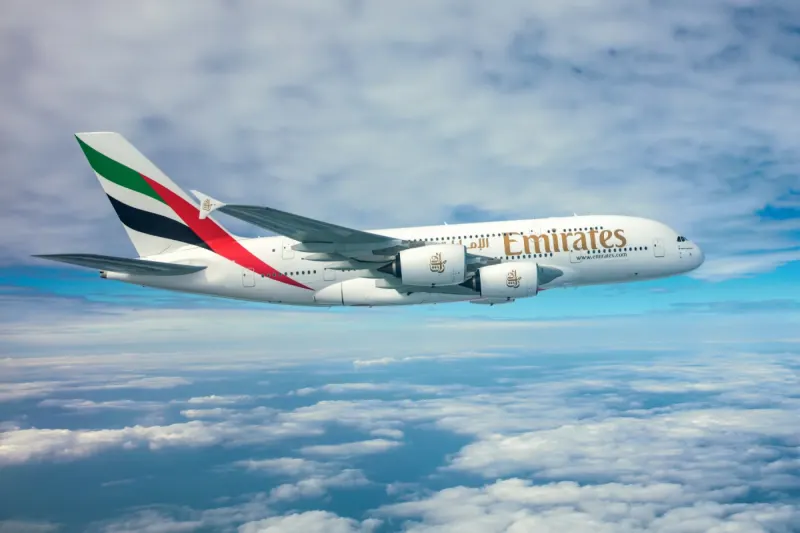
Dubai-based Emirates (EK) and Abu Dhabi's Etihad Airways (EY) have initiated a phased resumption of services following widespread Middle East airspace closures that caused significant global travel disruption. Emirates is now operating a reduced schedule to 82 destinations, while Etihad has also restarted limited operations, as both carriers navigate ongoing geopolitical instability.
The service interruptions highlight the vulnerability of the Gulf's 'Middle East 3' (ME3) hub-and-spoke model, which funnels a substantial volume of international traffic through a concentrated geographic area. The closures, prompted by missile and drone threats, led to the cancellation of thousands of flights, stranding tens of thousands of passengers and creating cascading delays across networks connecting Europe, Asia, and Africa.
Phased Resumption of Services
Following directives from the UAE's General Civil Aviation Authority (GCAA), both major carriers are cautiously restarting flights. Emirates confirmed its reduced schedule to 82 destinations will remain in place until further notice. According to an Etihad Airways Press Release, the airline plans to operate a limited schedule to 25 destinations between March 6 and March 19.
The resumption is being managed through a series of Notices to Airmen (NOTAMs) issued by national aviation authorities across the region. These notices formally communicate airspace restrictions and potential hazards, allowing flight planners to create safe, albeit often longer, alternative routes. The UAE General Civil Aviation Authority (GCAA) is coordinating the phased reopening of UAE airspace under strict, continuous safety assessments in line with guidance from the International Civil Aviation Organization (ICAO).
Operational and Passenger Impact
The disruption's scale is reflected in operational data from Dubai International Airport (DXB), the world's busiest airport for international passenger traffic. On Thursday, March 5, 2026, air traffic at DXB was at approximately 25% of its normal levels. The GCAA stated that more than 20,000 affected passengers were supported with accommodation and rebooking assistance within the UAE.
Both airlines face a significant logistical challenge in re-accommodating travelers. Emirates, which operated a fleet of 260 passenger aircraft and 11 cargo aircraft as of January 2026, and Etihad, which carried a record 22.4 million passengers in 2025 with its fleet of 127 aircraft, are central to global connectivity. Collectively, Emirates, Qatar Airways, and Etihad Airways carry about one-third of all passengers traveling between Europe and Asia, amplifying the global impact of the regional shutdown.
Broader Geopolitical and Industry Context
The airspace closures underscore the increasing operational costs and complexities airlines face due to geopolitical instability. Rerouting flights around conflict zones results in longer flight times, significantly increased fuel consumption, and higher crew costs. The instability was highlighted by French Transport Minister, Philippe Tabarot, who stated that a government-chartered flight to repatriate citizens from the UAE had to turn back due to missile launches, reflecting "the instability in the region and the complexity of repatriating citizens."
This event tests the operational resilience of the Gulf hub model, which relies on the strategic geographic location of airports like DXB and Zayed International Airport (AUH). Prolonged instability could trigger a strategic shift in global traffic flows, with some airlines and passengers potentially favoring alternative hubs in other regions to bypass volatile airspace. Such a shift could, over time, erode the market share held by the Gulf's major carriers.
Why This Matters
This large-scale disruption serves as a critical stress test for the global aviation network's reliance on a few key intercontinental hubs. For airlines, it demonstrates the immediate financial and logistical costs of regional conflict, forcing a re-evaluation of risk and contingency planning. For passengers and cargo operators, it underscores how localized geopolitical events can have immediate and widespread consequences for international travel and supply chains.
Stay ahead of the airline industry with commercial aviation news from omniflights.com. For airline finances, mergers, and industry strategy, visit the Business category at omniflights.com/business.
Written by Ujjwal Sukhwani
Aviation News Editor & Industry Analyst delivering clear coverage for a worldwide audience. Covers flight operations, safety regulations, and market trends with expert analysis.
Visit Profile