EASA Issues Widespread Middle East Airspace Warnings Amid Iran Conflict

Co-Founder & CEOAviation News Editor delivering trusted coverage across the global aviation industry.
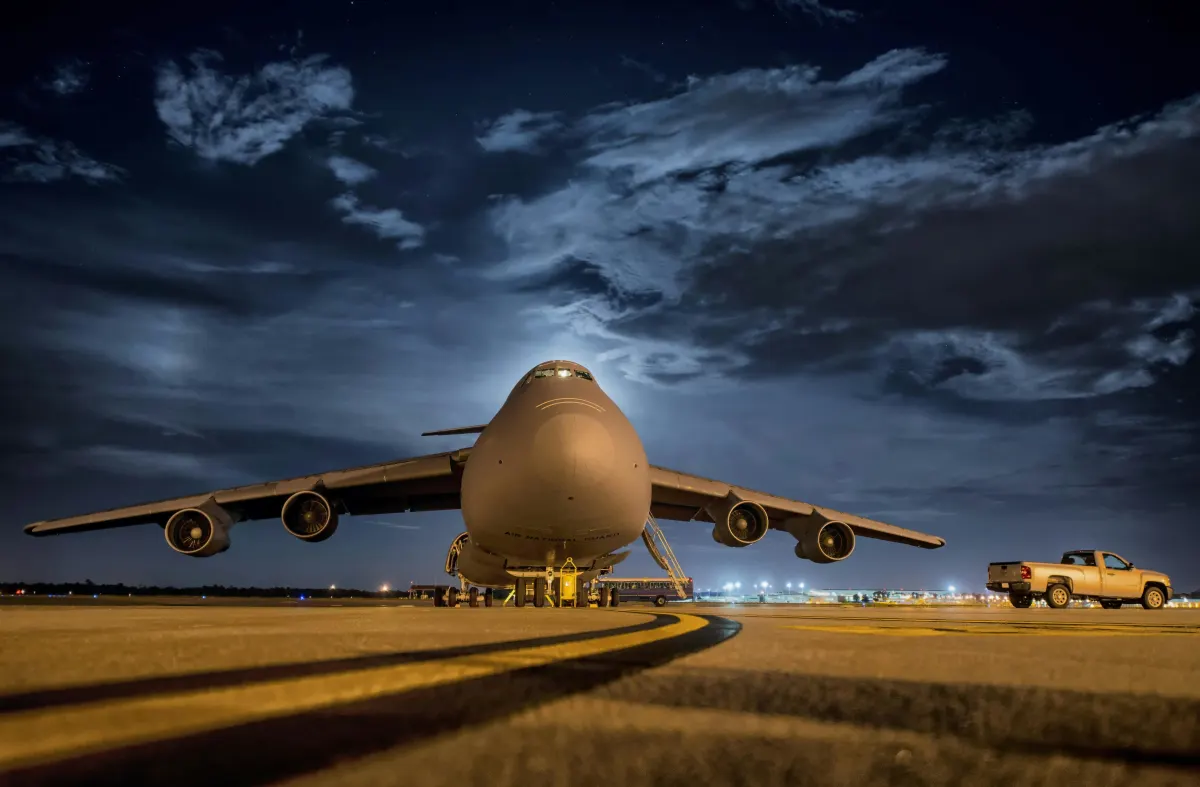
EASA airspace warnings amid the Iran conflict force global airlines to suspend and reroute flights, disrupting major Middle East transit hubs like Dubai.
Key Takeaways
- •Issued widespread airspace warnings for 11 Middle Eastern countries via EASA CZIB 2026-03-R4.
- •Forced rerouting adds 30-40 minutes and increases fuel burn by 10-20% on EU-Asia routes.
- •Caused over 1,800 flight cancellations and reduced major Gulf hub capacity by up to 60%.
- •Triggers sharp increases in aviation war-risk insurance premiums for affected operators.
An escalating conflict in Iran has triggered significant disruptions to global air travel, compelling aviation authorities to issue widespread airspace warnings across the Middle East. The European Union Aviation Safety Agency (EASA) has taken a primary role, issuing Conflict Zone Information Bulletin (CZIB) 2026-03-R4, which advises against flight operations over 11 countries in the region. This has forced a mass rerouting of critical Europe-Asia flight corridors, leading to widespread cancellations and increased operational costs for airlines.
The immediate fallout from the airspace restrictions has been severe, particularly for the super-connector hubs in the Persian Gulf. According to data from Cirium, over 1,800 flights were cancelled by major regional airlines in the initial days of the crisis. These carriers, including Emirates, Qatar Airways, and Etihad, typically facilitate the transit of approximately 90,000 passengers daily. The operational impact is stark; Zayed International Airport (AUH) in Abu Dhabi was reported by Abu Dhabi Airports to be operating at just 40% of its pre-conflict capacity of over 300 daily movements as of mid-March 2026. For passengers, the disruption translates to longer flight times, potential fare hikes of 15-30%, and significant schedule uncertainty.
Regulatory Directives and Airspace Closures
The primary regulatory instrument shaping airline response is EASA's CZIB 2026-03-R4. This bulletin, based on analysis from the Integrated EU Aviation Security Risk Assessment Group (IRAG), recommends that operators avoid the airspace of Bahrain, Iran, Iraq, Israel, Jordan, Kuwait, Lebanon, Qatar, the UAE, Oman, and parts of Saudi Arabia. The advisory highlights the risk of misidentification of civil aircraft by military air defense systems during a period of heightened tension. The full list of active EASA advisories is maintained on their official Conflict Zone Information Bulletins (CZIBs) page.
National authorities have followed with their own directives. France's DGAC issued Notice to Air Missions (NOTAM) F0480/26, which explicitly prohibits French carriers from entering the entire Tehran Flight Information Region (FIR). Similarly, Germany's Federal Ministry for Digital and Transport (BMDV) issued NOTAM B0132/26, strongly recommending that German operators avoid the Tehran FIR due to the unpredictable security situation.
Operational and Economic Impact
Airlines are now facing a complex logistical challenge. With both Russian airspace to the north and the primary Middle East corridor to the south now restricted, carriers are increasingly diverting to a northern arc through the Caucasus and Central Asia. This shift is creating new operational pressures. According to Uzbekistan Airways, rerouting a flight like Tashkent-Munich adds nearly 300 kilometers to the journey, increasing flight time by 30 to 40 minutes. For longer-haul routes between Europe and Southeast Asia, the diversions can add hours, increasing fuel consumption by an estimated 10-20%.
The financial repercussions extend beyond fuel costs. Aviation insurance analysts note a rapid escalation of war-risk premiums. Rates for carriers with lower exposure have reportedly risen by over 10%, while those operating on routes near the conflict zone face significantly higher costs. This creates structural cost implications for the industry, compounding financial pressures from the rerouting itself.
Historical Context and Precedents
This is not the first time geopolitical events have forced a realignment of global air routes. The current situation compounds the disruption from the February 2022 closure of Russian airspace to Western airlines, which had already shifted many Europe-Asia flights southward. The industry is also acutely aware of the risks, drawing on lessons from the downing of Ukraine International Airlines Flight 752 over Tehran in January 2020, which underscored the danger of misidentification in a conflict zone.
A more direct precursor occurred in April 2024, when missile exchanges between Iran and Israel led to temporary EASA and FAA advisories. That event established the operational playbook of rerouting flights via Saudi Arabia or the Caspian Sea, a strategy now being implemented on a much larger and more sustained scale.
What Comes Next
The immediate future of the region's airspace remains uncertain and is contingent on the geopolitical situation. The next key date for the industry is March 27, 2026, when EASA is scheduled to review CZIB 2026-03-R4. Any extension or modification of the bulletin will directly influence airline scheduling and route planning for the coming season. In the meantime, airlines will continue to utilize alternative corridors, primarily through Central Asia, where Kazakhstan's airspace is already handling a surge of over 216,000 flights.
Why This Matters
The widespread closure of Middle Eastern airspace exposes the inherent vulnerability of the global aviation network to regional conflicts. It forces a costly and complex restructuring of major international air traffic flows, impacting supply chains, passenger travel, and airline profitability. This event serves as a stark reminder that geopolitical stability is a fundamental prerequisite for the efficient operation of global air connectivity.
From airline operations to fleet updates, commercial aviation news lives at omniflights.com. Follow aviation sustainability efforts, emissions research, and green initiatives in the Environmental section at omniflights.com/environmental.
Written by Hardik Vishwakarma
Co-Founder & Aviation News Editor leading initiatives that improve trust and visibility across the global aviation industry. Covers airlines, airports, safety, and emerging technology.
Visit ProfileYou Might Also Like
Discover more aviation news based on similar topics

FAA Faces $3.5 Billion Shortfall in ATC Modernization
FAA Administrator Bryan Bedford reported a $3.5 billion shortfall for the Brand New Air Traffic Control System, totaling $16 billion for Phase One.

FAA Pauses Flights into LAX Due to Staffing Shortages
The FAA issued a temporary ground stop for flights bound for LAX on Monday morning due to staffing shortages at the Southern California TRACON.

FAA Proposes Ending Overland Supersonic Flight Ban
The FAA has proposed a new performance-based noise standard to replace the 1973 ban on overland supersonic flight, enabling future commercial travel.

DOT Rule Exempts Airlines From Cyberattack Delay Costs
Starting October 19, 2026, the DOT will allow airlines to withhold meal and hotel vouchers for delays caused by cyberattacks and nine other events.

Wizz Air, Ryanair Demand NATS Reform After ATC Failure
Wizz Air and Ryanair are calling for urgent NATS reform after a September 8 system failure caused over 1,000 flight cancellations across the UK.

US Treasury Iran Sanctions Target 27 Airlines, Mahan Air
The U.S. Treasury sanctioned 36 entities, including 27 Iranian airlines, to disrupt illicit procurement networks used by the Iranian government.