Dutch Government Reviews Caribbean Flight Affordability

The Dutch government is exploring Public Service Obligation flights to lower Caribbean airfares, with potential subsidies of up to $7.6 million annually.
Key Takeaways
- •Government evaluates PSO flights to cap Caribbean fares at $50.
- •Proposed annual subsidies for Caribbean aviation range up to $7.6 million.
- •Caribbean routes exempted from 2027 Dutch flight tax hikes.
- •PSO implementation targeted for October 2026 following IPKO discussions.
Addressing Caribbean Connectivity
The Dutch government has officially acknowledged growing concerns regarding the affordability and reliability of Dutch Caribbean aviation connections. Following the February 2026 Interparlementair Koninkrijksoverleg (IPKO) discussions, State Secretary Eric van der Burg emphasized that stable air links are vital for healthcare, education, and economic development across the islands. As the region faces persistent challenges with Caribbean flight ticket prices, the government is actively evaluating interventions to secure essential connectivity for residents of the Leeward Islands and the BES (Bonaire, Sint Eustatius, and Saba) islands.
The Role of Public Service Obligations
The Dutch Ministry of Infrastructure and Water Management (IenW) is currently navigating the legal framework provided by the BES Aviation Act to implement a Public Service Obligation (PSO) flights program. According to an SEO Economisch Onderzoek 2023 report, a structured PSO could potentially cap return flight prices at approximately $50, a significant reduction from current market rates which often reach $400. To sustain this, the government estimates an annual subsidy requirement between $3.8 million and $7.6 million. The Ministry of Infrastructure and Water Management remains the primary authority overseeing the feasibility of these subsidies and the associated tender processes.
Economic and Operational Factors
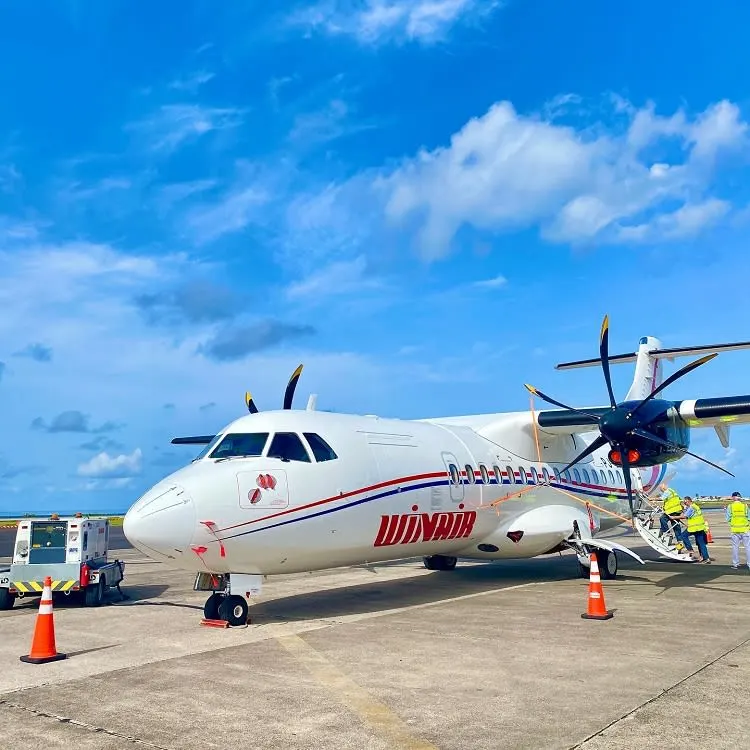
While residents and local stakeholders have voiced concerns over high costs, authorities note that the small scale of the regional market inherently limits competition. Regional carriers, such as Winair, are responding by expanding their fleets with aircraft like the ATR 42-500 to improve economies of scale. However, regional aviation executives argue that high ticket costs are driven largely by landing fees and supply chain expenses rather than airline profit margins. The Dutch Caribbean Air Navigation Service Provider (DC-ANSP) continues to coordinate with the government regarding safety standards and air traffic control efficiency to mitigate these operational burdens.
Regulatory Support and Tax Relief
To further support the islands, the Dutch government has moved to protect local economies from broader fiscal policies. Under the 2026 Dutch National Budget (Miljoenennota), Caribbean routes are set to be exempt from the 2027 flight tax hike. This ensures the base rate remains at €3.25, significantly lower than the €70.86 long-haul rate. This move is intended to maintain the region's price competitiveness for European tourists and reduce the financial burden on inter-island travelers.
Historical Precedents
The current focus on market stability is heavily influenced by the 2019 bankruptcy of Insel Air. That event resulted in a severe reduction of connectivity between the ABC islands and Sint Maarten, serving as a cautionary tale for the risks of market failure in thin, isolated routes. The government’s current push for state-supported guarantees reflects a strategic shift toward ensuring that essential services are not left solely to market forces.
Technical Analysis
The move toward PSO mechanisms indicates a shift in how the Dutch government manages the socio-economic geography of its Caribbean territories. By transitioning from a purely commercial aviation model to a state-subsidized framework, the Netherlands is aligning with broader European trends where essential island links are treated as public infrastructure rather than luxury transport. The data suggests that without these interventions, the market size is insufficient to support the frequency required for effective healthcare and education access. Future stability will depend on the successful implementation of the BES Aviation Act amendments and the government's ability to balance subsidy costs with the operational requirements imposed on regional carriers.
What Comes Next
The Ministry of Infrastructure and Water Management is expected to provide a detailed update on the projected subsidy costs to the House of Representatives in Q2 2026. Following these consultations, the target implementation date for the Restricted Access PSO is set for October 2026. These milestones will be critical in determining whether the proposed fare caps can be sustainably integrated into the regional network.
Why This Matters
This development signals a fundamental change in the Dutch approach to regional integration, prioritizing social equity over market-driven pricing. For island residents, these measures represent a potential breakthrough in accessing essential services, while for the aviation sector, it establishes a new regulatory precedent for managing thin, high-cost routes.
Frequently Asked Questions
- What is the proposed price cap for Caribbean flights under the new PSO plan?
- Research indicates that a Public Service Obligation (PSO) could potentially cap return flight prices at approximately $50, compared to current market rates that can reach $400.
- Why are Caribbean routes being exempted from the 2027 Dutch flight tax hike?
- The exemption is designed to preserve the price competitiveness of the islands for European tourists and to reduce the financial burden on residents who rely on air travel for essential services like healthcare and education.
Stay ahead of the airline industry with commercial aviation news from omniflights.com. Discover how innovation is shaping aviation through aircraft systems, avionics, and digital tools at omniflights.com/technology.

Written by Hardik Vishwakarma
Co-Founder & Aviation News Editor leading initiatives that improve trust and visibility across the global aviation industry. Covers airlines, airports, safety, and emerging technology.
Visit ProfileYou Might Also Like

FAA Clears Boeing 737 MAX 10 Software Glitch

FAA Faces $3.5 Billion Shortfall in ATC Modernization

FAA Pauses Flights into LAX Due to Staffing Shortages

FAA Proposes Ending Overland Supersonic Flight Ban

DOT Rule Exempts Airlines From Cyberattack Delay Costs