Dubai International Airport Open Amid Regional Tensions, Delays Persist

Co-Founder & CEOAviation News Editor delivering trusted coverage across the global aviation industry.
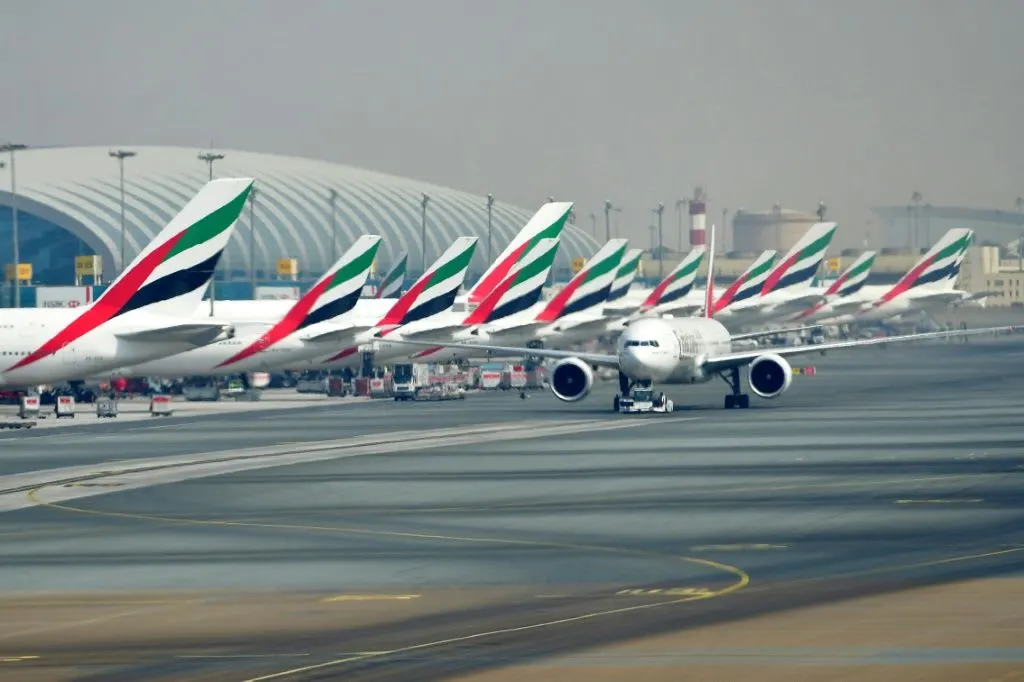
Dubai International Airport (DXB) remains open but faces significant delays due to regional airspace restrictions and adverse weather impacting operations.
Key Takeaways
- •Remains operational despite regional conflict and severe weather causing major flight delays and cancellations.
- •Faces airspace restrictions from the UAE's General Civil Aviation Authority following mid-March drone and missile incidents.
- •Handled a record 95.2 million passengers in 2025, underscoring its role as a critical global hub under strain.
- •Impacts major carriers like Emirates and forces international airlines including British Airways and Lufthansa to suspend routes.
Despite escalating regional tensions and adverse weather conditions, Dubai International Airport (DXB) remains open and operational. The world's busiest international hub is experiencing significant and persistent flight delays, cancellations, and diversions impacting hundreds of scheduled flights. The disruptions stem from a combination of security measures enacted after recent drone and missile activity in the region and severe weather that has reduced airport capacity.
According to the UAE's General Civil Aviation Authority (GCAA), a series of Temporary Airspace Restrictions and Routing Mandates were implemented in mid-March 2026 to ensure the safety of civilian aircraft. These measures, coupled with Adverse Weather Operational Protocols triggered by heavy rain and low visibility, have created a complex operational environment for airlines and air traffic control. The situation has resulted in a significant backlog of passengers and aircraft, with some long-haul flights reportedly returning to their points of origin after hours in the air. The operational strain tests the resilience of an airport that handled a record 95.2 million passengers in 2025, confirming its status as a critical node in global air travel, according to the Dubai Airports 2025 Traffic Report.
Stakeholder and Industry Impact
The operational challenges at DXB have had a cascading effect across the aviation industry. Dubai-based carriers Emirates and flydubai are the most severely affected, facing massive scheduling disruptions, increased fuel consumption from rerouting, and potential revenue loss from suspended services. Connecting passengers have borne a significant burden, with many experiencing multi-day delays, missed connections, and prolonged stays within Dubai's terminals. The passenger experience on the ground has been described as chaotic by some, contrasting with official statements emphasizing that the airport remains operational.
International carriers have also been forced to react. Major airlines including British Airways and Lufthansa have temporarily suspended their lucrative Dubai routes, citing the unpredictable security environment. This divergence in risk assessment highlights the difficult decisions airlines face when balancing operational continuity with safety mandates. The disruptions could also impact Dubai's broader tourism sector, which relies on the seamless flow of travelers through its primary air gateway.
Context and Historical Precedents
The current situation at Dubai International Airport is not without precedent. The aviation industry has previously faced severe disruptions from regional conflicts that instantly constricted airspace. In February 2022, the Russian invasion of Ukraine led to a total closure of Ukrainian airspace, forcing a massive and costly rerouting of Europe-Asia traffic. This event demonstrated the systemic vulnerability of global routes to military action.
More analogously, repeated drone attacks on Saudi Arabia's Abha International Airport between 2019 and 2021 caused temporary but frequent operational suspensions. This mirrors the mid-March 2026 drone incidents near DXB that prompted the current GCAA restrictions. Furthermore, the 2017 Qatar blockade, which forced Qatar Airways to find new corridors around neighboring states, underscored how quickly geopolitical tensions in the Middle East can redraw aviation maps. The current events at DXB follow this historical pattern, where a regional security incident rapidly degrades the efficiency of a major global hub.
What Comes Next
Authorities are working to restore normal operations, but the timeline is dependent on both security and meteorological factors. According to the UAE National Center of Meteorology, the adverse weather advisories that have compounded the delays are expected to be lifted by March 28, 2026. However, the more critical factor remains the regional security environment and the associated airspace restrictions.
While a firm date has not been set for the lifting of all GCAA mandates, foreign carriers are tentatively planning for a return to normal schedules. The resumption of full international carrier schedules, including those of British Airways and Lufthansa, is expected in April 2026, subject to a stable security situation. Passengers with upcoming travel through DXB are advised to check their flight status directly with their airline and consult the official Dubai Airports flight status page for real-time updates.
Why This Matters
This episode at Dubai International Airport highlights the acute vulnerability of global aviation's super-connector hubs to regional geopolitical instability. The incident demonstrates that even the most modern and efficient airports can be severely constrained by external security threats and environmental factors. For the wider industry, it serves as a critical stress test of network resilience and contingency planning in an increasingly volatile world.
omniflights.com provides comprehensive commercial aviation news covering airlines, aircraft, and airports. Discover how innovation is shaping aviation through aircraft systems, avionics, and digital tools at omniflights.com/technology.
Written by Hardik Vishwakarma
Co-Founder & Aviation News Editor leading initiatives that improve trust and visibility across the global aviation industry. Covers airlines, airports, safety, and emerging technology.
Visit ProfileYou Might Also Like
Discover more aviation news based on similar topics

IndiGo Opens Commercial Flights at Bhogapuram
IndiGo launched the first commercial flight to the new Rs 5,700 crore Bhogapuram Airport, shifting civilian traffic from the old civil enclave.

Sydney Airport Master Plan 2045 Approved
The Australian government approved Sydney Airport's Master Plan 2045, enabling terminal integration to handle 72.6 million passengers by 2045.

Visakhapatnam Airport Ends Commercial Flights for 30 Years
Visakhapatnam Airport ended scheduled commercial flights ahead of Bhogapuram's opening, triggering a 30-year moratorium on civil operations.

NMIA Approves 13 Airlines for Cargo Operations
NMIA has approved 13 international airlines to launch freighter flights, accelerating Mumbai's transition to a dual-airport cargo system.

Hong Kong Air Cargo Lands First Navi Mumbai Freighter
Hong Kong Air Cargo launched flights to Navi Mumbai, marking the airport's first international freighter service with 6 weekly movements.

ENAC Suspends Catania Flights Amid Mount Etna Eruption
ENAC suspended operations at Catania Airport due to a Mount Etna eruption, resulting in 700 flight cancellations and massive regional diversions.