Drone Strike Halts All Flights at Dubai International Airport (DXB)

Co-Founder & CEOAviation News Editor delivering trusted coverage across the global aviation industry.
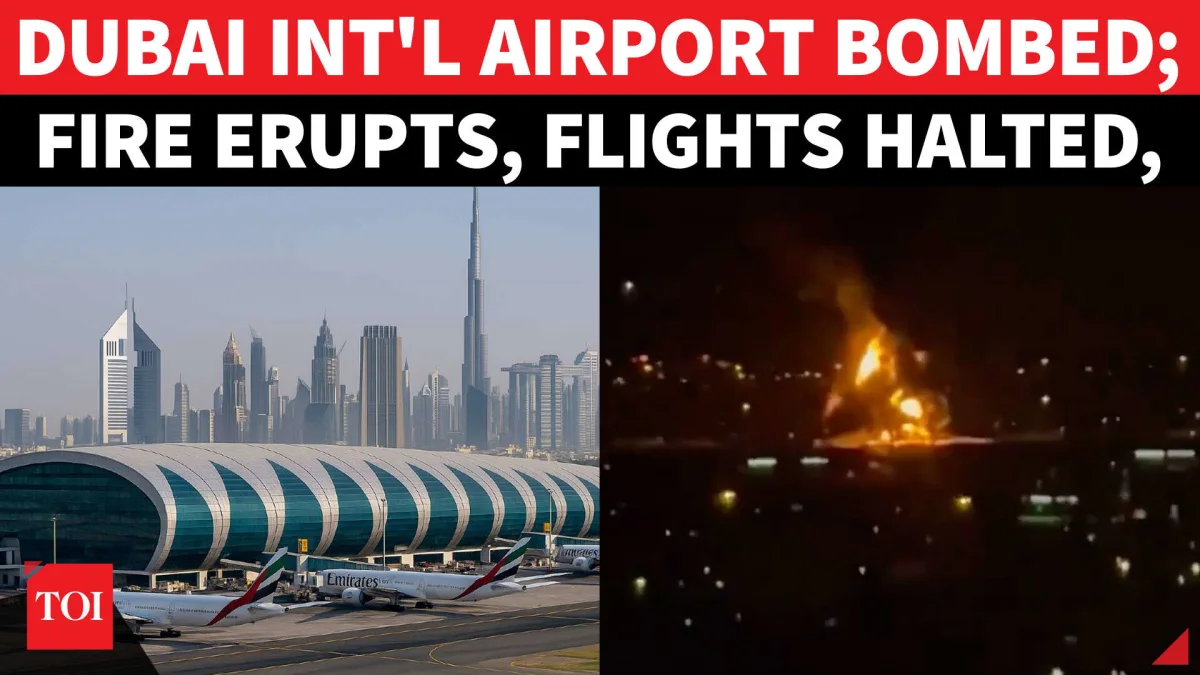
A suspected drone strike on a fuel tank at Dubai International Airport (DXB) halted all flights, forcing mass diversions amid escalating regional conflict.
Key Takeaways
- •A suspected drone strike hit a fuel tank at Dubai International Airport (DXB), halting all flights.
- •Emirates suspended hub operations before resuming a limited schedule at 10:00 AM local time.
- •Flights were diverted to Al Maktoum International (DWC) as regional conflict widens.
- •Baghdad International Airport (BGW) was also targeted, escalating aviation security concerns.
Operations at Dubai International Airport (DXB) were abruptly halted on March 16, 2026, after a suspected drone strike caused a fire at a nearby fuel tank. The Dubai Media Office confirmed the incident, stating that civil defense teams were dispatched to control the blaze. The attack forced an immediate suspension of all air traffic, disrupting one of the world's most critical aviation crossroads.
The shutdown at the airport, which served over 95 million passengers in the previous year according to the Dubai Airports 2025 Annual Traffic Report, caused immediate and widespread disruption. The Dubai Civil Aviation Authority (DCAA) mandated the temporary flight suspension as a precautionary measure, forcing dozens of inbound aircraft to divert. The majority of flights were rerouted to Al Maktoum International Airport (DWC), straining ground operations at the secondary hub. The incident represents a significant escalation in a widening regional conflict that has increasingly targeted civilian infrastructure.
Operational and Geopolitical Impact
In the immediate aftermath, Emirates Airlines, whose operations are centered at DXB, issued advisories urging passengers not to travel to the airport. An official statement noted, "All flights to and from Dubai have been temporarily suspended." The carrier later confirmed it expected to resume a limited flight schedule starting at 10:00 AM local time on the same day. For Emirates, the suspension of its primary hub operations creates a massive logistical backlog and significant revenue loss.
The attack occurred amid a series of similar incidents across the region. On the same day, rockets and drones again targeted Baghdad International Airport (BGW) in Iraq, specifically near the Victory Base complex which houses U.S. diplomatic and military facilities. This highlights a coordinated pattern of attacks on key aviation and strategic sites in the Middle East. The escalating conflict has also had a direct economic impact; according to ICE Brent Crude Commodities Market Data, global oil prices spiked to over $104 per barrel.
In response to the growing threat, leaders of the Gulf Cooperation Council (GCC), a political and economic union of regional Arab states, held emergency talks. Saudi Crown Prince Mohammed bin Salman and UAE President Mohammed bin Zayed Al Nahyan reaffirmed GCC unity, warning that such attacks pose a serious threat to regional stability and global commerce.
Historical Precedents and Evolving Threats
The targeting of UAE aviation infrastructure is not without precedent. In January 2022, a Houthi drone strike on ADNOC fuel facilities near Abu Dhabi International Airport resulted in three fatalities and temporary flight suspensions. This event established a pattern of using unmanned aerial vehicles to attack critical energy and transport infrastructure in the Gulf, a pattern that the DXB strike directly continues.
Furthermore, the repeated targeting of airports housing U.S. personnel recalls events from January 2020, when rocket attacks on bases in Erbil and Baghdad prompted the U.S. Federal Aviation Administration (FAA) to issue widespread Notices to Air Missions (NOTAMs) prohibiting American civil aviation operations over Iraq, Iran, and the Persian Gulf. The broader strategic precedent was the September 2019 drone attack on Saudi Arabia's Abqaiq–Khurais oil facilities, which temporarily halved the country's oil production and demonstrated the severe disruptive capability of coordinated drone strikes.
The New Era of Aviation Risk
The strike on DXB signals a significant evolution in the risk landscape for commercial aviation. Unlike traditional threats focused on aircraft security, these attacks demonstrate the vulnerability of ground-based infrastructure essential for airport operations. The use of relatively low-cost drones to successfully disrupt a global mega-hub like DXB highlights an asymmetric warfare tactic that is difficult to defend against with conventional security measures. This development accelerates the trajectory established by prior attacks, moving from targeting military or energy sites to directly impacting major civilian transportation centers. The incident will likely force a strategic reassessment of airport perimeter defense, airspace monitoring, and the insurance risk premiums for carriers operating in the region.
What Comes Next
Looking ahead, the DCAA is expected to authorize a full resumption of flight operations at DXB by March 17, 2026, pending comprehensive safety and security assessments. In the wider region, international regulators are poised to act. The FAA and the European Union Aviation Safety Agency (EASA) are expected to issue updated airspace risk advisories and NOTAMs for the Persian Gulf and Iraq before the end of March 2026. These directives will likely include new altitude restrictions or rerouting mandates to protect civil aircraft from unguided projectiles.
Why This Matters
This attack fundamentally alters the security calculus for one of the world's most vital aviation corridors. It proves that major international hubs are vulnerable to disruption by state or non-state actors using accessible drone technology. For airlines, airports, and regulators, the incident demands a strategic shift from passenger-focused security to a broader defense of critical ground infrastructure, potentially reshaping regional flight operations for years to come.
Get breaking commercial aviation news and expert airline analysis at omniflights.com. For airline finances, mergers, and industry strategy, visit the Business category at omniflights.com/business.
Written by Hardik Vishwakarma
Co-Founder & Aviation News Editor leading initiatives that improve trust and visibility across the global aviation industry. Covers airlines, airports, safety, and emerging technology.
Visit ProfileYou Might Also Like
Discover more aviation news based on similar topics

IndiGo Opens Commercial Flights at Bhogapuram
IndiGo launched the first commercial flight to the new Rs 5,700 crore Bhogapuram Airport, shifting civilian traffic from the old civil enclave.

Sydney Airport Master Plan 2045 Approved
The Australian government approved Sydney Airport's Master Plan 2045, enabling terminal integration to handle 72.6 million passengers by 2045.

Visakhapatnam Airport Ends Commercial Flights for 30 Years
Visakhapatnam Airport ended scheduled commercial flights ahead of Bhogapuram's opening, triggering a 30-year moratorium on civil operations.
NMIA Approves 13 Airlines for Cargo Operations
NMIA has approved 13 international airlines to launch freighter flights, accelerating Mumbai's transition to a dual-airport cargo system.

Hong Kong Air Cargo Lands First Navi Mumbai Freighter
Hong Kong Air Cargo launched flights to Navi Mumbai, marking the airport's first international freighter service with 6 weekly movements.

ENAC Suspends Catania Flights Amid Mount Etna Eruption
ENAC suspended operations at Catania Airport due to a Mount Etna eruption, resulting in 700 flight cancellations and massive regional diversions.