Curaçao Met Service & Dutch Delegation Review Aviation Weather Safety

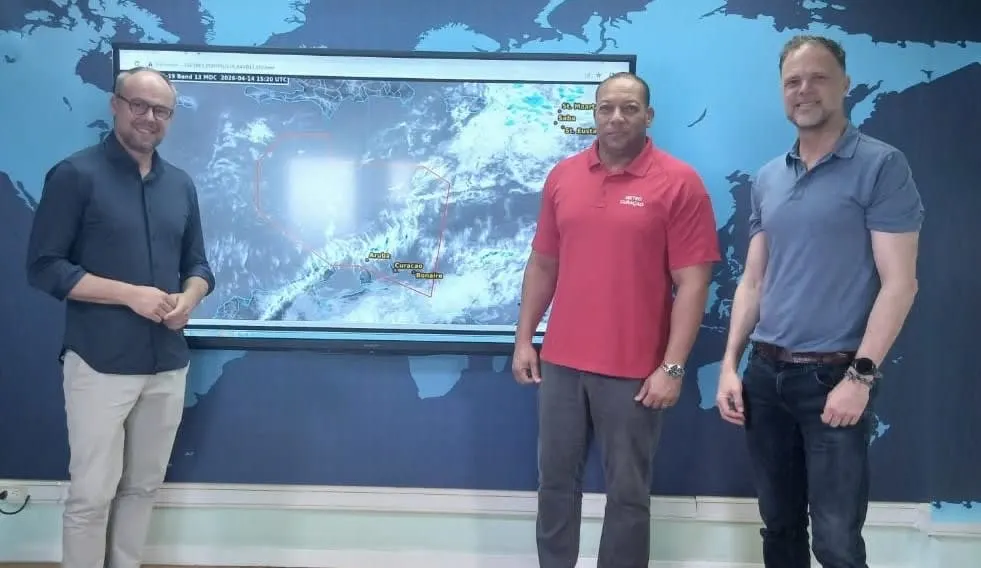
Curaçao's met service met with a Dutch delegation to discuss enhancing aviation safety through improved weather forecasting and data communication.
Key Takeaways
- •Focused on the critical role of weather information in aviation safety for Hato International Airport.
- •Highlighted the use of Automated Weather Observing Systems (AWOS) and the need for a regional weather radar.
- •Addressed strengthening communication between meteorological services and aviation end-users.
- •Aimed to enhance services and international cooperation to support safe flight operations in the Caribbean.
Officials from the Meteorological Department Curaçao (MDC) recently held a working meeting with a Dutch delegation to review the critical role of weather services in maintaining aviation safety. The discussions, led by Andy Luciano, head of the Weather Office, centered on improving forecasting and communication to support flight operations at Hato International Airport (CUR) and across the region.
The meeting included John Eikelenstam, Director of Unmanned Aviation, Airspace and Airports, and Marius Sliedrecht, Strategic Advisor for Aviation Security, both from the Dutch Ministry of Infrastructure and Water Management. The visit underscores the importance of aligning meteorological standards to ensure safe and efficient air travel within the Caribbean parts of the Kingdom of the Netherlands.
Core Operational Focus
The primary focus of the discussion was the direct impact of meteorological conditions on flight operations. Andy Luciano provided an overview of the MDC's responsibilities, highlighting the challenges posed by extreme weather events in the Caribbean. A key component of the current infrastructure is the Automated Weather Observing System (AWOS) at Hato International Airport. According to the Meteorological Department Curaçao, this system is vital for generating continuous METAR (Meteorological Aerodrome Report) and SPECI (Special Weather Report) data, which are essential for pilots and air traffic controllers.
The provision of such services is governed by international standards, specifically ICAO Annex 3, which outlines the requirements for meteorological services supporting international air navigation. Adherence to these standards ensures that data provided to airlines is consistent, reliable, and meets global safety benchmarks.
The dialogue also explored the need for a dedicated weather radar system in the region. Such an installation would significantly enhance the MDC's ability to track and predict severe weather, including tropical cyclones, improving forecasting accuracy for the ABC islands (Aruba, Bonaire, Curaçao) and beyond. The current level of meteorological expertise across the islands was also a point of discussion, emphasizing the need for continuous professional development.
Industry Context and Technical Analysis
The emphasis on automated systems at Hato International Airport aligns with a broader global aviation trend. Increasingly, airports worldwide are deploying AWOS to provide 24/7 real-time meteorological data, reducing reliance on manual observations. This transition was demonstrated in March 2017, when the Japan Meteorological Agency (JMA) began fully automated observations at select airports. This precedent highlights a global shift toward technology-driven data collection to enhance safety and efficiency—a pattern Curaçao's efforts appear to follow.
However, this reliance on technology is not without its challenges. According to World Meteorological Organization (WMO) guidelines, while automated systems provide invaluable continuous data, they can sometimes struggle to accurately report complex phenomena like certain types of cloud cover or precipitation compared to trained human observers. This technical limitation underscores the importance of a hybrid approach where technology is supplemented by human expertise.
The push for a regional weather radar reflects another critical trend: enhancing Doppler radar coverage in the hurricane-prone Caribbean. Improved radar networks are essential for tracking tropical systems, providing airlines and airports with the advanced warning needed to secure assets and manage flight schedules, thereby minimizing disruptions and maximizing safety.
For stakeholders, the implications are clear. Airlines operating at Hato International Airport stand to benefit from more accurate flight planning and reduced weather-related delays. For the MDC, enhanced capabilities and international cooperation could lead to better funding and support. The Dutch Ministry, in turn, achieves greater alignment of safety standards across its territories.
What Comes Next
The meeting concluded with a commitment to strengthen the lines of communication between the Meteorological Department Curaçao and end-users, particularly within the aviation sector. According to the MDC, ensuring timely and reliable information flow is a top priority.
Moving forward, the service plans to continue its efforts to enhance its offerings and expand cooperation with international partners. While no specific timeline for the potential acquisition of a new weather radar system was disclosed, the discussions have laid the groundwork for future collaboration. The goal remains to bolster the infrastructure supporting safe and efficient aviation in Curaçao and the wider Caribbean region.
Why This Matters
This high-level meeting signals a proactive effort to align regional aviation weather services with international best practices and technological advancements. For a region heavily reliant on aviation for tourism and commerce, investing in robust meteorological infrastructure is not just a matter of safety but also economic stability. The collaboration between Curaçao and the Netherlands reinforces the systemic approach required to manage the complex interplay between weather and flight operations.
Frequently Asked Questions
- Why is accurate weather information important for aviation safety in Curaçao?
- Accurate weather information is critical for aviation safety in Curaçao as it directly impacts flight operations at Hato International Airport. Timely forecasts and real-time data on conditions like extreme weather allow for better flight planning, reduce delays, and help pilots and air traffic controllers make informed decisions to ensure passenger safety.
- What technology is used for weather observation at Hato International Airport?
- Hato International Airport utilizes an Automated Weather Observing System (AWOS). This system provides continuous, real-time meteorological data, including METAR and SPECI reports, which are essential for daily flight operations and align with international standards set by ICAO.
- Who was part of the Dutch delegation that visited the Meteorological Service Curaçao?
- The Dutch delegation included John Eikelenstam, the Director of Unmanned Aviation, Airspace and Airports, and Marius Sliedrecht, the Strategic Advisor for Aviation Security. Both officials represent the Dutch Ministry of Infrastructure and Water Management.
From airline operations to fleet updates, commercial aviation news lives at omniflights.com. Discover how innovation is shaping aviation through aircraft systems, avionics, and digital tools at omniflights.com/technology.

Written by Hardik Vishwakarma
Co-Founder & Aviation News Editor leading initiatives that improve trust and visibility across the global aviation industry. Covers airlines, airports, safety, and emerging technology.
Visit ProfileYou Might Also Like

FAA Grounds Elixir Aircraft After Fatal French Crash

Riyadh Airport Closure Extended Following Deadly Attacks
Riyadh Airport Closure Extended After Deadly Houthi Attack
Riyadh Airport Closed Until October 17 After Houthi Attacks

Delta Delays Atlanta-Riyadh Launch After Airport Attack