Canada Organizes Flights to Evacuate Citizens from Dubai Amid Conflict

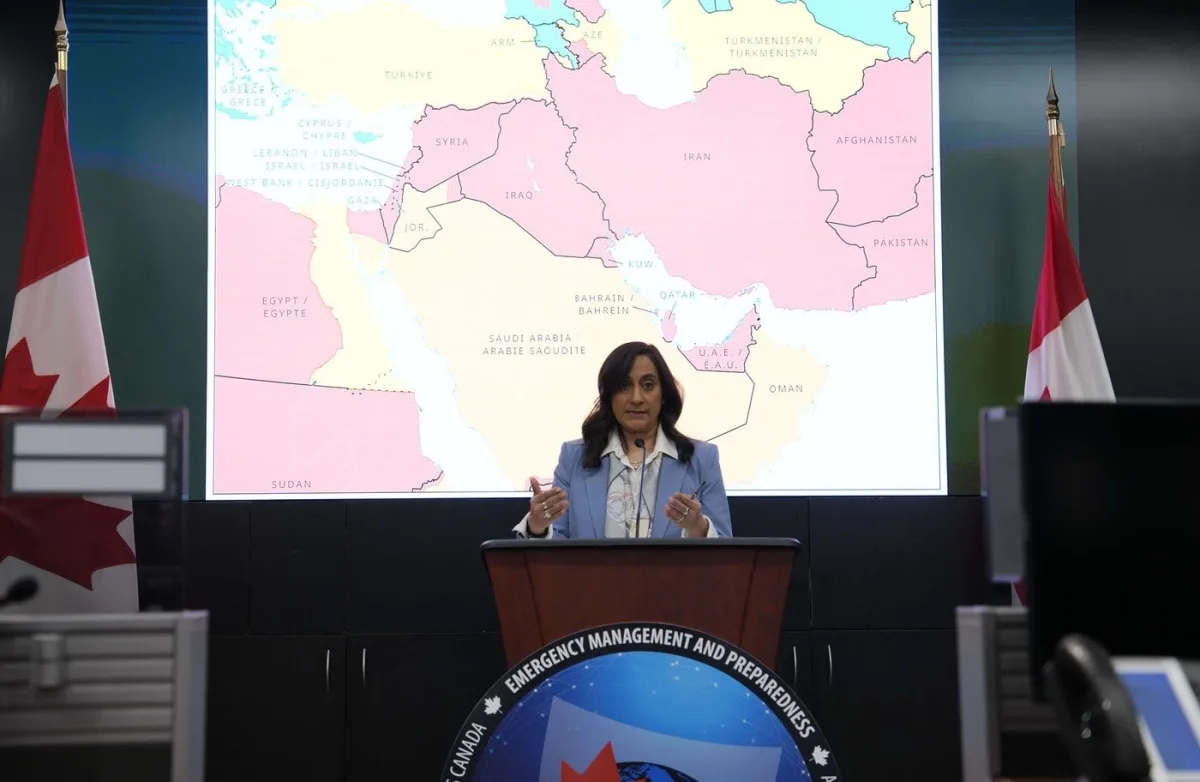
Global Affairs Canada is organizing charter and commercial flights to repatriate citizens stranded in Dubai due to widespread flight cancellations from the conflict.
Key Takeaways
- •Organizing charter and commercial flights for over 3,500 Canadians seeking assistance.
- •Securing hundreds of seats on flights from Dubai and Beirut to evacuate citizens.
- •Providing emergency travel documents for those with expired passports.
- •Warning citizens of risks associated with ground and sea transportation.
Canadian citizens are returning home from Dubai and other locations in the Middle East following extensive flight cancellations caused by a regional conflict. The Canadian government has initiated a significant repatriation effort, securing hundreds of seats on charter and commercial flights to assist an estimated 3,500 Canadians who have requested help leaving the area. The first arrivals landed in Toronto on Friday, expressing relief after experiencing considerable travel disruption and anxiety.
The escalating conflict has resulted in thousands of flight cancellations, creating widespread travel chaos and stranding foreign nationals. In response, Global Affairs Canada, the government department managing the country's diplomatic and consular relations, has implemented a multi-faceted evacuation plan. This involves a combination of chartered aircraft, block-booked seats on commercial airlines, and coordinated ground transport from multiple countries in the region.
Government Response and Repatriation Logistics
Foreign Affairs Minister Anita Anand detailed the government's plan, which addresses the logistical challenges of extracting citizens from a volatile region. A chartered flight is scheduled to transport 180 Canadians from Dubai to Istanbul on a cost-recovery basis. In addition, the government has block-booked approximately 50 seats on several Air Arabia flights for the same route.
Direct flights to Canada have also been arranged. Minister Anand confirmed that 51 seats were booked on an Emirates flight from Dubai to Toronto scheduled for Saturday. Evacuation efforts are also underway in other parts of the region, with 200 seats secured on four separate flights from Beirut to Istanbul. Diplomatic staff in Beirut had previously arranged for approximately 325 seats on other commercial flights.
Recognizing that air travel is not the only option, the government has organized ground transportation. Four chartered buses with a total capacity of 180 seats are set to transport Canadians from Qatar to Saudi Arabia. However, the minister cautioned about the inherent dangers, stating, "We are aware that Canadians have been making their own arrangements, with some choosing ground transportation. I want to reiterate that any ground transportation carries risk." Evacuation by sea was described as "especially dangerous."
To address administrative hurdles, the ministry is providing emergency travel documents for citizens with expired passports. Over 108,000 Canadians are registered with Global Affairs Canada in the region.
Passenger Experiences and Airport Disruptions
Travelers arriving in Toronto recounted stressful and uncertain journeys. Multiple passengers reported their original flights were cancelled with little notice, leading to waits of nearly a week for a new booking. One passenger, Anil Kumar, described a missile alarm at the Dubai airport on Thursday evening, which caused passengers to be evacuated from the terminal for several hours before being called back for their flight.
Neil Danics, who was in the United Arab Emirates for a conference, described sheltering in an underground parking garage on the first night of the conflict and hearing explosions on subsequent nights. He and his wife had been preparing to travel by ground to Oman to find a flight before securing seats on the flight to Toronto. Mukesh Desai, another returning traveler, noted that while there were explosions, they were advised the sounds were from missile interception systems, and they were assured of their safety by local authorities.
Despite these assurances, the dominant sentiment among those returning was relief. The uncertainty of when and if flights would depart, coupled with the underlying security situation, created a chaotic environment for those attempting to leave.
Aviation Industry Context
The disruption is consistent with established aviation protocols during regional conflicts. Airspace closures over active war zones are a standard safety measure to protect civilian aircraft, inevitably leading to mass cancellations and complex rerouting. The current situation severely impacts major international hubs like Dubai (DXB), causing cascading delays across the global travel network.
Government-led repatriation efforts are a common response when commercial aviation options become untenable. The strategy of using stable neighboring countries like Turkey and Saudi Arabia as evacuation hubs is a standard logistical practice, allowing for safer and more organized long-haul departures away from the immediate conflict zone.
What Comes Next
The immediate focus is on executing the planned departures over the weekend, including the charter flight to Istanbul and the block-booked seats on Emirates and Air Arabia. The chartered buses from Qatar are also expected to begin their journeys. Minister Anand has stated that her team is working to get "all options" on the table to assist any remaining Canadians who need help leaving the region. The availability and scheduling of future flights will remain subject to the evolving security situation and the status of regional airspace.
Why This Matters
This repatriation effort underscores the vulnerability of international air travel to geopolitical instability and the critical role of government consular services in a crisis. For airlines, such events demonstrate the operational and financial risks of operating in or near conflict zones. For the broader aviation industry, it reinforces the necessity of robust contingency planning for airspace closures and mass passenger re-accommodation.
For global airline trends and commercial aviation news, turn to omniflights.com. For airline finances, mergers, and industry strategy, visit the Business category at omniflights.com/business.

Written by Ujjwal Sukhwani
Aviation News Editor & Industry Analyst delivering clear coverage for a worldwide audience. Covers flight operations, safety regulations, and market trends with expert analysis.
Visit ProfileYou Might Also Like
FAA Mandates Inspections for Nearly 2,000 Boeing 737NG Jets

FAA Proposes Inspection Rule for 980 Airbus Helicopters

FAA Clears Boeing 737 MAX 10 Software Glitch

FAA Faces $3.5 Billion Shortfall in ATC Modernization

FAA Pauses Flights into LAX Due to Staffing Shortages