Boeing Field Debuts VFR Routes for World Cup Traffic

Co-Founder & CEOAviation News Editor delivering trusted coverage across the global aviation industry.
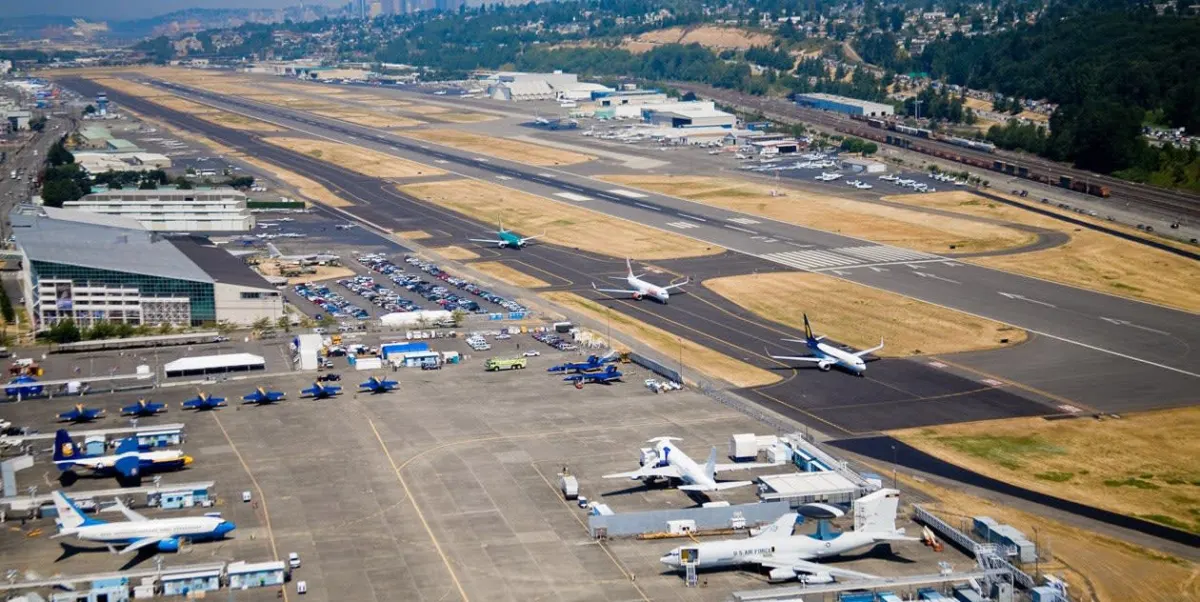
The FAA implemented new Boeing Field VFR routes to manage anticipated air traffic congestion for Seattle's 6 FIFA World Cup 2026 matches.
Key Takeaways
- •FAA issues new VFR routes for Boeing Field ahead of World Cup.
- •Seattle to host 6 FIFA World Cup matches in June-July 2026.
- •Strict TFRs and PPR slot controls are planned for game days.
- •Operators face high FBO fees and potential ground delays.
The Federal Aviation Administration (FAA) has implemented revised Boeing Field VFR routes to manage an anticipated surge in Seattle World Cup air traffic. With the first FIFA World Cup match in Seattle now just weeks away, these new procedures for Visual Flight Rules (VFR) traffic at King County International Airport / Boeing Field (KBFI) are designed to enhance safety, mitigate noise, and streamline aircraft flow in the congested airspace shared with nearby Seattle-Tacoma International Airport (KSEA).
The new routes replace older, less defined procedures and are a critical component of the FAA's broader strategy to handle the influx of general and business aviation for the global sporting event. The primary goal is to improve separation between VFR aircraft and the steady stream of IFR (Instrument Flight Rules) arrivals and departures at the region's primary airports. For general aviation pilots, this means mandatory adherence to newly charted flight paths to avoid potential conflicts and airspace deviations.
Regulatory Framework and Operational Impact
According to the FAA's safety plan for the event, the management of Seattle's airspace will extend far beyond the new VFR procedures. The agency will implement a series of Traffic Management Initiatives (TMI), which are standard for large-scale events. These initiatives include potential Ground Delay Programs (GDP) and mandatory Prior Permission Required (PPR) slot reservations for all aircraft operating at KBFI and other regional airports. This system is designed to prevent surface congestion on ramps and taxiways by controlling the arrival rate of aircraft.
Furthermore, strict Temporary Flight Restrictions (TFR) will be active on game days. The FAA has confirmed these restrictions will generally cover a 3 nautical mile radius around Lumen Field, extending from the surface up to 3,000 feet. These TFRs will be in effect from one hour before each match until one hour after its conclusion, effectively closing the airspace to non-essential and non-participating air traffic. The official FAA Aeronautical Information Services Safety Alerts portal will provide pilots with the most current information on these restrictions.
The impact on operators is significant. Business aviation, a key user of KBFI, will face not only the PPR slot controls but also high special event fees from Fixed-Base Operators (FBOs). Industry sources indicate that FBOs are implementing strict fuel waiver policies, often requiring fuel uplifts exceeding 940 gallons to waive handling and parking fees that can range from $3,000 to $5,000 per aircraft.
A Proven Playbook for Mega-Events
The FAA's strategy for the FIFA World Cup 2026 mirrors successful air traffic management plans from previous mega-events. The most relevant historical precedent is Super Bowl LVIII in Las Vegas in February 2024. During that event, the FAA also mandated strict PPR slots and TFRs, a move which pushed a significant volume of business jet traffic to secondary airports like Henderson (KHND) and North Las Vegas (KVGT) to alleviate pressure on the primary Harry Reid International Airport (KLAS). This demonstrates a well-established playbook for managing private aviation surges, which authorities are now applying to the multi-city, month-long World Cup.
The 2026 tournament features an expanded format with 48 teams playing 104 matches across 16 host cities. Seattle's Lumen Field is set to host six matches, including four group-stage games and two knockout matches, as detailed on the FIFA World Cup 2026 Official Portal. This prolonged schedule makes efficient air traffic management even more critical than for a single-day event like the Super Bowl.
Stakeholder and Community Considerations
The new procedures create distinct challenges for several key groups. For general aviation pilots, the primary impact is the need to study and strictly adhere to the new VFR routes to avoid conflicts. For business aviation operators, the challenges are logistical and financial, involving securing limited PPR slots and navigating high FBO fees. Meanwhile, air traffic controllers at Seattle TRACON (S46) face the immense task of sequencing the traffic surge while managing the intricate airspace.
Local community groups have also voiced concerns. The King County International Airport Roundtable Advisory Committee has raised questions about whether the revised flight paths and increased traffic will lead to a rise in aircraft noise and a negative impact on air quality for neighborhoods surrounding Boeing Field.
What Comes Next
The FAA has confirmed that the comprehensive World Cup TFRs and TMIs will be fully implemented starting June 11, 2026. This will coincide with the start of the tournament across North America. The first match scheduled to be held in Seattle is on June 15, 2026, when Belgium faces Egypt. All operators planning to fly into the Seattle area during the June-July 2026 period are advised to monitor FAA NOTAMs (Notices to Air Missions) and plan well in advance to secure necessary permissions and slots.
Why This Matters
The implementation of new VFR routes and a multi-layered traffic management plan at Boeing Field is more than a local procedural update; it is a critical case study in how aviation authorities are adapting to the logistical demands of global mega-events. This strategy highlights the increasing reliance on secondary airports to maintain operational capacity at major hubs and underscores the complex balance between ensuring safety, managing congestion, and addressing community concerns like noise abatement.
Frequently Asked Questions
- Why did the FAA create new VFR routes for Boeing Field?
- The FAA implemented new Visual Flight Rules (VFR) routes at Boeing Field (KBFI) to improve safety and manage the expected surge in air traffic for the 2026 FIFA World Cup. The new procedures are designed to enhance separation between VFR and IFR aircraft in Seattle's congested airspace.
- What restrictions will pilots face during the Seattle World Cup matches?
- During match days, pilots will face Temporary Flight Restrictions (TFRs) around Lumen Field, typically a 3-nautical-mile radius up to 3,000 feet. Business and general aviation operators will also encounter strict Prior Permission Required (PPR) slot controls and potential ground delays.
Visit omniflights.com for the latest commercial aviation news and airline industry updates. Stay informed on aviation incidents, investigations, and best practices in the Safety category at omniflights.com/safety.
Written by Hardik Vishwakarma
Co-Founder & Aviation News Editor leading initiatives that improve trust and visibility across the global aviation industry. Covers airlines, airports, safety, and emerging technology.
Visit ProfileYou Might Also Like
Discover more aviation news based on similar topics

FAA Faces $3.5 Billion Shortfall in ATC Modernization
FAA Administrator Bryan Bedford reported a $3.5 billion shortfall for the Brand New Air Traffic Control System, totaling $16 billion for Phase One.
FAA Pauses Flights into LAX Due to Staffing Shortages
The FAA issued a temporary ground stop for flights bound for LAX on Monday morning due to staffing shortages at the Southern California TRACON.

FAA Proposes Ending Overland Supersonic Flight Ban
The FAA has proposed a new performance-based noise standard to replace the 1973 ban on overland supersonic flight, enabling future commercial travel.

DOT Rule Exempts Airlines From Cyberattack Delay Costs
Starting October 19, 2026, the DOT will allow airlines to withhold meal and hotel vouchers for delays caused by cyberattacks and nine other events.

Wizz Air, Ryanair Demand NATS Reform After ATC Failure
Wizz Air and Ryanair are calling for urgent NATS reform after a September 8 system failure caused over 1,000 flight cancellations across the UK.

US Treasury Iran Sanctions Target 27 Airlines, Mahan Air
The U.S. Treasury sanctioned 36 entities, including 27 Iranian airlines, to disrupt illicit procurement networks used by the Iranian government.