American Airlines A321 Returns to Aruba After In-Flight Technical Issue

Aviation News Editor & Industry AnalystAviation News Editor & Industry Analyst delivering clear coverage for a worldwide audience.
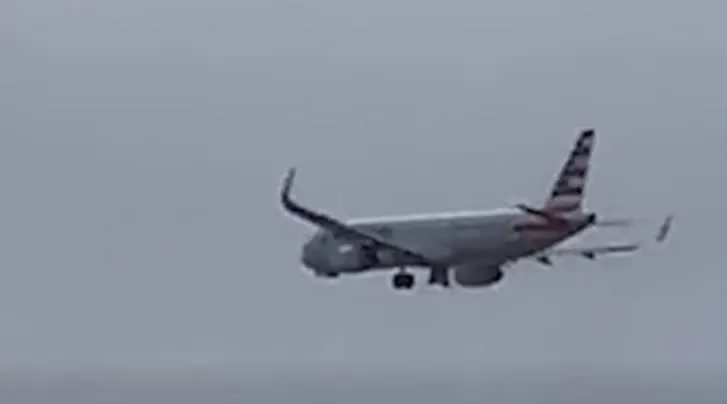
An American Airlines A321 returned to Aruba shortly after takeoff due to a technical issue, leading to the flight's cancellation and rebooking for passengers.
Key Takeaways
- •Returned to Aruba shortly after takeoff due to a reported technical issue.
- •Involved an Airbus A321 operating as flight AA870 to Philadelphia.
- •Resulted in flight cancellation and required rebooking for up to 187 passengers.
- •Follows other recent incidents involving technical issues with A321 nose landing gear.
An American Airlines flight bound for Philadelphia was forced to return to its departure airport in Oranjestad, Aruba, on Thursday following a technical issue that arose shortly after takeoff. The incident involved flight AA870, operated by an Airbus A321, which landed safely at Queen Beatrix International Airport (AUA). No injuries were reported among the crew or passengers.
The flight, destined for Philadelphia International Airport (PHL), experienced an unspecified problem that prompted the pilots to make a precautionary return. In line with standard procedure for such events, airport authorities activated their Airport Emergency Plan (AEP). This triggered a standby alert for emergency services and a temporary halt to some airport operations to ensure the aircraft could land without incident.
According to the Aruba Airport Authority (AAA), the Airbus A321 circled over the sea for approximately one hour to burn fuel before making its final approach. This procedure is common for aircraft returning with a heavy fuel load to ensure they are within safe landing weight limits. Flight tracking data confirms the aircraft's holding pattern before its safe return to AUA. The flight was subsequently cancelled, impacting the travel plans for as many as 187 passengers who required rebooking on alternative services.
Incident Context and Investigation
While American Airlines has not yet released an official statement detailing the exact nature of the technical fault, unverified reports suggest the issue may have been related to the aircraft's nose landing gear. The investigation into the incident is now underway by American Airlines Maintenance & Operations.
The decision to return to the origin airport aligns with established aviation safety procedures. When non-critical technical issues arise early in a flight, particularly those related to landing gear or hydraulics, returning to the departure airport is often the safest course of action. This ensures the aircraft can be assessed by familiar maintenance crews and minimizes the complexity of diverting to an unscheduled airport.
This event adds to a series of recent incidents involving landing gear systems on Airbus A321 aircraft. For example, in January 2026, a United Airlines A321neo experienced a nosewheel separation during a hard landing in Orlando. Similarly, in November 2024, another American Airlines A321 was forced to divert after a hydraulic failure that prevented the crew from steering the nose gear after landing. These precedents highlight the operational sensitivity of landing gear assemblies on the widely used narrow-body jet.
Stakeholder and Operational Impact
The precautionary landing and subsequent cancellation had a cascading effect on several stakeholders. For the passengers of flight AA870, the primary impact was the significant travel disruption and the need for re-accommodation. For American Airlines, the incident triggers a mandatory maintenance inspection and potential repairs on the A321, taking the aircraft out of service temporarily. The airline also incurred costs related to passenger care and the operational logistics of repositioning a replacement aircraft or rebooking passengers on other flights.
The Aruba Airport Authority experienced minor operational disruptions due to the temporary halt of its activities. The successful management of the situation, however, demonstrated the effectiveness of its emergency response protocols, which are regularly drilled to handle such events.
What Comes Next
The immediate focus is on the technical assessment of the involved Airbus A321. According to predictive timelines, American Airlines Maintenance is expected to complete a thorough inspection of the aircraft's nose gear and associated systems by the end of March 2026. This investigation will determine the root cause of the fault and the necessary corrective actions before the aircraft is cleared to return to service. Until then, the aircraft will remain grounded in Aruba.
Why This Matters
While in-flight turnbacks are relatively common and demonstrate robust safety protocols, this incident underscores the continued importance of vigilant maintenance and component reliability, particularly on high-cycle aircraft like the A321. For the industry, it serves as another data point regarding the operational performance of landing gear systems, a critical component that demands zero-fault tolerance. The event highlights how even a non-critical technical issue can cause significant disruption for both passengers and airline operations, reinforcing the value of preventative maintenance strategies.
Stay ahead of the airline industry with commercial aviation news from omniflights.com. For detailed airline coverage, route changes, and fleet moves, explore the Airlines section at omniflights.com/airlines.
Written by Ujjwal Sukhwani
Aviation News Editor & Industry Analyst delivering clear coverage for a worldwide audience. Covers flight operations, safety regulations, and market trends with expert analysis.
Visit ProfileYou Might Also Like
Discover more aviation news based on similar topics
Ryanair Flight RK514 Diverts to Birmingham After Emergency
Ryanair flight RK514 diverted to Birmingham Airport on September 13, 2026, following a medical emergency involving a passenger.

Amazon Suspends 21 Air After Fatal Miami 767 Runway Overrun
Amazon has suspended operations with 21 Air following a fatal Boeing 767 runway overrun at Miami International Airport that resulted in five deaths.
FAA Proposes A220 Fuel Line Inspections for US Operators
The FAA issued a proposed directive requiring inspection of motive-flow fuel lines on 13 US-registered Airbus A220s to prevent potential leaks.
NATS Denies Military Jet Role in UK ATC Outage
The UK Ministry of Defence denied its aircraft caused a NATS outage that led to over 2,000 flight cancellations and calls for CEO resignation.
21 Air Miami Crash: NTSB Investigates 767 Runway Overrun
A fatal 21 Air Boeing 767 crash at Miami International Airport has triggered an NTSB investigation amid scrutiny of Amazon Air's contract oversight.

Amazon Cargo Plane Crash: 5 Remembered After MIA Excursion
Five cleaning crew members died after an Amazon-contracted Boeing 767 overran the runway at Miami International Airport at 158 knots.