Airlines and Amazon Add Fuel Surcharges Amid 2026 Oil Spike

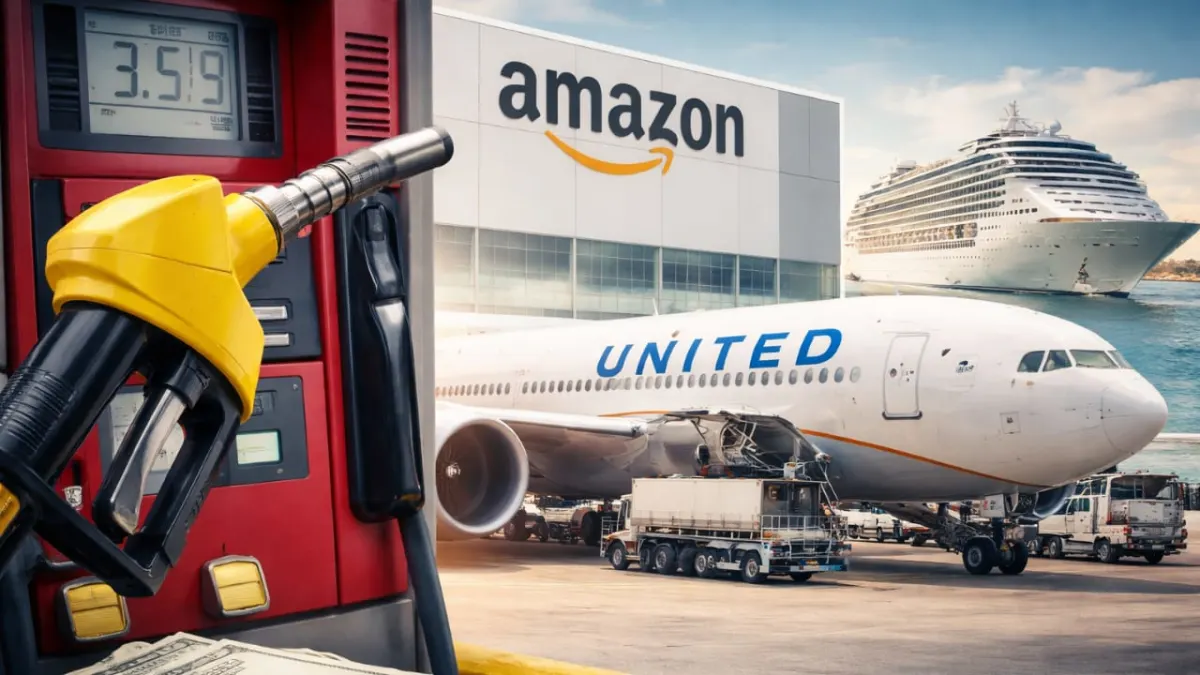
United Airlines, Amazon, and others are adding fuel surcharges and fees to offset soaring jet fuel prices driven by the 2026 Iran conflict.
Key Takeaways
- •Triggers a doubling of U.S. jet fuel prices to over $4.60 per gallon following the 2026 Iran conflict.
- •Increases United Airlines' first checked bag fee by $10, reaching a maximum of $50.
- •Introduces a 3.5% fuel surcharge for Amazon's third-party fulfillment sellers, averaging $0.17 per unit.
- •Adds a $50 CAD per-passenger fee for new Air Canada Vacations sun destination packages.
A sudden spike in oil prices stemming from the 2026 Iran conflict is prompting a wave of fuel surcharges and fee increases across the transportation and logistics sectors. U.S. jet fuel prices have more than doubled, surging from $2.50 to over $4.60 per gallon, according to the Argus U.S. Jet Fuel Index. In response, major carriers including United Airlines and JetBlue Airways, e-commerce giant Amazon, and travel operators like Air Canada Vacations are implementing new fees to offset the dramatic rise in operating costs.
The cascading economic effects are not confined to a single industry, signaling a broad-based repricing of transportation costs that will ultimately be borne by consumers. From checked baggage on domestic flights to the price of online goods and vacation packages, the conflict's impact is materializing in the form of direct and indirect cost hikes. This strategy mirrors historical responses to oil shocks, where companies have shifted costs through ancillary charges rather than direct price increases on core services.
Airline Fee Hikes In Detail
U.S. airlines have moved quickly to protect margins by increasing ancillary fees for checked baggage. United Airlines increased its first and second checked bag fees by $10. According to a statement from the airline, this brings the cost for a first bag paid within 24 hours of departure to $50. Similarly, JetBlue Airways raised its checked bag fees by $4 to $9, with a second bag now costing as much as $69 during peak travel periods.
This approach leverages a key loophole in U.S. tax policy. According to the Internal Revenue Service (IRS), optional baggage fees are exempt from the 7.5% federal excise tax applied to domestic airfares. By raising these untaxed ancillary fees, airlines can recover fuel costs more efficiently than by increasing base fares. This practice of tax arbitrage became widespread following the 2008 global oil price spike, which established the modern ancillary fee model now being deployed.
Travel package operators are also directly passing on fuel costs. Air Canada Vacations implemented a fixed fuel surcharge of $50 CAD per passenger for new bookings to sun destinations, effective April 6, 2026.
Logistics and E-Commerce Impact
The surge in fuel prices has also hit the e-commerce and logistics sectors. Amazon announced a 3.5% fuel and logistics surcharge for third-party sellers using its Fulfillment by Amazon (FBA) network in the U.S. and Canada. The fee, which averages $0.17 per unit, directly impacts the margins of small and medium-sized businesses that rely on the platform. The impact on sellers is significant, as it compounds pressure from other rising input costs.
Major logistics providers are following a similar strategy. The United States Postal Service (USPS) has filed for a temporary 8% fuel surcharge on its competitive package services, pending approval from the Postal Regulatory Commission (PRC). This move aligns the USPS with private carriers like UPS and FedEx, which already utilize dynamic, fuel-indexed pricing models. As of early April 2026, UPS's surcharge stood at 25.5% and FedEx's at 25.0%, highlighting the industry-wide adoption of such mechanisms to manage fuel price volatility.
Broader Travel Industry Response
The cruise industry is also responding to the crisis. StarDream Cruises has added a daily fuel surcharge ranging from $19 to $26 per guest for its Asia sailings. A notable aspect of this trend is the activation of fine-print clauses that allow cruise lines to retroactively apply these surcharges to already-booked tickets, creating frustration for both travelers and travel agencies. Tom Baker of Cruise Center commented that the conflict's economic effects will "impact every traveler on the planet" as companies activate these clauses to absorb the doubling of fuel prices.
What Comes Next
Several of these newly announced surcharges are scheduled for implementation in the coming weeks. Amazon has confirmed its 3.5% FBA surcharge will take effect on April 17, 2026, and will expand to its Buy with Prime service on May 2, 2026. The USPS 8% fuel surcharge is expected to become effective on April 26, 2026, following anticipated approval from the PRC.
Industry executives have warned that further price increases are likely if fuel costs remain elevated. United Airlines CEO Scott Kirby stated that airfare hikes would "probably start quick," suggesting that increases in baggage fees are only the first step. Consumers should anticipate continued price adjustments across travel and shipping services as companies navigate the volatile cost environment.
Why This Matters
The coordinated implementation of fuel surcharges across aviation, e-commerce, and tourism underscores the global economy's sensitivity to geopolitical shocks in energy-producing regions. This development signals a rapid pass-through of wholesale energy costs to consumers, potentially fueling broader inflation. For passengers and shoppers, it means a higher total cost of travel and goods, often through complex ancillary fees rather than transparent increases in sticker prices.
Frequently Asked Questions
- Why are airlines like United and JetBlue increasing baggage fees in 2026?
- Airlines are increasing baggage fees to offset a sharp rise in jet fuel prices, which doubled to over $4.60 per gallon following the 2026 Iran conflict. Raising these tax-exempt ancillary fees allows carriers to recover costs without increasing the base airfare, which is subject to a 7.5% federal tax.
- What is the fuel surcharge Amazon added for its sellers?
- Amazon introduced a 3.5% 'fuel and logistics-related surcharge' for third-party sellers using its Fulfillment by Amazon (FBA) services in the US and Canada. Effective April 17, 2026, this fee averages about 17 cents per unit and is designed to mitigate increased transportation costs.
Stay ahead of the airline industry with commercial aviation news from omniflights.com. Track policy changes, airspace rules, and global aviation governance in the Regulatory category at omniflights.com/regulatory.

Written by Hardik Vishwakarma
Co-Founder & Aviation News Editor leading initiatives that improve trust and visibility across the global aviation industry. Covers airlines, airports, safety, and emerging technology.
Visit ProfileYou Might Also Like
American Airlines Eyes Starlink for Boeing 737, 777, 787
US Slows Aircraft-Part Exports to China Amid Trade Truce
Boeing Tightens Spending Ahead of Critical SPEEA Union Vote
Boeing CEO Kelly Ortberg Warns of 777X Certification Delay
American and United Plan Capacity Cuts Amid Fuel Cost Surge