Air India Hikes Fuel Surcharges After 737 MAX Incident in Phuket

Aviation News Editor & Industry AnalystAviation News Editor & Industry Analyst delivering clear coverage for a worldwide audience.
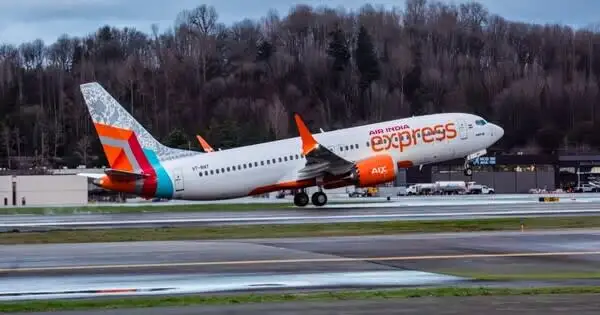
Air India is raising fuel surcharges globally due to rising jet fuel costs, as an Air India Express 737 MAX suffers a hard landing incident in Phuket.
Key Takeaways
- •Suffered a hard landing in Phuket, detaching the nose wheels from a Boeing 737 MAX 8 with 138 people aboard.
- •Implements a multi-phase fuel surcharge hike starting March 12, 2026, due to rising global jet fuel costs.
- •Cites Aviation Turbine Fuel (ATF) as 40% of its operating costs, a figure amplified by high domestic taxes.
- •Raises surcharges up to USD 200 for North American routes in response to geopolitical and economic pressures.
An Air India Express flight suffered a significant landing incident at Phuket International Airport, coinciding with parent company Air India's announcement of a major, phased-in fuel surcharge increase across its network. The Air India Express Phuket incident involved flight IX938, a Boeing 737 MAX 8, which experienced a hard landing resulting in the detachment of its nose wheels. This operational event occurs as the airline group confronts severe economic pressure from a sharp Aviation Turbine Fuel price hike, prompting the new passenger surcharges set to begin on March 12, 2026.
The confluence of a serious operational incident and a significant financial policy change highlights the dual pressures facing the carrier. While the Phuket incident triggers a safety investigation, the fuel surcharge underscores a global industry trend of rising operating costs, which are particularly acute for Indian airlines due to domestic taxation policies.
Phuket Landing Incident Details
On March 11, 2026, Air India Express flight IX938 from Hyderabad experienced a hard landing upon arrival at Phuket International Airport (HKT). According to an official statement from India's Directorate General of Civil Aviation (DGCA), the event caused both nose wheels of the Boeing 737 MAX 8 aircraft to detach. All 138 people on board, comprising 132 passengers and 6 crew members, were deplaned safely with no reported injuries.
In a statement, an Air India Express spokesperson confirmed the event: "We confirm that our Hyderabad-Phuket flight on 11 March experienced an issue with the nose wheel at Phuket Airport. The crew followed all standard protocols, and guests were deplaned." The airline also acknowledged the cooperation of Phuket airport authorities.
Due to the location of the incident, aviation authorities in Thailand will lead the investigation into the cause of the hard landing. As per international protocols for aircraft accident and incident investigations, India's DGCA will coordinate with its Thai counterparts. The investigation will examine flight data recorder information, air traffic control communications, and the condition of the aircraft and runway to determine the contributing factors.
Phased Fuel Surcharge Rollout
Concurrent with the incident, Air India announced a broad expansion of fuel surcharges, citing a steep rise in the cost of Aviation Turbine Fuel (ATF). The airline stated that geopolitical tensions in the Middle East have caused significant price escalations since early March 2026. This move reflects a wider industry trend where carriers are passing on volatile fuel costs to passengers.
The new surcharges will be implemented in three phases. Phase 1, effective for all new bookings from March 12, introduces a Rs 399 surcharge on domestic routes within India and flights to countries in the South Asian Association for Regional Cooperation (SAARC). Flights to West Asia and the Middle East will carry a new USD 10 surcharge. For Southeast Asia, the fee will increase from USD 40 to USD 60, and for Africa, it will rise from USD 60 to USD 90.
Phase 2 will begin for bookings made from March 18. This phase targets long-haul routes, with the surcharge for flights to Europe increasing from USD 100 to USD 125. Critically, for high-demand routes to North America and Australia, the surcharge will see a substantial increase from USD 150 to USD 200. A third phase impacting Far East markets like Japan and South Korea will be announced later. Tickets issued before these dates will not be affected unless reissued.
Cost Pressures and Regulatory Context
The airline's decision is rooted in the unique economic challenges facing Indian carriers. According to Air India's press statement, ATF accounts for nearly 40% of an airline's operating costs in India, a figure higher than for many global competitors. This vulnerability is exacerbated by the domestic tax structure.
In its statement, the airline noted, "In India, this pressure is amplified by high Excise Duty and Value-Added Tax (VAT) on ATF in major metro cities such as Delhi and Mumbai, magnifying cost....and placing substantial strain on airline operating economics." This regulatory context means that when global crude oil prices rise, the final cost for Indian airlines increases disproportionately due to taxes applied on top of the base price. The current surcharge is a direct mechanism to offset this financial burden and maintain the economic viability of its routes.
Why This Matters
These concurrent events underscore the complex challenges confronting Air India and the broader Indian aviation market. The Phuket incident places a renewed focus on operational safety and crew training, particularly involving newer aircraft variants like the 737 MAX. Simultaneously, the aggressive fuel surcharge implementation demonstrates the carrier's sensitivity to global energy markets and its limited ability to absorb rising costs, a situation made worse by domestic fiscal policy. For passengers, this signals a period of higher ticket prices, while for the industry, it highlights the delicate balance between ensuring safety and maintaining financial stability in a high-cost environment.
Get breaking commercial aviation news and expert airline analysis at omniflights.com. Follow aviation sustainability efforts, emissions research, and green initiatives in the Environmental section at omniflights.com/environmental.
Written by Ujjwal Sukhwani
Aviation News Editor & Industry Analyst delivering clear coverage for a worldwide audience. Covers flight operations, safety regulations, and market trends with expert analysis.
Visit ProfileYou Might Also Like
Discover more aviation news based on similar topics
IATA Pushes for Open Used Serviceable Material Market
IATA is urging engine OEMs to expand the Used Serviceable Material market following a landmark EU antitrust settlement with Pratt & Whitney Canada.
Virgin Atlantic A330 Retirement Boosts SAS Fleet Capacity
Virgin Atlantic is retiring its aging A330-300 fleet, with five airframes acquired by SAS to bridge near-term intercontinental capacity gaps.
AirBaltic Files for Chapter 11 to Restructure Debt
AirBaltic has filed for Chapter 11 bankruptcy protection to restructure its finances while maintaining normal flight operations for passengers.
Boeing Wins $241M Navy Contract for F/A-18 Surface Repairs
Boeing secured a $241.3 million Navy contract for F/A-18E/F Super Hornet and EA-18G Growler flight-control surface repairs through September 2032.
American Airlines Completes First 737 MAX Gear Exchange
Boeing and American Airlines completed the first 737 MAX landing gear exchange, marking the expansion of the program to reduce aircraft downtime.

Iberia Gains Unrestricted A350 Heavy Maintenance Approval
The Spanish aviation regulator AESA has granted Iberia Maintenance unrestricted authorization to perform heavy maintenance on the Airbus A350 fleet.