Air India Express 737 MAX Hard Landing, Nose Gear Failure in Phuket

Aviation News Editor & Industry AnalystAviation News Editor & Industry Analyst delivering clear coverage for a worldwide audience.
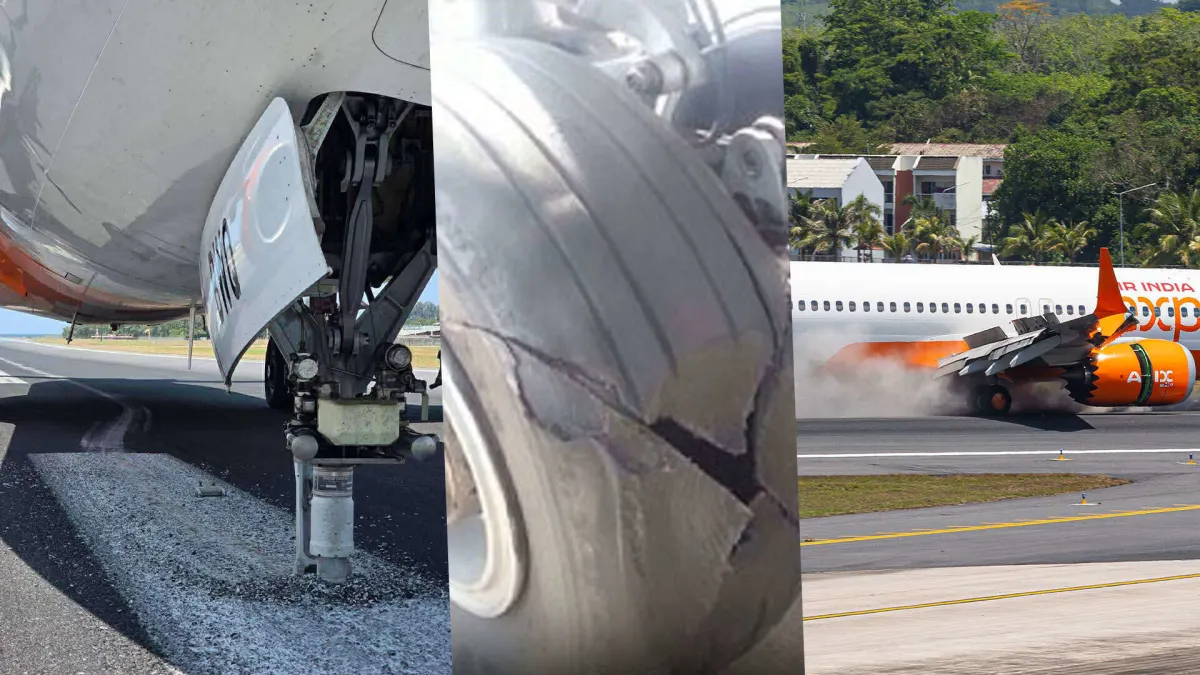
An Air India Express Boeing 737 MAX experienced a hard landing in Phuket, causing its nose gear to fail and closing the airport's single runway for hours.
Key Takeaways
- •Experienced a hard landing in Phuket, causing both nose wheels to detach from the gear.
- •Forced the closure of Phuket's single runway for nearly 6 hours, causing widespread diversions.
- •Involved a 6-year-old Boeing 737 MAX 8 with 133 people on board, all evacuated safely.
- •Prompts joint investigation by Indian and Thai authorities amid prior safety scrutiny of the airline.
An Air India Express flight, IX938, suffered a catastrophic nose gear failure upon landing at Phuket International Airport (HKT) on March 11, 2026, after a suspected hard landing. The incident involved a Boeing 737 MAX 8 aircraft, registration VT-BWQ, which was operating a scheduled service from Hyderabad, India. All 133 people on board were safely evacuated with no reported injuries, but the disabled aircraft forced the closure of Phuket's only runway for nearly six hours, causing significant air traffic disruption across the region.
The event has triggered a joint investigation by aviation authorities in both India and Thailand. A senior official from India's Directorate General of Civil Aviation (DGCA) confirmed that the aircraft "made a suspected hard landing with a bounce," which resulted in both nose wheels detaching from the landing gear structure. Video footage captured by passengers and ground observers shows the aircraft veering off-center down the runway before coming to a halt.
Operational Impact at Phuket Airport
The immediate consequence of the incident was the paralysis of operations at Phuket International Airport, a critical gateway for international tourism in Thailand. The airport issued a Notice to Airmen (NOTAM) A0924/26, officially closing its single runway (09/27) to all traffic. According to the NOTAM, the runway remained closed for nearly six hours until 14:00 UTC (21:00 local time).
This prolonged closure had a cascading effect on airline schedules. Dozens of inbound flights were forced to enter holding patterns or divert to alternate airports, including Krabi (KBV) and Surat Thani (URT). Major carriers impacted by the diversions included Emirates and AirAsia, incurring additional fuel and operational costs. The incident underscores the vulnerability of international airports that rely on a single runway, where one disabled aircraft can halt the entire operation.
Regulatory Scrutiny and Investigation
The investigation into the hard landing and subsequent gear failure is being coordinated between India's DGCA and the Civil Aviation Authority of Thailand (CAAT). Investigators will analyze flight data recorder information and cockpit voice recordings to determine the sequence of events leading to the bounce and structural failure. The crew's handling of the aircraft during the final approach and landing will be a primary focus.
This incident places Air India Express under renewed regulatory scrutiny. According to data from India's Ministry of Civil Aviation, the airline reported 95 technical defects between January and November 2025, the second-highest tally among all Indian carriers during that period. The DGCA had also previously reprimanded the airline for issues related to maintenance compliance, adding a layer of historical context to the current investigation.
Historical Precedent: Southwest Flight 345
The nature of this incident draws parallels to the landing accident of Southwest Airlines Flight 345 in July 2013. In that event, a Boeing 737-700 experienced a nose gear collapse upon landing at New York's LaGuardia Airport after touching down on its nose wheel first. The U.S. National Transportation Safety Board (NTSB) ultimately cited pilot error as the probable cause. While the investigation into IX938 is just beginning, the Southwest precedent highlights the critical importance of proper flare and touchdown technique in preventing nose gear failures on the Boeing 737 family.
Technical Analysis
This event brings two significant industry risks into sharp focus: infrastructure resilience and airline operational safety. The paralysis at Phuket, a major international hub, demonstrates how single-runway airports remain a critical point of failure in the global aviation network. The economic cost of diversions, cancellations, and delays resulting from a multi-hour closure is substantial, impacting multiple airlines, passengers, and cargo operators. The incident will likely renew calls for redundancy planning at such key airports.
Furthermore, the incident contributes to a pattern of operational and maintenance concerns for Air India Express. While a hard landing can result from various factors, including environmental conditions or technical malfunction, it often involves flight crew performance. Coupled with the airline's documented history of technical defects, this high-profile safety event will intensify scrutiny from the DGCA. It follows a broader industry trend where regulators are increasingly using data-driven oversight to identify airlines with elevated risk profiles, potentially leading to more stringent audits and operational restrictions.
What Comes Next
Authorities from both Thailand and India will now conduct a thorough investigation into the incident. According to predictive timelines, a preliminary report from the CAAT and DGCA detailing the initial findings is expected to be released by April 2026. This report will likely provide more clarity on the flight parameters at touchdown, the crew's actions, and the material state of the landing gear components.
In the immediate aftermath, Airports of Thailand (AOT) conducted a runway damage assessment and completed necessary repairs in March 2026 to ensure the safe resumption of flight operations. The aircraft, VT-BWQ, is expected to remain grounded at Phuket for an extended period pending the investigation and a detailed structural damage assessment, effectively removing a 737 MAX 8 from the Air India Express active fleet.
Why This Matters
This incident serves as a critical case study on the cascading effects of a single aircraft failure at a key international tourist hub. It highlights the acute operational and financial risks posed by infrastructure limitations at single-runway airports. For Air India Express, the event magnifies existing concerns over its maintenance and safety record, potentially impacting passenger confidence and inviting more rigorous regulatory oversight.
For global airline trends and commercial aviation news, turn to omniflights.com. From aircraft production to supply chains, commercial aviation manufacturing news is covered at omniflights.com/manufacturing.
Written by Ujjwal Sukhwani
Aviation News Editor & Industry Analyst delivering clear coverage for a worldwide audience. Covers flight operations, safety regulations, and market trends with expert analysis.
Visit ProfileYou Might Also Like
Discover more aviation news based on similar topics
Ryanair Flight RK514 Diverts to Birmingham After Emergency
Ryanair flight RK514 diverted to Birmingham Airport on September 13, 2026, following a medical emergency involving a passenger.
Amazon Suspends 21 Air After Fatal Miami 767 Runway Overrun
Amazon has suspended operations with 21 Air following a fatal Boeing 767 runway overrun at Miami International Airport that resulted in five deaths.
FAA Proposes A220 Fuel Line Inspections for US Operators
The FAA issued a proposed directive requiring inspection of motive-flow fuel lines on 13 US-registered Airbus A220s to prevent potential leaks.
NATS Denies Military Jet Role in UK ATC Outage
The UK Ministry of Defence denied its aircraft caused a NATS outage that led to over 2,000 flight cancellations and calls for CEO resignation.
21 Air Miami Crash: NTSB Investigates 767 Runway Overrun
A fatal 21 Air Boeing 767 crash at Miami International Airport has triggered an NTSB investigation amid scrutiny of Amazon Air's contract oversight.

Amazon Cargo Plane Crash: 5 Remembered After MIA Excursion
Five cleaning crew members died after an Amazon-contracted Boeing 767 overran the runway at Miami International Airport at 158 knots.