Air India AI 171 Crash Exposes Ground Victim Payout Void

Co-Founder & CEOAviation News Editor delivering trusted coverage across the global aviation industry.
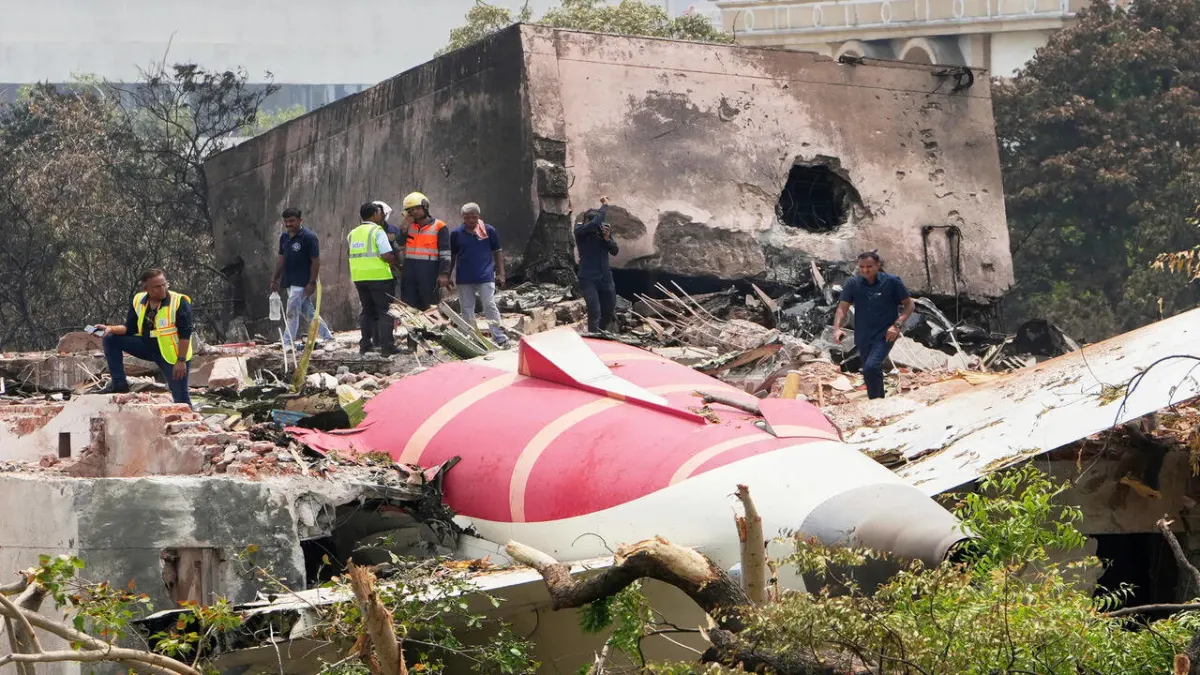
The Air India AI 171 crash killing 19 people on the ground highlights the urgent need for a statutory aviation third-party liability framework in India.
Key Takeaways
- •Air India AI 171 crash killed 19 people on the ground.
- •No statutory framework exists for ground victim compensation in India.
- •SMF urges government to adopt a strict liability compensation framework.
- •Interim ex gratia payments of Rs 25 lakh were provided by the airline.
Addressing the Ground Victim Compensation Gap
The June 12, 2025, crash of Air India flight AI 171 into a hostel in Ahmedabad resulted in a catastrophic loss of life, killing 241 passengers and crew, alongside 19 individuals on the ground. While the aviation industry maintains a robust, structured system for passenger compensation, the tragedy has exposed a significant legal void regarding ground victim compensation. The Safety Matters Foundation (SMF), an independent aviation safety non-profit, has formally petitioned the Indian aviation ministry to establish a comprehensive aviation statutory framework to rectify this disparity.
The Disparity in Legal Protection
Under current international and domestic regulations, passengers and their families are protected by the Carriage by Air Act and the Montreal Convention (1999), which mandate structured liability and insurance protocols. However, no comparable statutory mechanism exists for individuals on the ground who suffer death, injury, or property damage due to an aircraft accident. According to the SMF, compensation for ground victims currently relies on a fragmented patchwork of tort litigation, ad-hoc settlements, and ex gratia payments. Following the AI 171 accident, Air India provided an interim payment of Rs 25 lakh to the families of ground victims. While helpful, advocacy groups argue that such payments are voluntary rather than a legal entitlement, leaving families in a state of prolonged financial and legal uncertainty.
Regulatory Landscape and Historical Precedents
India’s Aircraft (Investigation of Accidents and Incidents) Rules explicitly define ground casualties as part of an aviation accident, yet the rules do not mandate compensation standards. Internationally, the International Civil Aviation Organization (ICAO) has attempted to address this through the 1952 Rome Convention and the 2009 Montreal Conventions on third-party liability. However, as noted in the ICAO Legal Affairs Treaty Collection, these treaties have failed to secure sufficient global ratification to enter into force.
Historically, events such as the 1992 El Al Flight 1862 crash in Amsterdam, which killed 39 people on the ground, demonstrate the severe complexities of third-party liability. While nations like Switzerland have incorporated strict liability into their national Aviation Act, most jurisdictions—including India—remain without a clear, mandatory path for relief. This lack of a statutory framework forces victims into costly, multi-year litigation cycles.
Stakeholder Impact and Economic Considerations
The push for a Ground Victims Compensation Framework carries significant implications for various stakeholders. For the families of the 67 individuals who suffered serious injuries on the ground during the AI 171 event, the absence of clear statutes means they must navigate a legal system not built for their specific circumstances. Conversely, aviation underwriters and insurance firms would likely face a requirement to overhaul risk models if India moves toward a strict liability model. Some industry analysts argue that imposing unlimited strict liability could create financial instability for carriers, a concern that historically hindered the ratification of international third-party treaties.
Technical Analysis: The Path to Strict Liability
The data suggests that the current reliance on tort law and ex gratia payments is insufficient for modern aviation safety standards. The move toward a strict liability regime, where victims only need to establish that their injury or damage resulted from an aircraft accident, represents a shift toward prioritizing consumer and public protection over carrier liability limits. This trajectory aligns with global movements to harmonize aviation safety standards, though it contradicts the historical precedent of limited, fault-based liability that has dominated international air law for decades. By formalizing these protections, India would transition from an ad-hoc compensation model to one that provides predictable, mandatory interim relief, thereby reducing the burden on both the judicial system and the affected families.
What Comes Next: The Investigation Timeline
As the industry awaits the final accident investigation report for flight AI 171, expected in late 2026 from the Aircraft Accident Investigation Bureau (AAIB), the pressure on the Ministry of Civil Aviation to draft new legislation remains high. The ICAO treaty status serves as a reminder that while international consensus is difficult to achieve, national-level reforms remain the most viable pathway for immediate change. The government’s response to the SMF request will likely serve as a litmus test for India's commitment to aviation third-party liability reform.
Why This Matters for the Aviation Industry
This development signals a critical evolution in how the aviation sector manages its external footprint. For airlines and insurers, the potential for a statutory compensation mandate means that the cost of doing business in residential corridors may rise, necessitating more precise risk assessment. For the public, the establishment of clear, mandatory compensation standards would provide a vital safety net, ensuring that ground victims receive equitable treatment regardless of the specific circumstances of an aviation disaster.
Frequently Asked Questions
- Why is there no statutory compensation for ground victims in India?
- Current Indian aviation law, including the Carriage by Air Act, primarily covers passengers under the Montreal Convention. No equivalent statutory framework has been ratified to mandate compensation for third-party victims on the ground.
- What is the Safety Matters Foundation requesting from the Indian government?
- The Safety Matters Foundation is requesting a statutory Ground Victims Compensation Framework that includes strict liability for operators, mandatory interim compensation, and defined minimum compensation standards.
Access up-to-date commercial aviation news and airline industry developments via omniflights.com. Get the latest updates on major hubs, regional terminals, and airport operations via the Airports section at omniflights.com/airports.
Written by Hardik Vishwakarma
Co-Founder & Aviation News Editor leading initiatives that improve trust and visibility across the global aviation industry. Covers airlines, airports, safety, and emerging technology.
Visit ProfileYou Might Also Like
Discover more aviation news based on similar topics

FAA Proposes Ending Overland Supersonic Flight Ban
The FAA has proposed a new performance-based noise standard to replace the 1973 ban on overland supersonic flight, enabling future commercial travel.

DOT Rule Exempts Airlines From Cyberattack Delay Costs
Starting October 19, 2026, the DOT will allow airlines to withhold meal and hotel vouchers for delays caused by cyberattacks and nine other events.

Wizz Air, Ryanair Demand NATS Reform After ATC Failure
Wizz Air and Ryanair are calling for urgent NATS reform after a September 8 system failure caused over 1,000 flight cancellations across the UK.

US Treasury Iran Sanctions Target 27 Airlines, Mahan Air
The U.S. Treasury sanctioned 36 entities, including 27 Iranian airlines, to disrupt illicit procurement networks used by the Iranian government.

FAA Awards $481M in Airport Infrastructure Grants
The FAA announced $481 million in infrastructure grants across 191 U.S. airports to improve runways, terminals, and overall capacity.
FAA Air Traffic Controllers Protest Pay and Staffing Cuts
The FAA is withholding a 2.8% pay raise for air traffic controllers, exacerbating morale and safety concerns amid a critical nationwide staffing shortage.