Air China Resumes Direct Flights to Pyongyang After 6-Year Hiatus

Co-Founder & CEOAviation News Editor delivering trusted coverage across the global aviation industry.
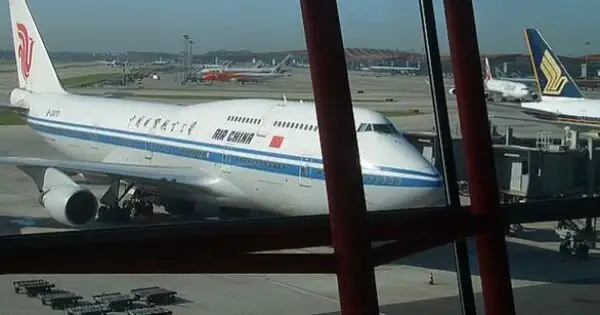
Air China has resumed direct flights between Beijing and Pyongyang, ending a six-year suspension and signaling North Korea's gradual border reopening.
Key Takeaways
- •Resumed direct flights between Beijing and Pyongyang on March 30, 2026, after a six-year halt.
- •Operates the route with a 128-seat Boeing 737-700, re-establishing a key transport link.
- •Follows the resumption of rail services and Air Koryo's 2023 flights, signaling North Korea's gradual reopening.
- •Positions Chinese tour operators to restart business, as Chinese tourists comprised 90% of pre-pandemic visitors.
Air China (CA), the national flag carrier of China, has resumed direct flights between Beijing and Pyongyang, marking the end of a six-year suspension prompted by the COVID-19 pandemic. The first flight landed in the North Korean capital on March 30, 2026, re-establishing a critical air corridor between the two allied nations and signaling a further, albeit cautious, step in North Korea's reopening to the world.
The resumption of air travel follows the restoration of passenger train services between China and North Korea on March 12, 2026. Together, these developments restore crucial transportation links that are vital for diplomatic, economic, and cultural exchange. North Korea's state-owned airline, Air Koryo (JS), had already restarted its own flights to Beijing in August 2023, representing the initial move to reconnect the two capitals by air after the country sealed its borders in January 2020.
A Cautious Reopening
According to Chinese state media, the inaugural Air China flight was met at Pyongyang Sunan International Airport (FNJ) by Chinese Ambassador to North Korea, Wang Yajun, and other diplomats. In a statement, Ambassador Wang highlighted the strategic importance of the route, noting it injects "new momentum into economic, trade, and cultural exchanges." The approval for the service came from the Civil Aviation Administration of China (CAAC), the country's aviation regulator.
The flight, operating as CA121 from Beijing Capital International Airport (PEK), utilizes a Boeing 737-700 aircraft with a capacity for 128 passengers. This move is particularly significant for North Korea's tourism industry. According to data from the South Korea Institute for International Economic Policy, Chinese tourists accounted for approximately 90 percent of all foreign visitors to North Korea before the pandemic. The halt in travel had a severe impact on state-owned enterprises like hotels and retailers that rely on foreign currency.
For China-based tour operators specializing in trips to the Democratic People's Republic of Korea (DPRK), the resumption reactivates business operations that have been completely dormant for six years. The restoration of both air and rail links is a primary enabler for the potential revival of this niche tourism market.
Geopolitical and Industry Context
North Korea's isolation during the pandemic was among the strictest in the world. The country has been slowly relaxing these rules, first allowing a group of Russian tourists to enter in 2024 before restoring transport links with China. The re-establishment of the Beijing-Pyongyang air corridor is viewed by some geopolitical analysts as a calculated signal of Sino-DPRK alignment. This perspective suggests the decision is driven as much by strategic positioning as by purely commercial or tourism-related demand.
However, from a tourism industry standpoint, some Western travel agencies remain skeptical, arguing that a full recovery is contingent on North Korea officially lifting its ban on a broader range of international tourists. The current reopening is largely confined to its primary political and economic partners.
In August 2023, Air Koryo operated its first international commercial flight since the border closure, also to Beijing. This was the first step in restoring the Beijing-Pyongyang air corridor, which Air China has now joined. The original suspension in January 2020 severed all international transport, completely isolating the country.
Aircraft Deployed on Beijing-Pyongyang Route
| Metric | Air China | Air Koryo |
|---|---|---|
| Aircraft Model | Boeing 737-700 | Tupolev Tu-204-300 |
| Typical Capacity | 128 seats | ~142 seats |
| Manufacturer Origin | United States | Russia/Soviet Union |
This comparison highlights a key constraint for North Korea's flag carrier. UN Security Council sanctions restrict the country's ability to acquire new aircraft, forcing Air Koryo to rely on an aging fleet of Russian-built planes, while Air China operates modern Western-built jets on the same route.
What Comes Next
The next significant development is expected in the third quarter of 2026, when North Korea's State General Bureau of Tourist Guidance is anticipated to authorize the return of general Chinese tour groups. While this milestone has not been officially confirmed, it is the logical next step following the restoration of transport infrastructure. For now, Air Koryo faces renewed competition on its most profitable international route, though initial demand is expected to be sufficient for both carriers.
Why This Matters
The resumption of Air China's flights to Pyongyang is more than a simple route restoration; it is a tangible indicator of North Korea's slow emergence from self-imposed isolation. For the aviation industry, it reopens a unique, politically sensitive market and provides a critical link for diplomatic and economic activity. The move underscores the strengthening ties between Beijing and Pyongyang and sets the stage for the potential revival of North Korea's tourism sector, overwhelmingly dependent on Chinese visitors.
Access up-to-date commercial aviation news and airline industry developments via omniflights.com. Stay informed on aviation incidents, investigations, and best practices in the Safety category at omniflights.com/safety.

Written by Hardik Vishwakarma
Co-Founder & Aviation News Editor leading initiatives that improve trust and visibility across the global aviation industry. Covers airlines, airports, safety, and emerging technology.
Visit ProfileYou Might Also Like
Discover more aviation news based on similar topics
KLM Receives First A350-900 De Nachtwacht for Fleet Renewal
KLM Royal Dutch Airlines has received its first Airbus A350-900, named De Nachtwacht, to begin replacing its aging Boeing 777 and Airbus A330 fleet.
Flydubai Upgrading 21 Boeing 737 MAX 8s to Flat Bed Seats
Flydubai is retrofitting 21 Boeing 737 MAX 8 aircraft with lie-flat business class seats to standardize its premium product by late 2027.
Emirates Winter Booking Momentum Grows Amid Fleet Expansion
Emirates carried 8.6 million passengers this summer and enters winter with strong demand as it accelerates fleet retrofits and network growth.
Air Arabia Consortium Gains AOC for New Dammam Budget Airline
A Saudi GACA-led consortium including Air Arabia has secured an AOC to launch a new budget airline based at Dammam's King Fahd International Airport.
Turkish Airlines Exits Luanda as Angola Hub Struggles
Turkish Airlines dropped its Luanda route as Angola's new airport struggles to attract traffic, handling only 756,028 passengers in 2025.
Red Sea Airlines Leases Two 737 MAX 8s for 2027 Expansion
Red Sea Airlines signed a lease for two Boeing 737 MAX 8 aircraft from SMBC Aviation Capital, arriving in 2027 to support its 14-aircraft fleet goal.