Air Arabia Flight Makes Emergency Landing After Bird Strike

Co-Founder & CEOAviation News Editor delivering trusted coverage across the global aviation industry.
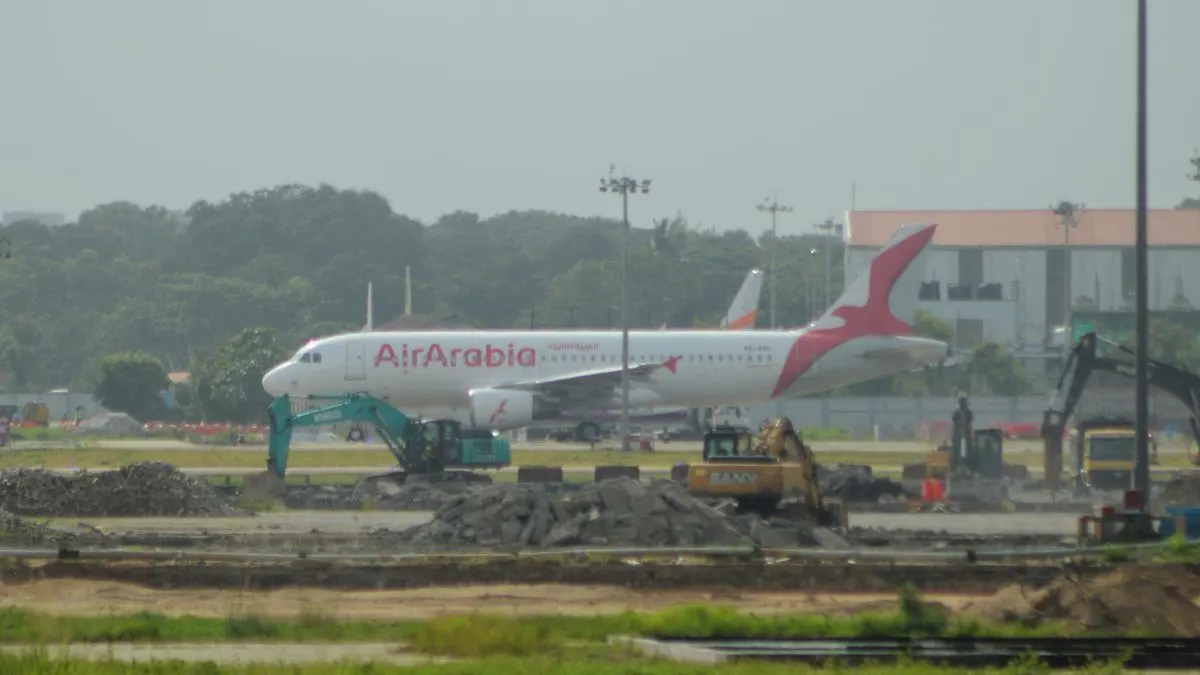
An Air Arabia Airbus A320 returned to Thiruvananthapuram following a suspected bird strike, impacting 166 passengers on the flight to Sharjah.
Key Takeaways
- •Air Arabia flight returned to TRV after a suspected bird strike.
- •The A320 carried 166 passengers during the emergency landing.
- •India saw 1,782 bird strike incidents during 2025.
- •DGCA incident report is expected to be released in Q3 2026.
An Air Arabia flight bound for Sharjah International Airport (SHJ) from Thiruvananthapuram International Airport (TRV) was forced to return for an emergency landing on Wednesday morning following a suspected bird strike. The incident, involving an Airbus A320 (A320), highlights ongoing concerns regarding aviation safety in India as wildlife-related incidents continue to rise at domestic aerodromes. According to preliminary airport official statements, the aircraft was carrying 166 passengers at the time of the event.
Operational and Passenger Impact
Following the suspected impact, the flight crew followed standard safety protocols and initiated an immediate return to TRV. The aircraft was subsequently grounded for thorough engineering inspections, leading to significant schedule disruptions for the affected passengers. The incident forced the airline to manage immediate rebooking and accommodation requirements for those stranded. For Air Arabia, which operates an all-Airbus A320 family fleet of over 84 aircraft, such unscheduled maintenance cycles represent a notable operational challenge, particularly given the airline's high-frequency route structure, which includes 14 direct flights per week between these two cities.
Regulatory Landscape and Wildlife Hazards
The Directorate General of Civil Aviation (DGCA) maintains strict oversight regarding wildlife management. Under Civil Aviation Requirement Section 4 Series B Part 1, airport operators are mandated to mitigate the risk of collisions with wildlife. Furthermore, Aerodrome Advisory Circular AD AC 01 of 2022 requires operators to implement a robust Wildlife Hazard Management Plan (WHMP). Despite these regulations, data from the Ministry of Civil Aviation indicates a sharp increase in bird strike incidents, rising from 1,278 in 2024 to 1,782 in 2025. This surge, representing a growth of over 130% since 2021, is often attributed to urban development and habitat displacement near airport perimeters.
Technical Context and Historical Precedents
Bird strikes remain a critical safety concern for narrow-body aircraft. In June 2022, a SpiceJet flight experienced an engine fire following a bird strike, demonstrating the potential for significant mechanical damage. Similarly, in June 2025, an Air India flight at the same airport was cancelled following a bird strike, underscoring the recurring nature of this hazard at TRV. Environmental groups argue that these incidents are increasingly tied to broader issues, including inadequate waste management and rapid urban expansion near flight paths, which attract wildlife to the vicinity of runways.
DGCA Investigation Timeline
The DGCA is expected to conduct a formal review of the incident as part of its standard safety oversight. While the aircraft undergoes engineering evaluation throughout June 2026, a comprehensive incident report is anticipated by the third quarter of 2026. This review will likely assess the effectiveness of the current wildlife mitigation measures at the airport and determine if additional preventative steps are required to safeguard future operations.
Why Thiruvananthapuram Airport Authority Is Under Scrutiny
This event places significant pressure on the airport authority to demonstrate the efficacy of its WHMP. As the frequency of bird strikes continues to trend upward, regulators and airlines are increasingly focused on the intersection of urban planning and aviation safety. For passengers, the incident serves as a reminder of the inherent volatility of flight schedules when faced with environmental hazards, while for the industry, it reinforces the necessity of continuous investment in wildlife control technologies and habitat management strategies.
Frequently Asked Questions
- What caused the Air Arabia emergency landing at TRV?
- The flight was forced to return to Thiruvananthapuram International Airport due to a suspected bird strike shortly after departure.
- How common are bird strikes at Indian airports?
- Bird strikes are on the rise in India, with 1,782 incidents reported in 2025, marking a significant increase from 1,278 cases in 2024.
omniflights.com is your source for accurate commercial aviation news and global aviation updates. For airline finances, mergers, and industry strategy, visit the Business category at omniflights.com/business.
Written by Hardik Vishwakarma
Co-Founder & Aviation News Editor leading initiatives that improve trust and visibility across the global aviation industry. Covers airlines, airports, safety, and emerging technology.
Visit ProfileYou Might Also Like
Discover more aviation news based on similar topics
Ryanair Flight RK514 Diverts to Birmingham After Emergency
Ryanair flight RK514 diverted to Birmingham Airport on September 13, 2026, following a medical emergency involving a passenger.

Amazon Suspends 21 Air After Fatal Miami 767 Runway Overrun
Amazon has suspended operations with 21 Air following a fatal Boeing 767 runway overrun at Miami International Airport that resulted in five deaths.
FAA Proposes A220 Fuel Line Inspections for US Operators
The FAA issued a proposed directive requiring inspection of motive-flow fuel lines on 13 US-registered Airbus A220s to prevent potential leaks.
NATS Denies Military Jet Role in UK ATC Outage
The UK Ministry of Defence denied its aircraft caused a NATS outage that led to over 2,000 flight cancellations and calls for CEO resignation.
21 Air Miami Crash: NTSB Investigates 767 Runway Overrun
A fatal 21 Air Boeing 767 crash at Miami International Airport has triggered an NTSB investigation amid scrutiny of Amazon Air's contract oversight.

Amazon Cargo Plane Crash: 5 Remembered After MIA Excursion
Five cleaning crew members died after an Amazon-contracted Boeing 767 overran the runway at Miami International Airport at 158 knots.