Air Arabia Flight G9 454 Diverts to Kochi After Engine Snag

Co-Founder & CEOAviation News Editor delivering trusted coverage across the global aviation industry.

An Air Arabia flight carrying 179 people diverted to Cochin International Airport due to a technical issue, landing safely with no operational impact.
Key Takeaways
- •Air Arabia flight G9 454 diverted to Kochi after engine reverse thrust issues.
- •All 179 passengers and crew landed safely at 3:38 AM on June 13, 2026.
- •Cochin International Airport operations remained unaffected during the emergency.
- •DGCA is expected to conduct a routine incident review in Q3 2026.
An Air Arabia flight G9 454 operating from Sharjah to Kozhikode made an emergency landing at Cochin International Airport (COK) in the early hours of June 13, 2026, following a technical issue with the aircraft’s engine reverse thrust system. The flight, which carried 170 passengers and 9 infants, landed safely at 3:38 AM local time. All 179 occupants were confirmed safe by a spokesperson for Cochin International Airport Limited (CIAL).
Operational Response to Technical Snag
The diversion was initiated as a precautionary measure to ensure the safety of the flight and its passengers. Because the original destination, Kozhikode Calicut International Airport (CCJ), is a tabletop runway with limited margins for error, the crew opted for the longer runway at Cochin to provide a safer deceleration environment. Upon declaring a full emergency, CIAL mobilized fire, medical, and Central Industrial Security Force (CISF) personnel. The emergency status was active for 11 minutes, from 3:34 AM to 3:45 AM, during which time regular airport operations remained completely unaffected. You can review safety protocols at the Directorate General of Civil Aviation (DGCA) official website.
Safety Protocols and Tabletop Runways
The decision to divert highlights the industry’s heightened focus on precautionary measures for tabletop runways. Following the 2020 Air India Express Flight 1344 crash, which resulted in 21 fatalities after a Boeing 737 overran the runway at Kozhikode, flight crews are mandated to exercise extreme caution regarding deceleration systems. Functional reverse thrust is considered critical for operations at CCJ, and any malfunction typically necessitates a diversion to a longer, flat-terrain facility like Cochin. Further details on airport infrastructure and emergency response can be found via Cochin International Airport Limited (CIAL).
CCJ vs. COK: Runway Specifications
| Metric | Kozhikode (CCJ) | Cochin (COK) |
|---|---|---|
| Length | 2,860m | 3,400m |
| Type | Tabletop (elevated) | Standard Flat Terrain |
| Safety Margin for Reverse Thrust Failure | Low | High |
Technical Context and Fleet Reliability
Air Arabia operates an extensive fleet primarily composed of the Airbus A320 and A321 family aircraft. As of year-end 2025, the airline reported a fleet size of 90 aircraft. Technical data regarding these airframes can be accessed through Air Arabia Fleet Information. The incident at Kochi required immediate technical intervention by maintenance crews, who successfully resolved the reverse thrust snag, allowing the aircraft to continue its journey to Kozhikode later that morning.
What Comes Next: DGCA Review
The incident is expected to undergo a routine review by the Directorate General of Civil Aviation (DGCA) in Q3 2026. This investigation will likely focus on the specific mechanical cause of the reverse thrust system malfunction and confirm that all standard operating procedures were followed by the flight crew. Such reviews are standard practice for any emergency diversion involving a technical snag to ensure ongoing fleet airworthiness and safety compliance.
Why This Matters for Regional Safety
This event underscores the importance of proactive decision-making in aviation, particularly when operating into airports with challenging topography. By prioritizing a diversion to a longer runway, the flight crew prevented a potential runway excursion at Kozhikode, demonstrating the effectiveness of current safety training and emergency protocols. For the aviation industry, this serves as a reminder that robust safety systems and clear diversion criteria remain the primary defense against incidents at high-risk airports.
Frequently Asked Questions
- Why did the Air Arabia flight divert to Kochi instead of Kozhikode?
- The flight experienced a technical issue with its engine reverse thrust system. Because Kozhikode's runway is a tabletop runway with limited margins for error, the crew diverted to the longer, flat-terrain runway at Cochin to ensure safe deceleration.
- Were there any injuries reported during the emergency landing?
- No. All 170 passengers and 9 infants on board flight G9 454 landed safely at Cochin International Airport without injury.
omniflights.com is your source for accurate commercial aviation news and global aviation updates. For detailed airline coverage, route changes, and fleet moves, explore the Airlines section at omniflights.com/airlines.
Written by Hardik Vishwakarma
Co-Founder & Aviation News Editor leading initiatives that improve trust and visibility across the global aviation industry. Covers airlines, airports, safety, and emerging technology.
Visit ProfileYou Might Also Like
Discover more aviation news based on similar topics
Ryanair Flight RK514 Diverts to Birmingham After Emergency
Ryanair flight RK514 diverted to Birmingham Airport on September 13, 2026, following a medical emergency involving a passenger.
Amazon Suspends 21 Air After Fatal Miami 767 Runway Overrun
Amazon has suspended operations with 21 Air following a fatal Boeing 767 runway overrun at Miami International Airport that resulted in five deaths.
FAA Proposes A220 Fuel Line Inspections for US Operators
The FAA issued a proposed directive requiring inspection of motive-flow fuel lines on 13 US-registered Airbus A220s to prevent potential leaks.
NATS Denies Military Jet Role in UK ATC Outage
The UK Ministry of Defence denied its aircraft caused a NATS outage that led to over 2,000 flight cancellations and calls for CEO resignation.
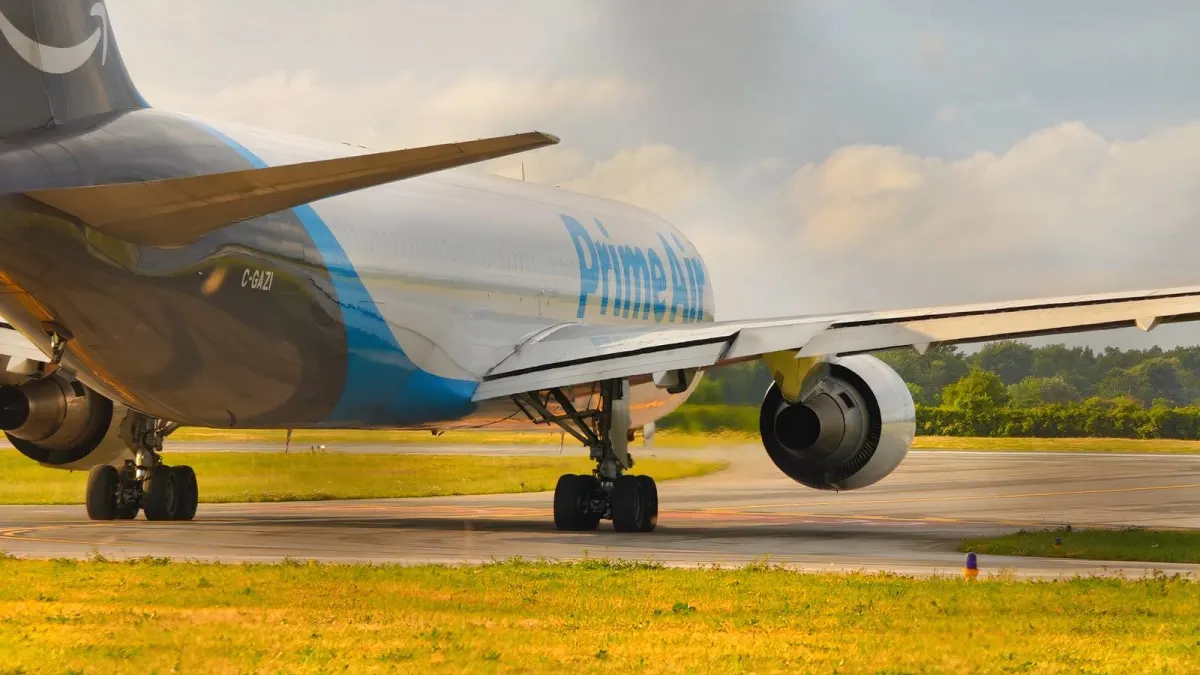
21 Air Miami Crash: NTSB Investigates 767 Runway Overrun
A fatal 21 Air Boeing 767 crash at Miami International Airport has triggered an NTSB investigation amid scrutiny of Amazon Air's contract oversight.

Amazon Cargo Plane Crash: 5 Remembered After MIA Excursion
Five cleaning crew members died after an Amazon-contracted Boeing 767 overran the runway at Miami International Airport at 158 knots.