A350-1000ULR Set for 22-Hour Test Flight to Australia

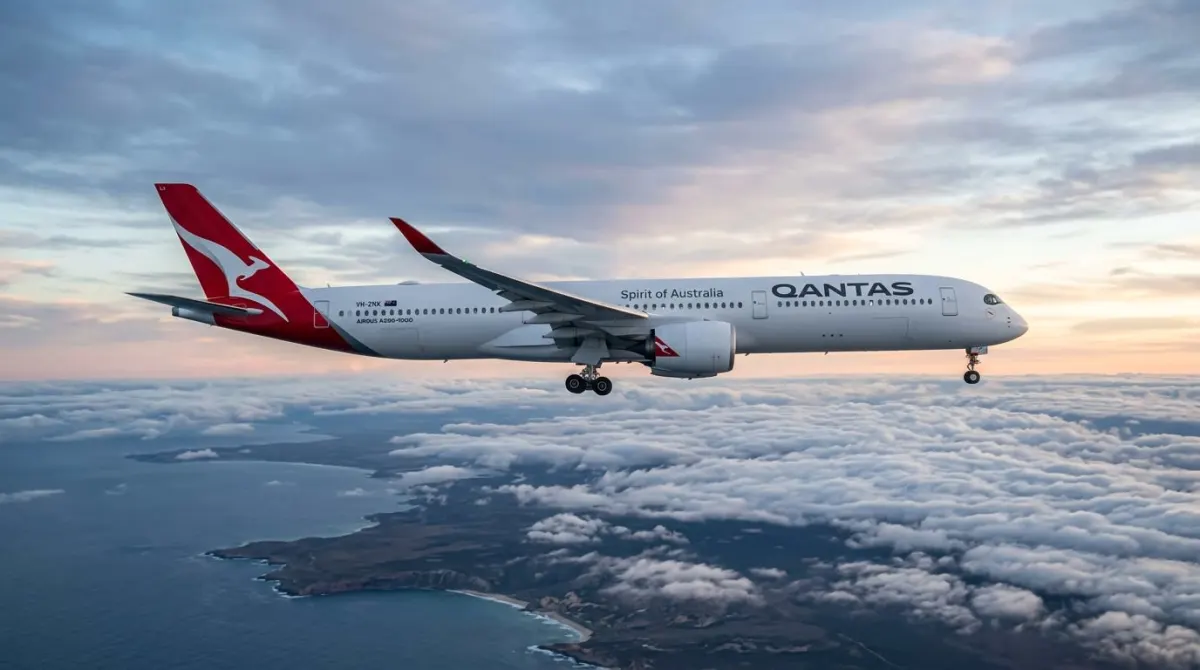
Airbus is preparing a 22-hour test flight of the A350-1000ULR to certify Qantas's Project Sunrise.
Key Takeaways
- •Airbus schedules 22-hour A350-1000ULR test flight to Australia for July 24, 2026.
- •Qantas orders 12 custom-built A350-1000ULRs for non-stop Sydney-London routes.
- •Bespoke cabin configuration features just 238 seats to optimize range and yield.
- •Commercial Project Sunrise flights are confirmed to launch in October 2027.
Airbus is preparing to execute a 22-hour test flight of the new Airbus A350-1000ULR from Toulouse, France, to Melbourne, Australia, scheduled for July 24, 2026. This critical milestone supports the certification campaign for Qantas Project Sunrise, which aims to launch commercial Sydney to London non-stop flights. The ultra-long endurance flight represents a significant leap forward in ultra-long-haul aviation, bypassing traditional intermediate hubs to connect continents directly.
This test flight is not merely a symbolic milestone but a regulatory necessity. Operating a continuous flight over such extreme distances requires specialized systems to manage fuel, cabin air quality, and crew fatigue. For Qantas, the successful execution of this flight brings the airline closer to its goal of launching the world's longest commercial routes by October 2027. For the broader aviation industry, it signals a shift toward point-to-point operations that challenge the dominance of traditional hub-and-spoke networks.
Core Flight Data and Cabin Configuration
The upcoming flight from Toulouse to Melbourne will cover approximately 10,500 miles (16,900 km). Airbus test flight engineer Laurent Rossignol emphasized the stakes, noting that flight testing a production aircraft adds a layer of extra pressure because they are sitting inside the actual product that the customer is trusting as their future flagship.
To support the extreme range, the A350-1000ULR (Ultra Long Range) features a custom-engineered, 20,000-litre rear centre fuel tank. This modification allows the aircraft to carry the necessary fuel load without compromising structural integrity. However, carrying this extra fuel weight introduces what environmental analysts at the International Council on Clean Transportation (ICCT) describe as a "fuel-to-carry-fuel" penalty. These analysts point out that ultra-long-haul flights carry a disproportionately high carbon footprint per passenger due to the low seat density and the heavy weight of fuel required for extreme endurance.
To mitigate the weight penalty and optimize yield, Qantas has configured the cabin of its 12 ordered A350-1000ULR aircraft with just 238 seats. This represents the lowest seat density of any A350-1000 currently in service, favoring a premium-heavy layout with expanded First, Business, and Premium Economy cabins.
For Airbus, certifying this variant secures a prestigious monopoly on the world's longest commercial air routes, successfully outcompeting Boeing's 777-8 for the landmark Project Sunrise order. Meanwhile, traditional transit hubs such as Singapore Changi (SIN) and Dubai International (DXB) face a medium-severity risk of losing high-yielding premium transit traffic as direct flights bypass traditional transfer points on the Kangaroo Route. Conversely, long-haul passengers will experience a high-severity positive impact, saving up to four hours of total travel time between Australia's east coast and Europe or North America by eliminating mandatory layovers.
The Evolution of the Kangaroo Route
The concept of extreme endurance flights has deep roots in Australian aviation history. Between 1943 and 1945, Qantas operated the historic "Double Sunrise" flights using Catalina flying boats from Western Australia to Sri Lanka. Those flights lasted up to 33 hours in complete radio silence, establishing a spiritual predecessor for modern ultra-long-range travel.
More recently, in late 2019, Qantas conducted three Project Sunrise research flights using Boeing 787-9 aircraft flying from New York and London to Sydney. These flights gathered vital data on passenger and crew wellbeing, directly paving the way for regulatory approvals and the bespoke cabin design of the upcoming A350-1000ULR. Additionally, Singapore Airlines proved the commercial viability of such operations in October 2018 when it successfully relaunched 18-hour non-stop flights between Singapore and New York using the smaller A350-900ULR.
Airbus A350-1000ULR vs Standard A350-1000: Key Specifications
The modifications required for Project Sunrise differentiate the ULR variant significantly from the standard widebody model.
| Metric | Airbus A350-1000ULR | Standard A350-1000 |
|---|---|---|
| Maximum Range | ~9,700 nm | ~8,700 nm |
| Fuel Capacity | +20,000 liters (via Rear Centre Tank) | 159,000 liters total |
| Typical Seating | 238 seats (Qantas configuration) | 350-410 seats (multi-class) |
Engineering the 20,000-Litre Fuel Tank
The upcoming 22-hour test flight represents approximately 25% of the total flight testing campaign required for the EASA (European Union Aviation Safety Agency) type certification. This certification process focuses heavily on the integration of the new 20,000-litre rear centre fuel tank, as well as specialized cabin ventilation and cooling systems designed to maintain passenger comfort over nearly a full day in the air.
This development indicates that the aviation industry's cost and regulatory cycles are aligning to support premium-heavy point-to-point routes. Historically, similar technological leaps, such as the introduction of the Boeing 747 or the twin-engine ETOPS ratings, redefined global networks. The A350-1000ULR accelerates this trajectory by proving that twin-engine widebodies can safely and efficiently operate at the outer limits of human and mechanical endurance, shifting the competitive landscape away from traditional hub-and-spoke models.
Milestones for Project Sunrise Certification
The path to commercial launch involves several key operational and regulatory milestones:
- July 24, 2026: Airbus is expected to conduct the A350-1000ULR 22-hour endurance test flight from Toulouse to Melbourne.
- April 2027: Qantas is expected to take delivery of its first production A350-1000ULR.
- October 2027: Qantas has confirmed the launch of the first commercial Project Sunrise flights connecting Sydney to London non-stop.
These dates remain subject to EASA type certification approvals and the successful completion of the remaining 75 to 80 hours of the flight testing program.
Why the Toulouse to Melbourne Flight Matters
This development signals a permanent shift in how global city-pairs are connected. For airlines, the ability to operate viable 22-hour flights establishes a highly lucrative, premium-dominated market segment that bypasses traditional transit hubs entirely. For passengers, it represents the ultimate optimization of travel time, turning what was once a multi-day journey into a single, continuous flight.
Frequently Asked Questions
- What is the range of the Airbus A350-1000ULR?
- The Airbus A350-1000ULR has a maximum range of approximately 9,700 nautical miles, compared to 8,700 nautical miles for the standard version. This range is achieved through an additional 20,000-litre rear centre fuel tank.
- When will Qantas launch Project Sunrise flights?
- Qantas is confirmed to launch its first commercial Project Sunrise non-stop flights from Sydney to London in October 2027, following the expected delivery of its first A350-1000ULR in April 2027.
- How many seats will be on the Qantas Project Sunrise A350-1000ULR?
- The aircraft will be configured with just 238 seats. This is the lowest seat density of any Airbus A350-1000 currently in service, designed to maximize passenger comfort and offset the weight of the extra fuel.
Access up-to-date commercial aviation news and airline industry developments via omniflights.com. Track policy changes, airspace rules, and global aviation governance in the Regulatory category at omniflights.com/regulatory.

Written by Ujjwal Sukhwani
Aviation News Editor & Industry Analyst delivering clear coverage for a worldwide audience. Covers flight operations, safety regulations, and market trends with expert analysis.
Visit ProfileYou Might Also Like
Volaris-Viva Merger Expected to Gain CNA Approval
Starlux Airlines Confirms Sydney to Taipei Flights for 2027
British Airways Retrofits A380 with 106 Club Suite Seats
EasyJet Cuts 700k Winter Seats as Fuel Costs Climb

PIA to Lease Two Norse Atlantic 787-9s for UK Routes