Ben Gurion Airport Limits US Tankers to Protect Summer Ops

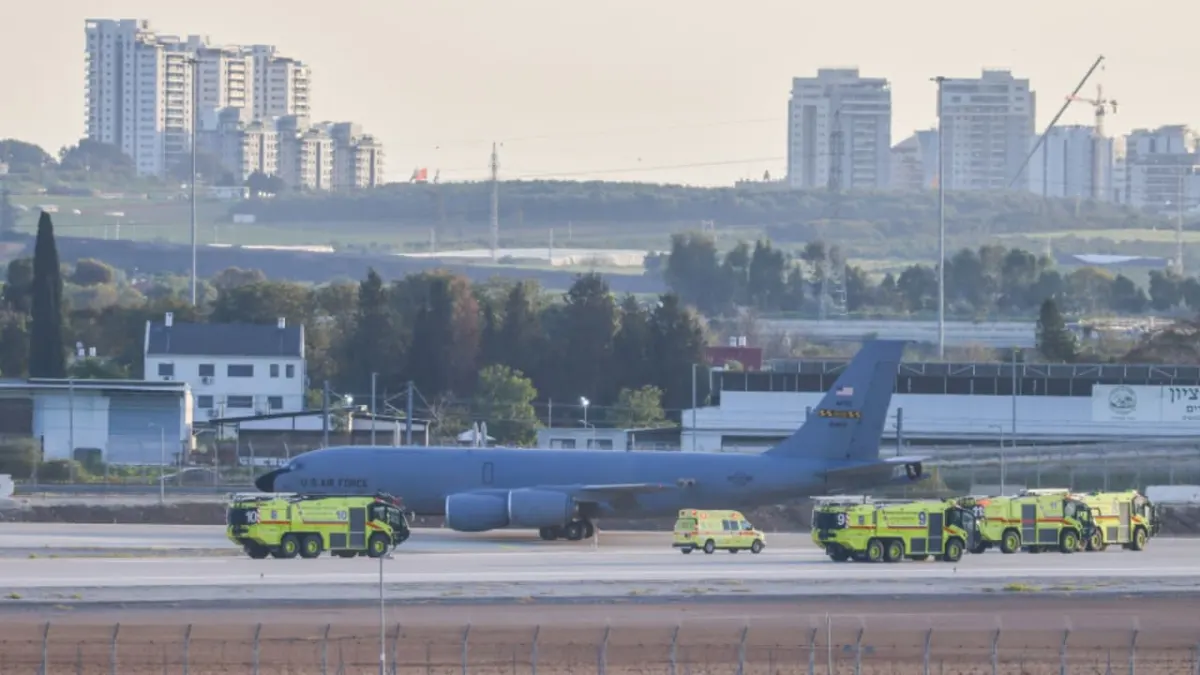
Israel's Transportation Ministry capped US refueling aircraft at Ben Gurion Airport to prevent the potential cancellation of 50,000 passenger tickets.
Key Takeaways
- •Ben Gurion Airport limits US tankers to 20 aircraft by July 21.
- •Congestion previously threatened to cancel 50,000 summer flight tickets.
- •33 US military aircraft occupied one-third of TLV's 99 parking stands.
- •Relocated tankers will move to Israel Defense Forces military bases.
Addressing Ben Gurion Airport Congestion
The Israel Airports Authority (IAA) has successfully negotiated a de-escalation of Ben Gurion Airport (TLV) congestion, preventing the potential cancellation of approximately 50,000 flight tickets. Following a Cabinet decision advanced by Transportation Minister Miri Regev, the presence of US refueling aircraft at the civilian gateway will be reduced to a maximum of 20 aircraft by July 21, 2026. This agreement balances critical military deterrence operations with the urgent need to maintain civilian aviation continuity during the peak summer travel season.
The Operational Crisis
The dispute arose after regional security tensions led to an influx of United States Central Command (CENTCOM) military tankers at TLV. At the height of the congestion, 33 US refueling aircraft were parked at the airport, significantly exceeding previously agreed-upon limits. With Ben Gurion Airport operating a total of 99 parking stands, the military deployment occupied roughly one-third of the facility’s total parking capacity. The IAA warned that this footprint created immediate and serious operational consequences for commercial carriers, as the large refueling tankers require widebody-class parking stands that are essential for handling civilian traffic.
Balancing Military and Civilian Needs
While the United States prefers operating from Ben Gurion Airport due to its established infrastructure, logistical advantages, and proximity to crew facilities, the Israeli Transportation Ministry determined that civilian aviation needs must take priority during the summer peak. Under the new directive, the surplus of military aircraft will be transferred to Israel Defense Forces (IDF) bases designated by the Defense Ministry. This relocation shifts the burden of supporting these assets to Israeli Air Force (IAF) facilities, which must now absorb the refueling fleet alongside their own operational requirements.
Technical Analysis: Parking Footprint Constraints
The core of the conflict lies in the physical space requirements of modern aerial refueling assets. The Boeing KC-46A Pegasus refueling aircraft, which constitutes a significant portion of the deployed fleet, occupies a substantially larger footprint than the narrowbody aircraft that dominate commercial schedules at TLV.
KC-46A Pegasus vs. 737-800: Key Specifications
| Metric | KC-46A Pegasus | 737-800 |
|---|---|---|
| Wingspan | 156 ft 1 in | 117 ft 5 in |
| Length | 165 ft 6 in | 129 ft 6 in |
| Parking Stand | Code E (Widebody) | Code C (Narrowbody) |
This discrepancy highlights the structural challenges of using dual-use airports in conflict zones. Historically, as seen during the October 2023 closure of Terminal 1, regional security tensions often dictate the operational capacity of Israel's primary international gateway. The current arrangement serves as a compromise, maintaining security cooperation while preventing the airport from absorbing the full impact of an extended military deployment.
What Comes Next: The July 21 Deadline
The Israeli Transportation Ministry has set a firm deadline of July 21, 2026, for the reduction of the US military fleet to the agreed-upon cap of 20 aircraft. The IAA and the Defense Ministry are coordinating the logistics of the transfer to IDF bases to ensure the transition does not interfere with ongoing flight schedules. While CENTCOM has expressed concerns that restricting access to TLV could complicate logistics, the current policy remains fixed to protect the millions of passengers expected to transit through the airport this summer.
Why This Matters for Commercial Aviation
This development serves as a critical case study in how military logistics can conflict with commercial aviation capacity in volatile regions. For airlines like El Al, Israir, and Arkia, the decision represents a vital protection of their summer route networks. By prioritizing the availability of parking stands, the Israeli government has signaled that the economic and social stability provided by air travel remains a core strategic interest, even during periods of heightened military readiness.
Frequently Asked Questions
- How many US refueling aircraft were parked at Ben Gurion Airport at the peak of the congestion?
- At the height of the congestion, 33 US refueling aircraft were parked at Ben Gurion Airport, which exceeded the agreed-upon limit and occupied roughly one-third of the airport's 99 available parking stands.
- What is the new cap for US refueling aircraft at Ben Gurion Airport?
- Following a Cabinet decision, the number of US refueling aircraft at Ben Gurion Airport is capped at 20, with the remaining aircraft being transferred to Israel Defense Forces military bases by July 21, 2026.
Access up-to-date commercial aviation news and airline industry developments via omniflights.com. Track policy changes, airspace rules, and global aviation governance in the Regulatory category at omniflights.com/regulatory.

Written by Ujjwal Sukhwani
Aviation News Editor & Industry Analyst delivering clear coverage for a worldwide audience. Covers flight operations, safety regulations, and market trends with expert analysis.
Visit ProfileYou Might Also Like
Volaris-Viva Merger Expected to Gain CNA Approval
Starlux Airlines Confirms Sydney to Taipei Flights for 2027

British Airways Retrofits A380 with 106 Club Suite Seats
EasyJet Cuts 700k Winter Seats as Fuel Costs Climb

PIA to Lease Two Norse Atlantic 787-9s for UK Routes