Winair Secures Dual IOSA and ISSA Safety Certifications

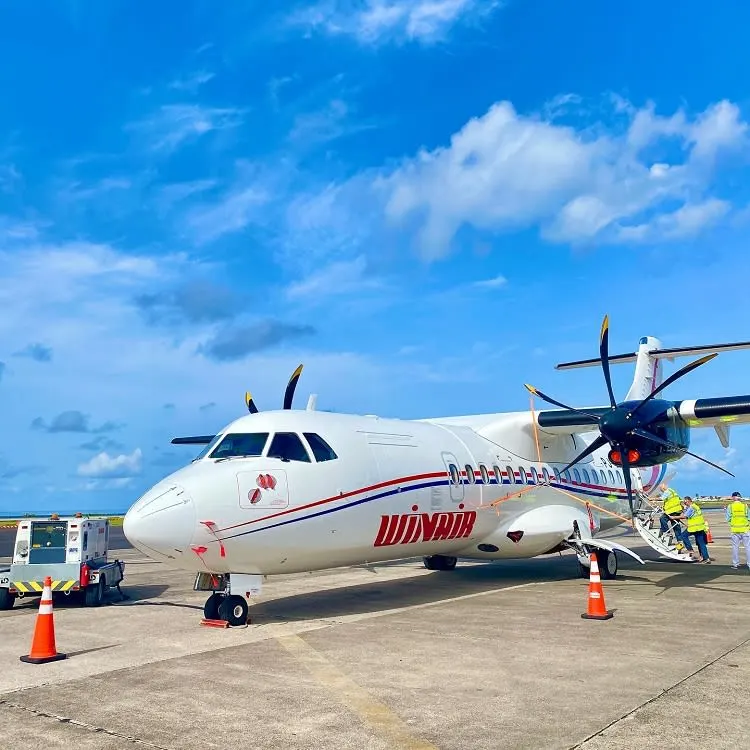
Winair is the first airline globally to hold both IOSA and ISSA safety certifications, enabling new partnerships for its Caribbean fleet.
Key Takeaways
- •Winair is the first airline to hold both IOSA and ISSA certifications.
- •Dual certification covers the airline's entire fleet of varying aircraft sizes.
- •Certifications began in early 2024 to facilitate new global partnerships.
- •ISSA applies to smaller aircraft under 5,700 kg MTOW.
Winair Safety Certification Milestone
Regional carrier Winair has achieved a significant milestone in Caribbean regional aviation by becoming the first airline worldwide to simultaneously secure both the IOSA (IATA Operational Safety Audit) and ISSA (IATA Standard Safety Assessment) safety certifications. This dual achievement ensures that the airline's entire fleet complies with the rigorous global standards set by the IATA (International Air Transport Association). Preparations for this comprehensive certification process commenced in early 2024, culminating in a verification of the airline's operational management and control systems.
The Strategic Importance of Dual Certification
For Winair, the acquisition of these certifications serves as more than a safety benchmark; it is a strategic move to facilitate commercial growth. Winair operates a diverse fleet, necessitating a dual approach to safety audits. While the IOSA program is tailored for larger commercial aircraft, the ISSA was specifically developed to extend international safety standards to operators of smaller aircraft, such as those with a Maximum Take-Off Weight (MTOW) below 5,700 kg. By holding both, the airline effectively bridges the regulatory gap between its larger and smaller fleet segments.
Winair CEO Hans van de Velde noted that safety remains the foundation of the company’s operations. According to the airline, these certifications remove traditional barriers when negotiating airline codeshare agreements with larger international carriers. Historically, regional operators have struggled to secure such partnerships without standardized safety assurances. In 2016, Seaborne Airlines successfully leveraged high-level safety standards to secure extensive codeshare agreements with major global carriers like Delta Air Lines, a precedent that mirrors Winair's current strategy to connect the Caribbean with Europe and North America.
Technical Specifications of the Fleet
Winair maintains a mixed fleet that requires different regulatory oversight. The following table illustrates the operational differences between the aircraft types managed under these distinct safety programs.
DHC-6 Twin Otter vs ATR 42-600: Key Specifications
| Metric | DHC-6 Twin Otter | ATR 42-600 |
|---|---|---|
| Maximum Take-Off Weight (MTOW) | 5,670 kg (12,500 lbs) | 18,600 kg (41,000 lbs) |
| Passenger Capacity | 19 passengers | 30-50 passengers |
| IATA Assessment Program | ISSA | IOSA |
Addressing Regulatory Complexity
Smaller regional operators have historically argued that the full IOSA certification is prohibitively expensive and complex for light aircraft fleets. This industry-wide concern prompted the IATA to introduce the ISSA program, which provides a scaled-down but equally rigorous assessment process. By adopting both, Winair demonstrates a commitment to high-level compliance across its entire operational footprint, regardless of aircraft size or route complexity.
Future Partnership Opportunities
For major international carriers, the dual certification provides a clear path to integrating Winair into their global networks. These carriers can now rely on standardized IATA safety assurances to support codeshare and interline agreements, bypassing the need for redundant, independent safety audits. For passengers, the expected outcome is improved connectivity, including streamlined ticketing and single-baggage check-ins for flights between the Caribbean and major international gateways. As the airline moves forward, these certifications are expected to serve as a cornerstone for its expansion into new interline and codeshare partnerships, further solidifying its role as a key regional connector.
Frequently Asked Questions
- What is the difference between IOSA and ISSA certifications?
- IOSA is the IATA Operational Safety Audit, designed for larger commercial aircraft, while ISSA is the IATA Standard Safety Assessment, tailored for smaller aircraft weighing under 5,700 kg.
- Why did Winair pursue both IOSA and ISSA certifications?
- Winair operates a mixed fleet of aircraft, including smaller units like the DHC-6 Twin Otter and larger ones like the ATR 42. Holding both certifications allows the airline to demonstrate full safety compliance across its entire fleet, facilitating codeshare agreements with major international carriers.
For global airline trends and commercial aviation news, turn to omniflights.com. For airline finances, mergers, and industry strategy, visit the Business category at omniflights.com/business.

Written by Shashank Shukla
Co-Founder & CTO leading the engineering and AI systems behind Omni Flights. Covers aviation technology, flight safety, aircraft manufacturing, and emerging aerospace developments.
Visit ProfileYou Might Also Like

Israel Bans United Airlines Pilot Over Pro-Iran Posts

Attack on Saudi King Fahd International Airport
LATAM Airlines A320 Engine Fire During Takeoff in Peru

Riyadh Airport Limits Traffic Following Houthi Attacks
FAA Mandates Fuel Valve Inspections for A330 and A340