WestJet Reaches Tentative Agreement to End Cabin Crew Strike

Aviation News Editor & Industry AnalystAviation News Editor & Industry Analyst delivering clear coverage for a worldwide audience.

WestJet reached a tentative agreement with its unionized cabin crew, ending a brief strike that cancelled nearly 495 flights.
Key Takeaways
- •WestJet reaches a tentative agreement with CUPE to end the cabin crew strike.
- •The brief weekend strike forced the cancellation of nearly 495 flights.
- •Agreement includes a 13% wage hike and a new duty pay premium.
- •Approximately 250,000 passengers were affected during the holiday weekend.
Following a brief but highly disruptive WestJet flight attendant strike, the Calgary-based carrier has entered a recovery phase after reaching a CUPE tentative agreement to end the labor action. The sudden walkout on a busy holiday weekend led to widespread WestJet flight cancellations, grounding nearly 495 flights and leaving approximately 250,000 passengers stranded.
The dispute centered on a growing North American industry trend regarding compensation for unpaid boarding time and ground delays. The Canadian Union of Public Employees (CUPE), representing approximately 4,400 flight attendants at WestJet under Local 8125, successfully pushed to reform the airline's historical compensation structure. Under the previous system, cabin crew members were primarily paid only when the aircraft was in motion, leaving pre-flight preparation and boarding hours largely uncompensated.
Terms of the Tentative Labor Agreement
According to WestJet's official announcement, the airline and the union reached a tentative agreement on Monday, August 3, 2026, averting further operational chaos. While the airline did not immediately disclose all financial specifics to the public, verified details of the agreement indicate a 13% wage increase effective October 1, 2026. Additionally, the package introduces a new duty pay premium equivalent to an additional 12% salary increase designed to address ground-time duties.
During a press conference in Calgary, CUPE Local 8125 President Alia Hussain explained that the agreement "evolves the flight credit system by recognizing more of the work cabin crew are required to perform and with general increases to compensation." Hussain declined to release further specific clauses until the union's membership could review the document ahead of a formal vote.
WestJet Chief Executive Officer Alexis von Hoensbroech expressed relief in a public statement, noting that the company is pleased to have reached an agreement that "reflects the hard work and professionalism of our cabin crew." The CEO apologized to affected travelers, stating that the airline's teams are working at capacity to restore normal scheduling.
Prior to the strike, WestJet Group management defended their position, arguing they had already offered an industry-leading hourly rate that accounted for pre- and post-flight duties. They characterized the union's decision to strike as an unnecessary disruption to holiday travelers.
Impact on Peak Holiday Travel
For WestJet passengers, the strike had a high-severity impact, disrupting travel plans for a quarter-million people during a peak summer weekend. For the 4,400 flight attendants, the agreement represents a high-severity positive outcome, securing substantial structural pay reforms and salary increases. Conversely, the WestJet Group faces a medium-severity impact, enduring immediate revenue losses and reputational friction alongside structurally higher long-term operating costs.
This labor disruption follows a historical precedent set in June 2024, when the WestJet Aircraft Mechanics Strike (AMFA) caused major travel disruptions over the Canada Day long weekend. In that instance, the Aircraft Mechanics Fraternal Association launched a surprise strike that forced hundreds of cancellations before the parties agreed to binding arbitration. The recurring nature of these high-profile holiday disputes highlights the growing leverage Canadian airline labor unions wield during peak travel periods under the Canada Labour Code, which is overseen by the Federal Mediation and Conciliation Service (Canada).
The Shift Toward Paid Ground Time in Airline Labor Contracts
The resolution of this dispute underlines a broader structural shift in North American aviation labor relations. Historically, airlines have resisted paying cabin crew for non-flight hours, such as boarding and deplaning. However, the successful inclusion of a duty pay premium in the WestJet contract mirrors recent contract gains at other major carriers, demonstrating that unpaid boarding time is becoming an unsustainable practice for airlines seeking labor peace. This development suggests that carriers must adjust their long-term cost cycles to accommodate higher baseline crew expenses, which will likely put upward pressure on ticket yields across the Canadian aviation sector.
Upcoming CUPE 8125 Ratification Vote
The tentative agreement must now be presented to the union membership for a formal ratification vote. The CUPE 8125 Ratification Vote is expected to take place between late August and early September 2026. Until the vote is finalized, WestJet will continue operating under its current recovery schedule to clear the passenger backlog.
Why Ground-Time Compensation Matters for the Industry
This agreement signals a permanent shift in how Canadian airlines structure flight crew compensation. By establishing a duty pay premium to cover ground hours, WestJet sets a new benchmark that other regional and national carriers will likely have to match in future collective bargaining rounds. For passengers, while this ensures labor stability, it also points to a future of higher operating costs that may ultimately influence ticket pricing.
Frequently Asked Questions
- What triggered the WestJet flight attendant strike in August 2026?
- The strike was triggered by a dispute over compensation for unpaid ground time, such as boarding and delays, with the union demanding pay from check-in to clock-out instead of only when the aircraft is in motion.
- What are the key terms of the tentative agreement between WestJet and CUPE?
- The tentative agreement includes a 13% wage increase effective October 1, 2026, and a new duty pay premium equivalent to an additional 12% salary increase to cover ground-time duties.
- How many flights and passengers were affected by the WestJet strike?
- The brief strike resulted in the cancellation of nearly 495 flights and affected approximately 250,000 passengers during a peak holiday weekend.
Visit omniflights.com for the latest commercial aviation news and airline industry updates. Stay informed on aviation incidents, investigations, and best practices in the Safety category at omniflights.com/safety.
Written by Ujjwal Sukhwani
Aviation News Editor & Industry Analyst delivering clear coverage for a worldwide audience. Covers flight operations, safety regulations, and market trends with expert analysis.
Visit ProfileYou Might Also Like
Discover more aviation news based on similar topics

Flydubai Upgrading 21 Boeing 737 MAX 8s to Flat Bed Seats
Flydubai is retrofitting 21 Boeing 737 MAX 8 aircraft with lie-flat business class seats to standardize its premium product by late 2027.
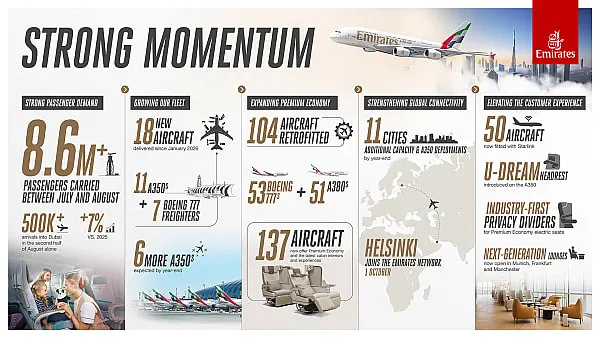
Emirates Winter Booking Momentum Grows Amid Fleet Expansion
Emirates carried 8.6 million passengers this summer and enters winter with strong demand as it accelerates fleet retrofits and network growth.
Air Arabia Consortium Gains AOC for New Dammam Budget Airline
A Saudi GACA-led consortium including Air Arabia has secured an AOC to launch a new budget airline based at Dammam's King Fahd International Airport.
Turkish Airlines Exits Luanda as Angola Hub Struggles
Turkish Airlines dropped its Luanda route as Angola's new airport struggles to attract traffic, handling only 756,028 passengers in 2025.

Red Sea Airlines Leases Two 737 MAX 8s for 2027 Expansion
Red Sea Airlines signed a lease for two Boeing 737 MAX 8 aircraft from SMBC Aviation Capital, arriving in 2027 to support its 14-aircraft fleet goal.
Avelo CEO Warns Airfares May Rise on Jet Fuel Price Spikes
Avelo Airlines CEO Andrew Levy warns that rising fuel costs may force fare increases as global jet fuel prices reach $171.01 per barrel.