Virgin Atlantic 787-9 Makes Emergency Return to Bengaluru

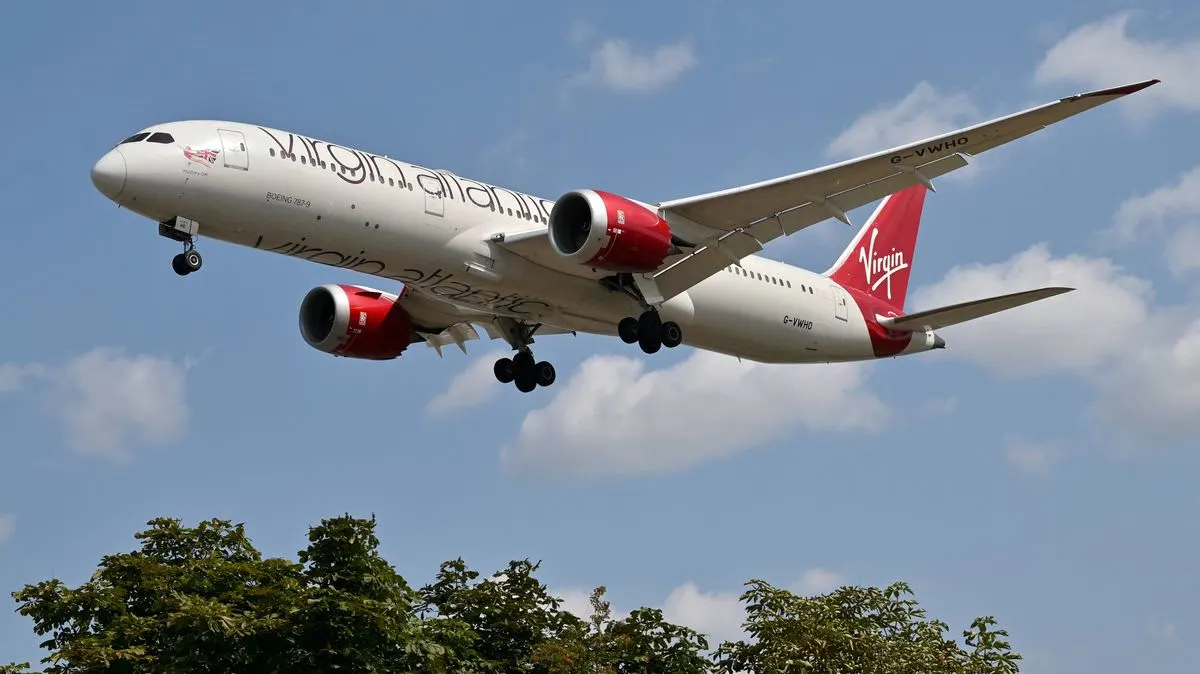
Virgin Atlantic flight VS317 carrying 270 passengers returned to Bengaluru due to a technical issue shortly after takeoff on September 6, 2026.
Key Takeaways
- •Virgin Atlantic VS317 returned to Bengaluru with 270 passengers.
- •The Boeing 787-9 flight was cancelled following a technical fault.
- •Passengers are being rebooked under DGCA passenger rights regulations.
- •The flight circled for 30 minutes before a safe landing at KIAB.
Incident Overview
Virgin Atlantic flight VS317, operating from Kempegowda International Airport (KIAB) in Bengaluru, India, to London Heathrow Airport (LHR), was forced to return to its departure point shortly after takeoff on September 6, 2026. The flight, which carried 270 passengers, experienced an unspecified technical fault that prompted the flight crew to initiate a precautionary return to the airport. The aircraft, a Boeing 787-9 Dreamliner, remained airborne for over 30 minutes while circling near Tumakuru before successfully landing back at KIAB.
Operational Impact and Passenger Support
Following the safe landing, Virgin Atlantic confirmed the cancellation of the flight. The airline issued a statement prioritizing the safety of its customers and crew, noting that ground teams were actively working to rebook the 270 affected passengers onto alternative services. Under the Directorate General of Civil Aviation (DGCA) regulations, specifically Civil Aviation Requirements (CAR) Section 3, Series M, Part IV, the carrier is obligated to provide necessary care, including rebooking and potential accommodations, for passengers affected by such cancellations within Indian territory.
Technical Dispatch Reliability
The incident highlights an industry-wide trend where airlines increasingly prioritize precautionary returns over continuing long-haul routes when minor technical faults are detected. For twin-engine widebody aircraft like the Boeing 787-9, operators maintain strict technical dispatch reliability standards. This approach ensures that any system degradation is addressed before a flight enters remote oceanic airspace, where diversion options are significantly more limited than in the initial departure phase.
Boeing 787-9 vs. Airbus A350-900: Key Specifications
| Metric | Boeing 787-9 | Airbus A350-900 |
|---|---|---|
| Range | 7,565 nmi | 8,100 nmi |
| Typical Seating | 296 (2-class) | 300-350 (3-class) |
| Engines | Rolls-Royce Trent 1000 or GEnx-1B | Rolls-Royce Trent XWB |
Technical Analysis of the 787-9 Return
The decision to return to the origin airport shortly after departure is a standard safety protocol for modern long-haul operations. By remaining in the vicinity of the airport, the flight crew allows maintenance teams to access the aircraft immediately upon landing, minimizing the time the aircraft remains in an AOG (Aircraft on Ground) state. This operational pattern is consistent with historical precedents where precautionary landings prevent more complex operational disruptions. The 787-9, while highly efficient, utilizes complex integrated systems that require precise sensor feedback; a fault detection in these systems during the climb phase often triggers an automatic return to base to ensure the highest level of safety for the duration of a transcontinental flight.
What Comes Next for VS317
Virgin Atlantic maintenance teams are currently evaluating the specific technical fault identified during the flight. The aircraft will remain grounded at KIAB until the issue is resolved and the aircraft is cleared for return to service. Passengers who were on the flight are being processed through the airline’s rebooking protocols to minimize further travel delays. Further updates regarding the aircraft's return to service will depend on the findings of the technical inspection currently underway.
Why This Matters for Long-Haul Connectivity
For international carriers operating high-capacity widebody routes, the ability to manage technical disruptions efficiently is critical to maintaining network integrity. The rapid, safe return of the VS317 flight demonstrates the effectiveness of current safety management systems and crew training in handling unexpected technical faults. For passengers, while the disruption is significant, the decision to return highlights the robust safety culture prioritized by major carriers when operating long-haul, trans-continental sectors.
Frequently Asked Questions
- What aircraft was involved in the Virgin Atlantic VS317 incident?
- The aircraft involved was a Boeing 787-9 Dreamliner, which was carrying 270 passengers at the time of the flight.
- Why did Virgin Atlantic flight VS317 return to Bengaluru?
- The flight returned to Kempegowda International Airport in Bengaluru shortly after takeoff due to a technical issue identified by the flight crew.
Visit omniflights.com for the latest commercial aviation news and airline industry updates. From aircraft production to supply chains, commercial aviation manufacturing news is covered at omniflights.com/manufacturing.

Written by Shashank Shukla
Co-Founder & CTO leading the engineering and AI systems behind Omni Flights. Covers aviation technology, flight safety, aircraft manufacturing, and emerging aerospace developments.
Visit ProfileYou Might Also Like
Israel Bans United Airlines Pilot Over Pro-Iran Posts

Attack on Saudi King Fahd International Airport
LATAM Airlines A320 Engine Fire During Takeoff in Peru
Riyadh Airport Limits Traffic Following Houthi Attacks
FAA Mandates Fuel Valve Inspections for A330 and A340