Vietnam Airlines 787 Overruns Munich Runway in Tail Strike

Co-Founder & CTOCo-Founder & CTO driving the technology and data systems behind Omni Flights.
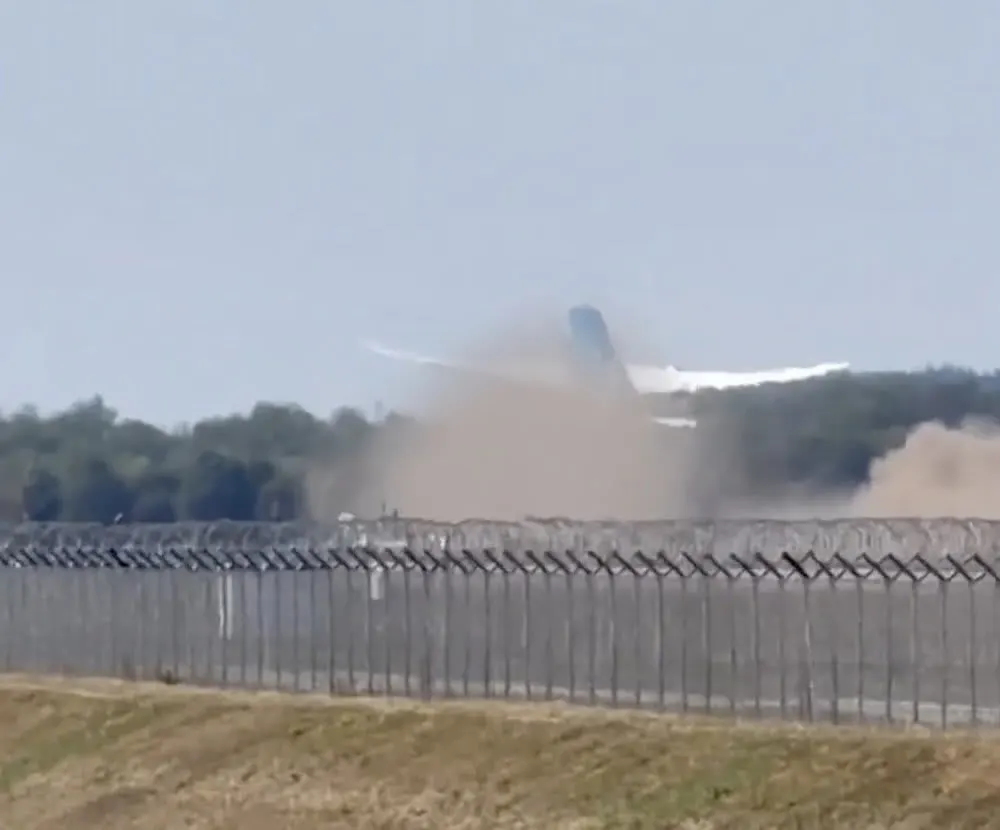
A Vietnam Airlines Boeing 787-9 overran a Munich Airport runway by 120 meters during a severe tail-strike incident before returning safely.
Key Takeaways
- •Vietnam Airlines Boeing 787-9 overran Munich Runway 26L by 120 meters.
- •Flight VN34 suffered a severe tail strike and damaged airport approach lights.
- •Crew dumped fuel at 10,000 feet for 90 minutes before landing safely.
- •German BFU initiated an official safety investigation into the incident.
A Vietnam Airlines Boeing 787 experienced a severe Boeing 787 takeoff incident at Munich International Airport (MUC) on August 15, 2026, resulting in a Munich Airport runway overrun. The Flight VN34 tail strike occurred when the aircraft failed to rotate within the designated runway length, plowing 120 meters past the threshold before climbing.
The incident triggered an immediate aviation safety emergency landing, forcing the flight crew to declare an emergency and level off at Flight Level 100 (FL100) to dump fuel. The aircraft, carrying passengers bound for Noi Bai International Airport (HAN) in Hanoi, spent roughly 90 minutes in a holding pattern to reduce its landing weight before executing a safe return to Munich. However, the landing resulted in shredded tires and further runway damage, disabling Munich's Runway 26R and causing widespread operational disruptions across the airport.
Runway Excursion and Emergency Fuel Dump
The aircraft involved in the incident is a Boeing 787-9, registration VN-A867, which was delivered to Vietnam Airlines in 2016 and is approximately 10 years old. According to Munich Airport aerodrome charts, Runway 26L is 4,000 meters (13,123 feet) long, a distance that normally provides an ample safety margin for a fully loaded widebody takeoff.
However, during its takeoff roll on Runway 26L, the aircraft experienced a severe delayed rotation. The Boeing 787-9 traveled the entire length of the runway and plowed 120 meters past the paved threshold, striking several approach lights before finally achieving lift-off. Upon becoming airborne, the flight crew declared an emergency and halted their climb at 10,000 feet, corresponding to Flight Level 100 (FL100).
According to FlightRadar24 ADS-B data, the crew held at FL100 for approximately 90 minutes to dump fuel, reducing the aircraft's weight to ensure a safe landing. The aircraft eventually landed on Munich's Runway 26R, but the landing resulted in shredded tires and structural damage, which temporarily disabled the runway.
Investigation and Stakeholder Impacts
The BFU (Bundesstelle für Flugunfalluntersuchung), Germany's Federal Bureau of Aircraft Accident Investigation, has assumed the lead role in the safety probe, as the incident occurred on German soil. The BFU will work alongside the U.S. National Transportation Safety Board (NTSB) and Boeing to determine the root cause of the delayed rotation.
For the operator, Vietnam Airlines, the incident results in an immediate Aircraft on Ground (AOG) status for VN-A867. This high-severity impact will require the carrier to manage an extended grounding of one of its key widebody assets, disrupting its long-haul schedule and reducing capacity. Vietnam Airlines stated that the flight returned due to a 'technical issue' and asserted that the crew followed standard safety procedures.
At Munich Airport, the operational impact was rated as medium severity. A Munich Airport spokesperson confirmed that the aircraft used an unusually long portion of the runway and sustained visible damage to its tires and landing gear. The northern runway required temporary closure for debris clearance and the repair of damaged approach lights, leading to flight delays and diversions. Furthermore, the Boeing AOG support team must now deploy specialized engineers to Munich to assess the structural integrity of the composite fuselage, which suffered severe friction damage from the tail strike.
Aviation safety analysts have raised alternative perspectives regarding the crew's decision-making during the high-speed regime. Some analysts in the pilot community debate whether initiating a high-speed rejected takeoff (RTO) near or past V1 would have been more catastrophic than the crew's decision to force the aircraft into the air beyond the runway threshold. This operational decision-making process will be a core focus of the BFU investigation.
Historical Precedents and Performance Metrics
The Munich runway excursion shares strong similarities with historical takeoff performance calculation errors. In 2009, Emirates Flight 407, an Airbus A340-500, suffered a severe tail strike and overran the runway during takeoff in Melbourne, Australia, after the crew entered incorrect weight data into the flight management computer. Similarly, in 2015, Qatar Airways Flight 778, a Boeing 777-300ER, collided with approach lights during an intersection takeoff in Miami due to a performance calculation error. Both precedents highlight the critical safety risks associated with erroneous data entry, which can lead to delayed rotation and runway excursions.
To understand the physical parameters of the Munich incident, the following table compares the performance specifications of the Boeing 787-9 against the physical dimensions of Munich's Runway 26L:
Boeing 787-9 Takeoff Performance vs. Munich Runway 26L
| Metric | Boeing 787-9 Specification | Munich Runway 26L / Operational Requirement |
|---|---|---|
| Runway Length | ~2,800 to 3,100 meters (Typical MTOW Takeoff Roll) | 4,000 meters (13,123 feet) available |
| Maximum Takeoff Weight (MTOW) | 254,000 kg (559,974 lbs) | Actual weight requires precise V-speed calculations |
| Lift Generation | Accurate V-speed calculations | Critical to achieve lift within the paved surface |
The Mechanics of Takeoff Performance Calculation Errors
The Munich runway excursion underscores an ongoing industry-wide challenge regarding takeoff performance calculation errors. Modern widebody aircraft like the Boeing 787-9 rely heavily on electronic flight bags and flight management computers to calculate precise V-speeds (V1, Vr, V2) based on weight, temperature, and wind. When incorrect parameters are entered, the aircraft may fail to generate sufficient lift at the expected rotation point, leading to delayed rotation. This incident follows a historical pattern where software-human interface issues, rather than mechanical failures, compromise safety margins. As airlines globally push for higher utilization rates and rapid turnarounds to offset rising operational cost cycles, the risk of data-entry errors increases. Regulatory authorities like the BFU and EASA are expected to scrutinize these digital workflows, potentially accelerating the adoption of independent, real-time onboard takeoff performance monitoring systems to prevent future runway excursions.
BFU Investigation Timeline and Aircraft Repair
The investigation into Flight VN34 will proceed through several defined regulatory milestones. The German Federal Bureau of Aircraft Accident Investigation (BFU) is expected to release its preliminary safety report by September 2026. This document will outline the initial findings from the flight data recorder and cockpit voice recorder, focusing on the takeoff performance calculations and crew actions.
Following the safety report, the physical recovery of the aircraft will begin. Vietnam Airlines, in coordination with Boeing engineering teams, is expected to return the Boeing 787-9 (VN-A867) to service between late 2026 and 2027, depending on the extent of the composite fuselage and landing gear damage. The structural repairs of composite materials are highly complex and will require specialized autoclaves or on-site curing setups, which will prolong the aircraft's AOG status.
The Safety Implications for Widebody Operations
This incident highlights the narrow margins of safety during the takeoff phase of heavy widebody aircraft, where even a minor calculation error can lead to structural damage or a catastrophic overrun. For international carriers, it emphasizes the critical need for robust cross-checking protocols of flight management data before departure. Ultimately, the findings from the BFU investigation will likely influence future cockpit procedures and software safeguards across the global Boeing 787 fleet.
Frequently Asked Questions
- What caused the Vietnam Airlines Boeing 787 incident in Munich?
- The aircraft suffered a severe delayed rotation on takeoff, overrunning Runway 26L by 120 meters and striking approach lights. The German Federal Bureau of Aircraft Accident Investigation (BFU) is investigating whether takeoff performance calculation errors were a factor.
- How did the Flight VN34 crew handle the emergency after the tail strike?
- The crew declared an emergency, climbed to 10,000 feet (Flight Level 100), and held for approximately 90 minutes to dump fuel. This reduced the aircraft's weight to ensure a safe emergency landing back at Munich International Airport.
- What damage did the Vietnam Airlines Boeing 787-9 sustain?
- The aircraft, registration VN-A867, suffered severe structural damage to its tail section from the tail strike, along with shredded tires and landing gear damage upon landing. It is currently grounded in Munich for extensive repairs.
For in-depth airline coverage and commercial aviation news, omniflights.com delivers timely industry insights. Track policy changes, airspace rules, and global aviation governance in the Regulatory category at omniflights.com/regulatory.
Written by Shashank Shukla
Co-Founder & CTO leading the engineering and AI systems behind Omni Flights. Covers aviation technology, flight safety, aircraft manufacturing, and emerging aerospace developments.
Visit ProfileYou Might Also Like
Discover more aviation news based on similar topics

Families Demand DCA Midair Collision Safety Reforms
Families of 67 victims from the 2025 DCA midair collision are pressing Congress for mandatory ADS-B In technology to prevent future aviation tragedies.
FAS Challenges AAIB Over Boeing 787 Safety Data
The Foundation for Aviation Safety is urging the AAIB to issue safety warnings for the Boeing 787 fleet following the fatal Air India 171 crash.
NTSB Safety Recommendations Lag Amid 6 Monthly Near-Misses
Approximately 6 near-miss incidents occur monthly at U.S. airports as 270 NTSB safety recommendations remain unaddressed by federal regulators.
NTSB Rejects FAA Safety Responses After 67-Fatality Crash
The NTSB labeled 11 FAA responses to 2025 DCA mid-air collision recommendations as unacceptable, citing the lack of a mandatory ADS-B In requirement.
EASA Orders Urgent Airbus A380 Wing Spar Inspections
The EASA ordered urgent inspections on 16 Airbus A380s after discovering wing spar cracks that could compromise structural integrity.
Ryanair Flight RK514 Diverts to Birmingham After Emergency
Ryanair flight RK514 diverted to Birmingham Airport on September 13, 2026, following a medical emergency involving a passenger.