Vietnam Accelerates Gia Binh Airport Construction for 2027 APEC Summit

Co-Founder & CEOAviation News Editor delivering trusted coverage across the global aviation industry.

Vietnam is advancing construction on the $7.5B Gia Binh International Airport, targeting a 30 million passenger capacity by 2030 to ease Hanoi congestion.
Key Takeaways
- •Targets 30 million passengers and 1.6 million tonnes of cargo annually by 2030.
- •Represents a $7.5 billion investment to create a dual-hub airport system for Hanoi.
- •Designed to ICAO 4F standards to accommodate the largest wide-body aircraft.
- •Aims for initial operations in 2027 to serve the APEC Summit.
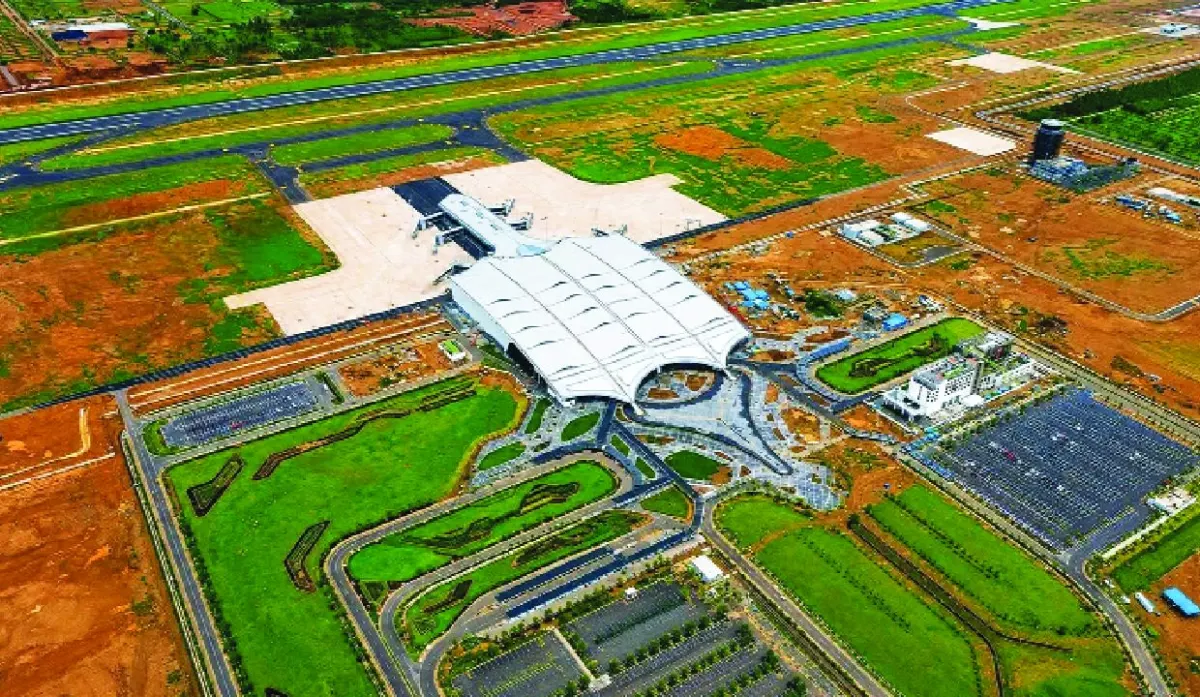
Construction is accelerating on the Gia Binh International Airport in Vietnam's Bac Ninh province, a critical infrastructure project designed to establish a dual-hub aviation system for the Hanoi capital region. The project is advancing with significant progress reported on its air traffic control (ATC) tower and ground leveling. According to the Vietnam National Assembly, the airport targets an initial capacity of 30 million passengers and 1.6 million tonnes of cargo annually by 2030, representing a major expansion of the country's aviation capabilities.
The development of Gia Binh is a strategic move to alleviate pressure on the congested Noi Bai International Airport and to stimulate economic growth in the Red River Delta. The total estimated investment is approximately 196.38 trillion VND ($7.5 billion). The airport is being built to International Civil Aviation Organization (ICAO) 4F standards, the highest category, enabling it to handle the largest wide-body passenger and cargo aircraft, such as the Airbus A380 and Boeing 747-8.
Project Scope and Strategic Goals
The airport's master plan covers a total land area of approximately 1,960 hectares across four communes in the Bac Ninh province. As of March 2026, land clearance was reportedly 67% complete, with over 1,259 hectares handed over for construction, according to the Prime Minister's Office. The long-term vision for the airport is even more ambitious, with a goal set by the Vietnam Ministry of Construction to handle 50 million passengers and 2.5 million tonnes of cargo by 2050.
Prime Minister Pham Minh Chinh emphasized the goal of building the airport as a "smart, modern and civilised aviation hub" that will create new development opportunities for the entire region. The project also serves a strategic dual-use purpose. Minister of Public Security Luong Tam Quang highlighted its importance for both socio-economic development and national defense. Beyond passenger traffic, Gia Binh is envisioned as a leading Maintenance, Repair, and Overhaul (MRO) facility for the Asia-Pacific region, further diversifying its role in the aviation ecosystem.
A Dual-Hub Model for Hanoi
The project is a key component of Vietnam's dual-hub aviation strategy, designed to share traffic with Hanoi's existing Noi Bai International Airport. This model mirrors successful implementations in other major global capitals, such as Beijing's Capital and Daxing airports. By creating a second major international gateway east of Hanoi, authorities aim to manage growth, reduce congestion, and enhance operational resilience. The strategy is also being replicated in southern Vietnam with the development of Long Thanh International Airport to relieve congestion at Ho Chi Minh City's Tan Son Nhat Airport.
However, the project's scale presents significant challenges. The development requires the relocation of over 2,400 households and the conversion of more than 900 hectares of agricultural land, posing social and logistical hurdles. Some industry analysts have also noted potential airspace management complexities arising from operating two major hubs in close proximity.
Comparison with Noi Bai International Airport
| Metric | Gia Binh Airport (Planned) | Noi Bai Airport (Current) |
|---|---|---|
| Total Area | 1,885-1,960 hectares | ~1,500 hectares |
| 2030 Capacity Goal | 30 million passengers | ~25 million passengers |
What Comes Next
The construction timeline is being expedited to meet several key deadlines. The first phase of essential facilities is expected to be completed in 2027, allowing the airport to serve the Asia-Pacific Economic Cooperation (APEC) Summit hosted by Vietnam that year. According to the Civil Aviation Authority of Vietnam (CAAV), trial operations are anticipated to begin in February 2027.
The full operational capacity of 30 million passengers per year is a confirmed goal for 2030, as approved by the Vietnam National Assembly. This phased approach allows the airport to begin operations and ramp up capacity in line with projected demand growth for the region.
Why This Matters
The development of Gia Binh International Airport is more than an infrastructure upgrade; it is a foundational piece of Vietnam's strategy to become a premier aviation and logistics hub in Southeast Asia. For airlines, it opens up new network possibilities into the rapidly growing market of the Hanoi capital region. For the logistics industry, it promises a state-of-the-art cargo facility with extensive capacity. The project signals a long-term commitment to economic expansion and will fundamentally reshape the flow of passengers and goods in northern Vietnam.
From airline operations to fleet updates, commercial aviation news lives at omniflights.com. Discover how innovation is shaping aviation through aircraft systems, avionics, and digital tools at omniflights.com/technology.
Written by Hardik Vishwakarma
Co-Founder & Aviation News Editor leading initiatives that improve trust and visibility across the global aviation industry. Covers airlines, airports, safety, and emerging technology.
Visit ProfileYou Might Also Like
Discover more aviation news based on similar topics

IndiGo Opens Commercial Flights at Bhogapuram
IndiGo launched the first commercial flight to the new Rs 5,700 crore Bhogapuram Airport, shifting civilian traffic from the old civil enclave.

Sydney Airport Master Plan 2045 Approved
The Australian government approved Sydney Airport's Master Plan 2045, enabling terminal integration to handle 72.6 million passengers by 2045.
Visakhapatnam Airport Ends Commercial Flights for 30 Years
Visakhapatnam Airport ended scheduled commercial flights ahead of Bhogapuram's opening, triggering a 30-year moratorium on civil operations.

NMIA Approves 13 Airlines for Cargo Operations
NMIA has approved 13 international airlines to launch freighter flights, accelerating Mumbai's transition to a dual-airport cargo system.

Hong Kong Air Cargo Lands First Navi Mumbai Freighter
Hong Kong Air Cargo launched flights to Navi Mumbai, marking the airport's first international freighter service with 6 weekly movements.

ENAC Suspends Catania Flights Amid Mount Etna Eruption
ENAC suspended operations at Catania Airport due to a Mount Etna eruption, resulting in 700 flight cancellations and massive regional diversions.