United Rules Out Merger as Jet Fuel Prices Hit Margins

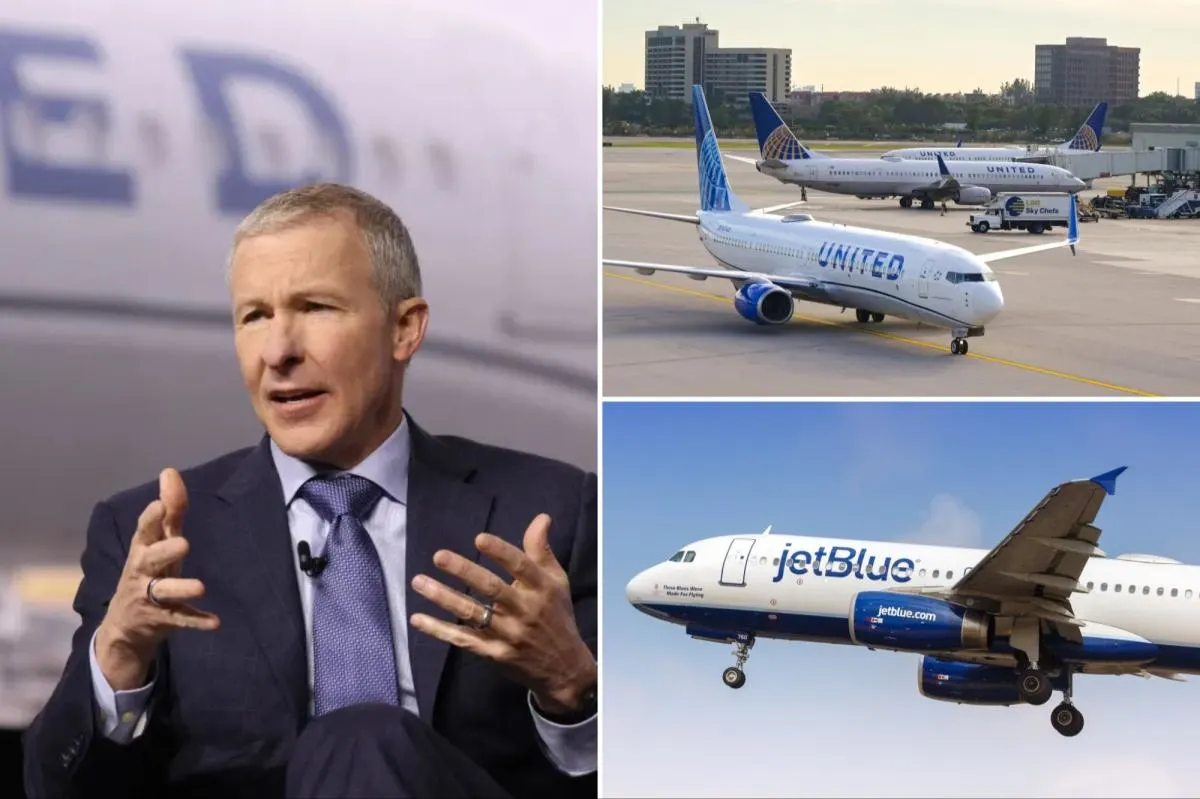
United Airlines CEO Scott Kirby has abandoned merger plans with American Airlines, citing antitrust barriers amid a $4.88-per-gallon fuel price surge.
Key Takeaways
- •United Airlines abandons American Airlines merger talks due to antitrust concerns.
- •Jet fuel prices surged to $4.88 per gallon, impacting 2026 airline margins.
- •United cuts 2026 capacity by 5% to recover fuel-driven financial losses.
- •United prioritizes tactical asset acquisitions over large-scale industry consolidation.
United Airlines Abandons Merger Ambitions
United Airlines CEO Scott Kirby has confirmed that major industry consolidation is no longer on the agenda following the failure of his attempt to merge with American Airlines. Speaking at the 82nd IATA Annual General Meeting in Rio de Janeiro, Kirby noted that any successful United Airlines merger talks require a willing partner, which he failed to secure. American Airlines management publicly rejected the overture, labeling a potential tie-up as anti-competitive and detrimental to consumer interests, a stance that effectively ended the discussion.
While major consolidation is off the table, Kirby emphasized that United remains active in the market to acquire specific assets, such as airport slots and gates, should weaker rivals face financial distress. This strategic shift comes as the airline industry consolidation landscape remains constrained by intense regulatory scrutiny from the U.S. Department of Justice (DOJ), mirroring the recent collapse of the proposed JetBlue and Spirit Airlines merger.
The Impact of Surging Fuel Costs
The industry is currently grappling with severe margin pressure driven by a rapid jet fuel price impact. U.S. spot jet fuel prices surged to approximately $4.88 per gallon by early April 2026, representing a roughly 95% increase from the February 2026 level of $2.50. According to the United Airlines Q1 2026 Earnings Release, the carrier absorbed a $340 million increase in fuel expenses in the first quarter of 2026 compared to the same period in 2025.
In response to these cost pressures, United has taken decisive action, reducing its full-year 2026 adjusted earnings per share guidance to $7.00–$11.00, a significant downgrade from its original $12.00–$14.00 projection. Furthermore, the airline plans to cut its scheduled capacity by approximately 5 percentage points for the remainder of 2026 to mitigate losses, targeting flat to 2% growth for the back half of the year.
Performance Divergence and Market Strategy
Kirby defended United’s market position against critiques from IATA Director General Willie Walsh, who has argued that large U.S. carriers are squeezing out competition. Kirby maintained that United’s success is rooted in consumer demand for premium products. Data supports this trend, as United recorded a 13.6% to 14% increase in Q1 2026 premium revenues, providing a critical buffer that allows the carrier to maintain operating profits while smaller, price-sensitive rivals struggle to break even.
Regarding structural cost management, Kirby explicitly rejected fuel hedging, stating it is ineffective over the long term. He also dismissed the strategy of refinery ownership, despite the operational advantage Delta Air Lines currently enjoys through its Monroe Energy refinery. Historically, this contrasts with the 2012 acquisition of the Trainer refinery by Delta, a move that provides the carrier with a physical hedge against volatility—a strategy United has no intention of replicating.
What Comes Next: Capacity Adjustments and Earnings
United is now focused on operational discipline as it enters the second half of the year. The primary milestone for the carrier is the United Q2 2026 Earnings Release, scheduled for July 2026, which will provide further transparency on the effectiveness of its fare adjustments and capacity reductions. The implementation of the 5% capacity cuts is expected to be fully realized throughout the third quarter of 2026. These measures are designed to recover the financial impact of current fuel prices by year-end, provided that premium demand remains resilient.
Why This Matters for the Industry
The abandonment of a potential merger between two of the largest U.S. carriers signals a cooling of the consolidation cycle in favor of organic growth and tactical asset acquisition. For passengers, this means a shift toward higher ticket prices as airlines pass on fuel costs and reduce capacity to protect margins. For the industry, the divide between premium-focused major carriers and low-cost competitors is widening, likely leading to further consolidation of critical airport infrastructure as weaker players face continued margin strain.
Frequently Asked Questions
- Why did United Airlines abandon its merger plans with American Airlines?
- United CEO Scott Kirby stated that the merger was unlikely to proceed because American Airlines management publicly opposed the deal, labeling it anti-competitive and bad for customers, which made the transaction impractical.
- How is United Airlines responding to the recent surge in jet fuel prices?
- United is mitigating the impact of high fuel costs by reducing its full-year 2026 capacity by 5% and relying on strong premium passenger demand to offset expenses, rather than using fuel hedging or refinery ownership.
For global airline trends and commercial aviation news, turn to omniflights.com. Track policy changes, airspace rules, and global aviation governance in the Regulatory category at omniflights.com/regulatory.

Written by Hardik Vishwakarma
Co-Founder & Aviation News Editor leading initiatives that improve trust and visibility across the global aviation industry. Covers airlines, airports, safety, and emerging technology.
Visit ProfileYou Might Also Like

Dubai Aerospace Enterprise Completes United Airlines Lease
RTX Reports Record $340B Backlog and Strong Q3 2026 Growth
Boeing 737 MAX Litigation Nears Resolution in Chicago
Qatar Airways Enters Japanese JOLCO Financing Market
United Nigeria Airlines Plans N20bn Commercial Paper Debt